




Do Doctors Recommend Adjustable Beds for Seniors?
Quick answer: We could not find a medical group that tells seniors, as a rule, to buy an adjustable bed. What we found is narrower and more useful. Medicare spells out when a doctor can order a hospital bed for home, and a few health sources suggest raising the head of the bed for nighttime reflux or snoring. If your doctor has asked for one of those things, an adjustable bed is a fair question to bring to your next visit.
When a doctor orders a hospital bed for home
Medicare is the clearest written record of when doctors call for a special bed. Its hospital beds page says "Part B covers medically necessary DME if your doctor or other health care provider orders it for use in your home." (Medicare.gov, Hospital beds)
The detailed rules sit in the CMS coverage policy for hospital beds, LCD L33820. One of the reasons it lists for a fixed-height hospital bed:
The beneficiary requires the head of the bed to be elevated more than 30 degrees most of the time due to congestive heart failure, chronic pulmonary disease, or problems with aspiration
The same policy covers a variable-height bed when the person meets one of the fixed-height reasons and "requires a bed height different than a fixed height hospital bed to permit transfers to chair, wheelchair or standing position." It also names positioning "in order to alleviate pain." And it sets a floor. In its words, "Elevation of the head/upper body less than 30 degrees does not usually require the use of a hospital bed." (CMS LCD L33820, Hospital Beds and Accessories)
So the answer to the title depends on the reason. Heart failure, lung disease, aspiration and pain that needs positioning are the cases on paper, with bed height for standing up added on top of one of them. A general wish to sleep better is not on the list.
One thing to know if you hope Medicare will pay: EzLift is not a Medicare-enrolled supplier, and EzLift beds are not billed to Medicare, Medicaid or insurance. Our Medicare and beds guide covers how a covered bed works.
Raising the head of the bed for nighttime reflux
Here the advice comes from gastroenterologists. The American College of Gastroenterology's 2022 GERD guideline says:
We suggest elevating head of bed for nighttime GERD symptoms. (Conditional recommendation, low level of evidence)
(ACG 2022 GERD guideline, PMC8754510)
"Low level of evidence" matters. The panel suggests it, but the studies behind it are thin. NIDDK gives a number you can use: your doctor may suggest raising your head "by placing a foam wedge or extra pillows under your head and upper back to incline your body and raise your head off your bed 6 to 8 inches." (NIDDK, Treatment for GER & GERD) An adjustable bed is one way to get that incline. Our acid reflux article goes further into wedges versus beds.
Snoring is different from sleep apnea
Mayo Clinic's self-care list for snoring includes this: "Raising the head of your bed by about 4 inches may help." (Mayo Clinic, Snoring: diagnosis and treatment)
Notice the "may." And for snoring that comes with obstructive sleep apnea, the same page points to oral appliances, CPAP and surgery. A raised bed is not on that list. If someone hears pauses or gasping in your breathing at night, see a doctor before you shop for a bed.
Leg swelling
MedlinePlus, from the National Library of Medicine, lists this home care tip for foot, leg and ankle swelling: "Put your legs on pillows to raise them above your heart while lying down." (MedlinePlus, Foot, leg, and ankle swelling) Ask your clinician whether your bed can safely achieve the recommended leg position above your heart. How high, and for how long, is a question for your clinician, because swelling has many causes and some of them need treatment first.
A safety point before you buy any bed with rails
FDA counts are sobering. "Between January 1, 1985 and January 1, 2013, FDA received 901 incidents of patients caught, trapped, entangled, or strangled in hospital beds." Those reports included 531 deaths, and "Most patients were frail, elderly or confused." (FDA, Hospital Beds) If the bed you are looking at has rails, check for gaps between the rails, the mattress and the frame.
Where EzLift fits
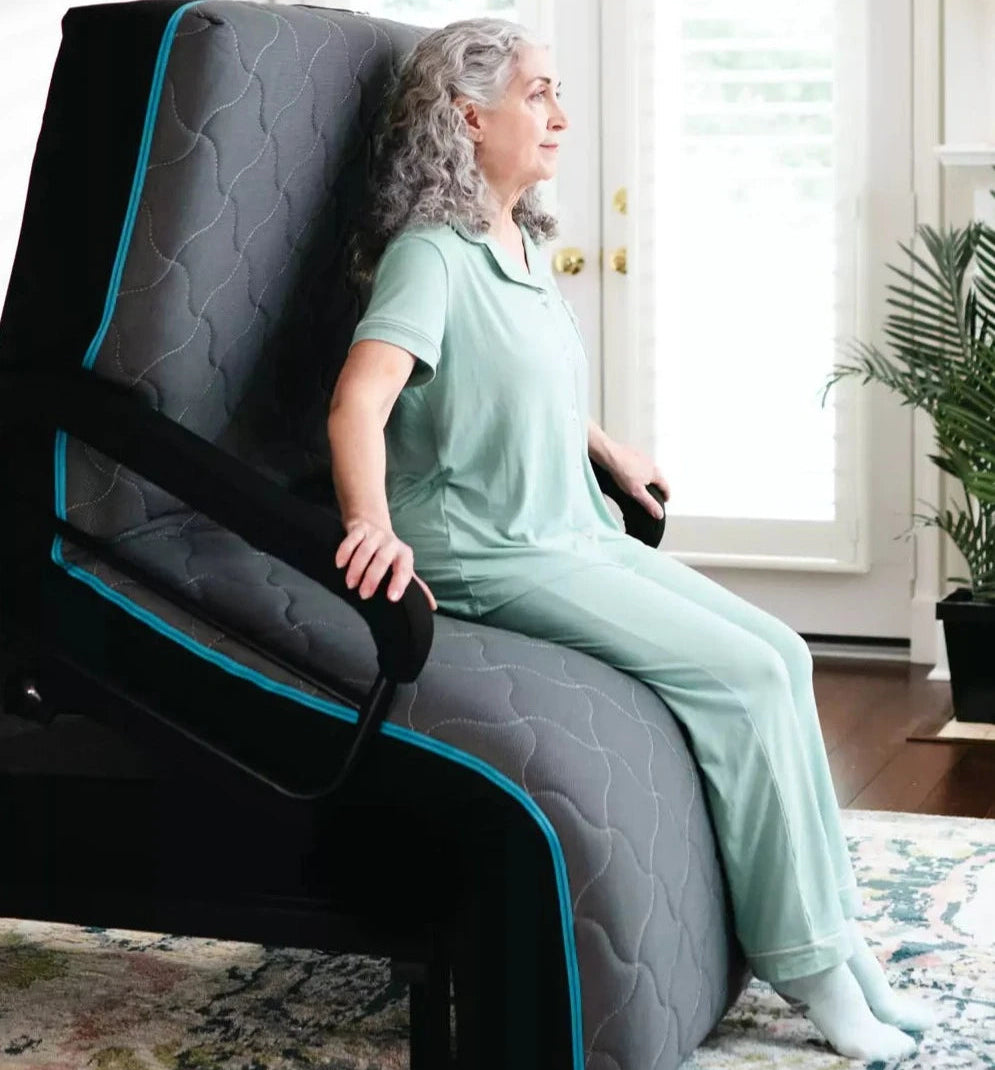
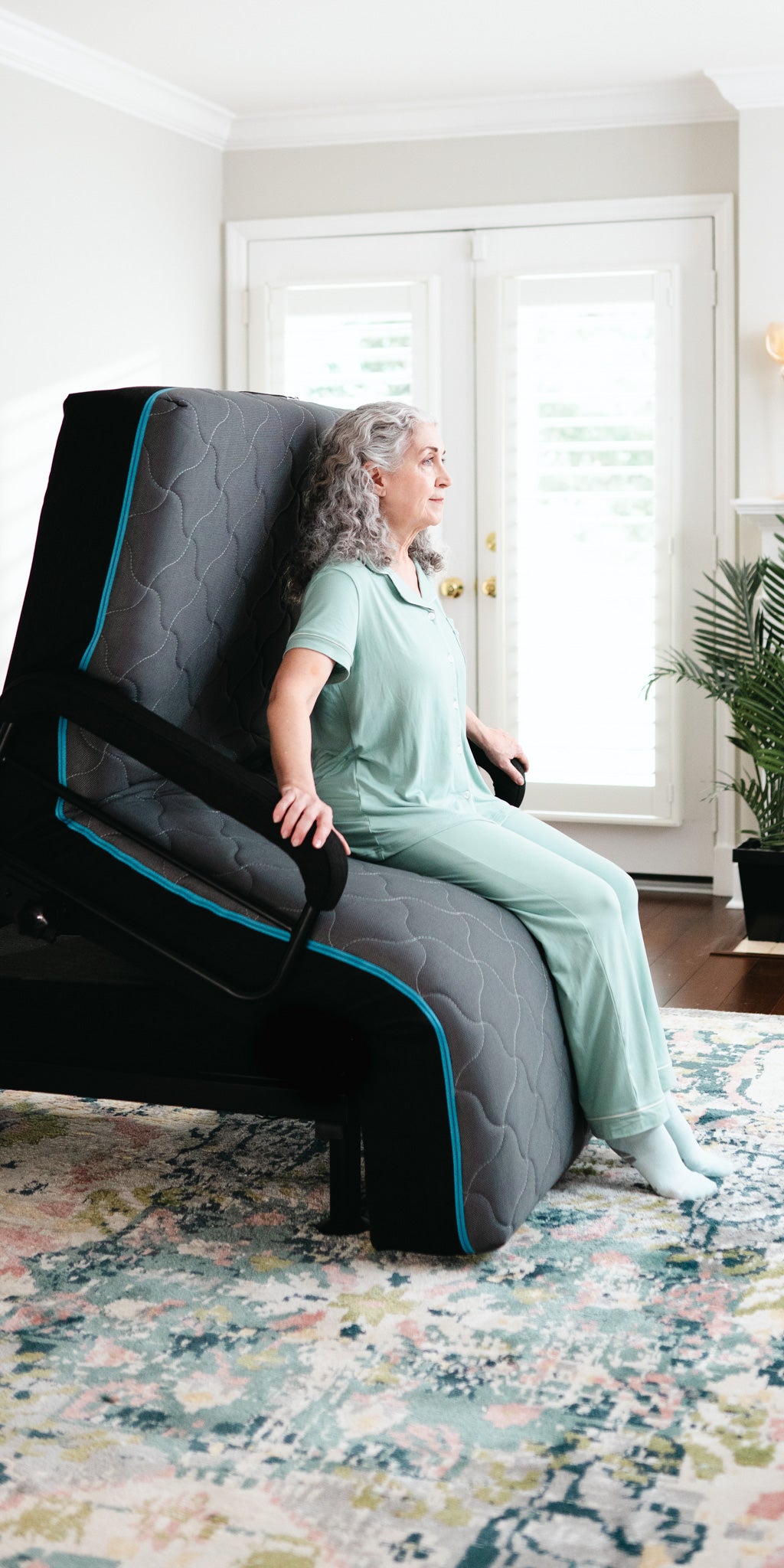
EzLift sells sleep-to-stand and rotating lift beds in its adjustable lift beds collection, including the EzLift Sleep to Stand Bed. We do not claim that doctors recommend EzLift beds, or that any EzLift bed treats reflux, snoring, sleep apnea, swelling or pain. Our view is simple. If your doctor has asked you to keep your head up most of the night, or you struggle to get from lying down to standing, start with that conversation. Then compare beds.
Sources
- Medicare.gov, "Hospital beds": https://www.medicare.gov/coverage/hospital-beds
- CMS, Local Coverage Determination L33820, "Hospital Beds and Accessories": https://www.cms.gov/medicare-coverage-database/view/lcd.aspx?lcdid=33820
- Katz PO, et al. "ACG Clinical Guideline for the Diagnosis and Management of Gastroesophageal Reflux Disease." Am J Gastroenterol. 2022. PMC8754510: https://pmc.ncbi.nlm.nih.gov/articles/PMC8754510/
- NIDDK, "Treatment for GER & GERD": https://www.niddk.nih.gov/health-information/digestive-diseases/acid-reflux-ger-gerd-adults/treatment
- Mayo Clinic, "Snoring: Diagnosis and treatment": https://www.mayoclinic.org/diseases-conditions/snoring/diagnosis-treatment/drc-20377701
- MedlinePlus, "Foot, leg, and ankle swelling": https://medlineplus.gov/ency/article/003104.htm
- FDA, "Hospital Beds": https://www.fda.gov/medical-devices/general-hospital-devices-and-supplies/hospital-beds
Written by the EzLift Team. Last reviewed November 7, 2026. This guide summarizes Medicare, CMS, ACG, NIDDK, Mayo Clinic, MedlinePlus and FDA material. It is not medical advice. EzLift is not a Medicare-enrolled supplier, and EzLift beds are not billed to Medicare, Medicaid or insurance. Follow your clinician's advice.