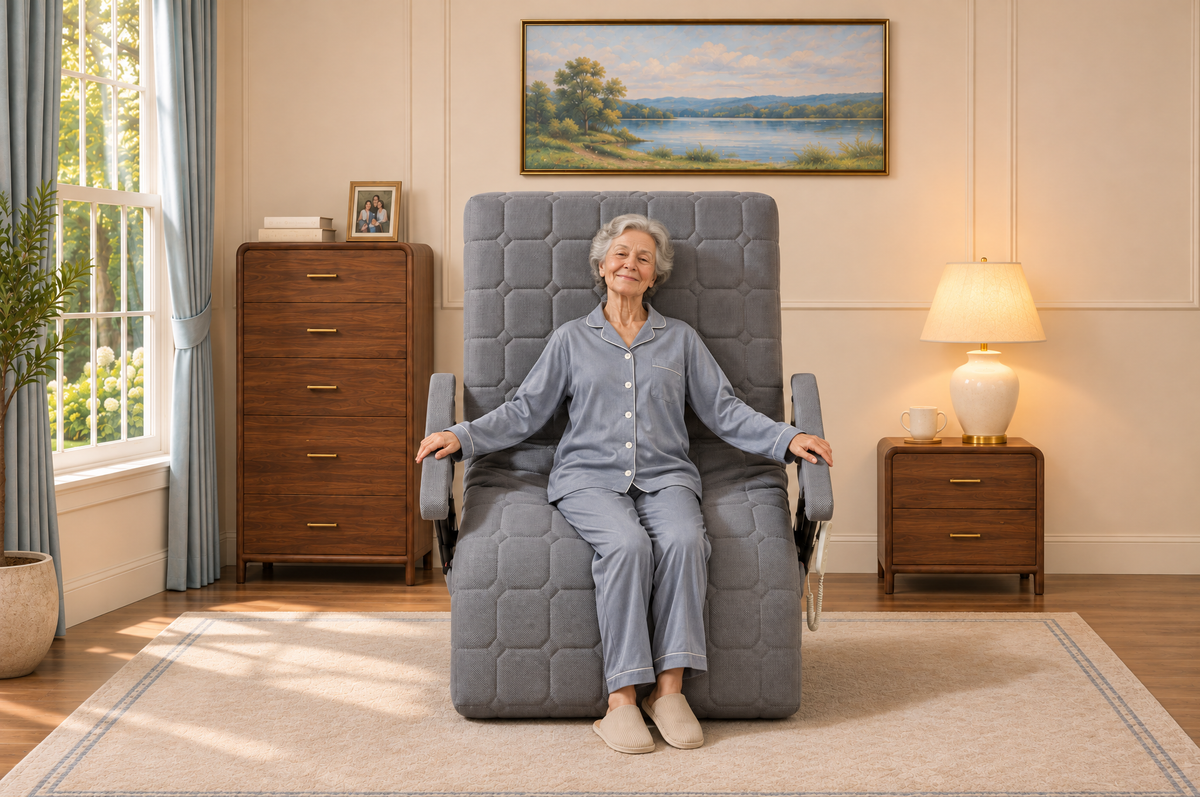
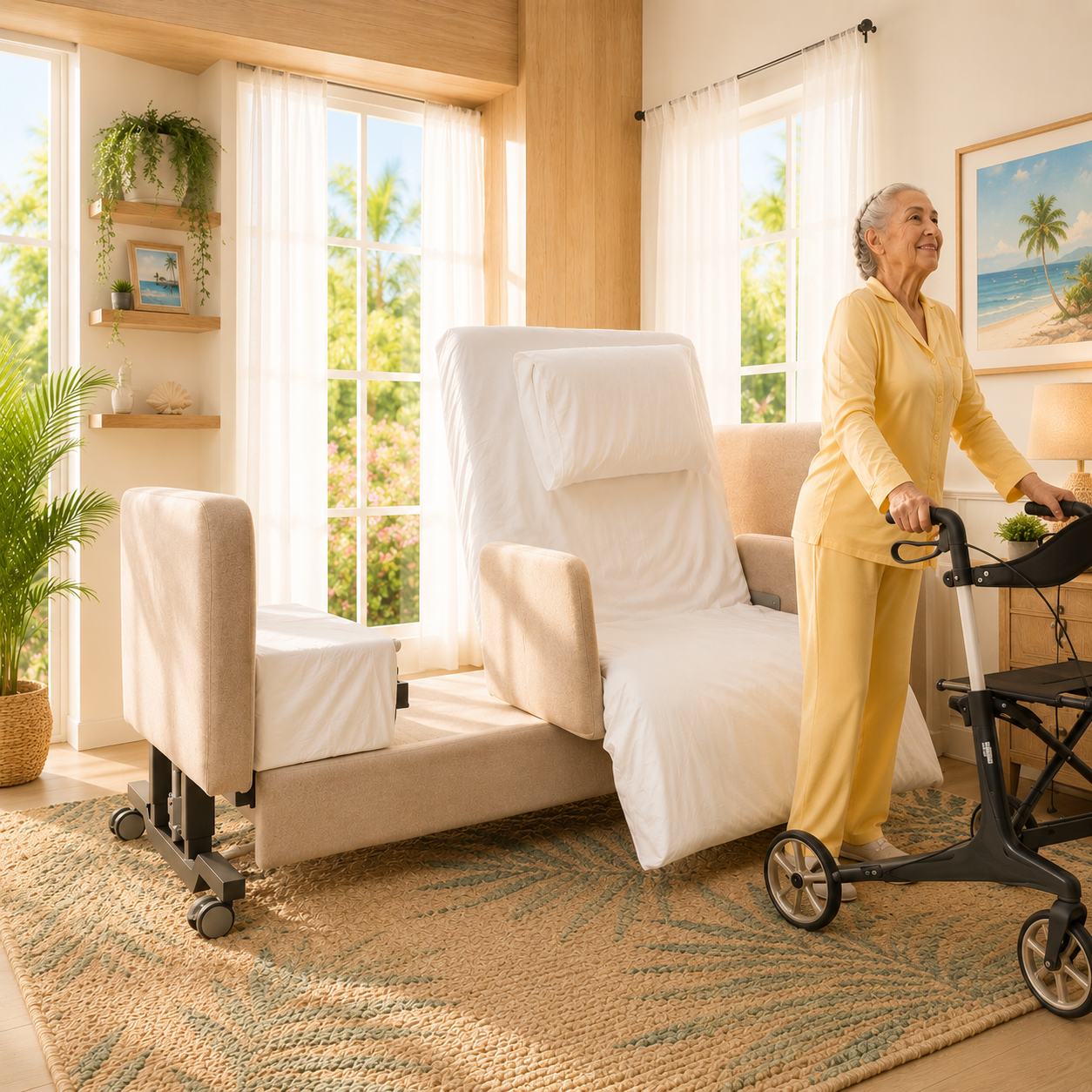

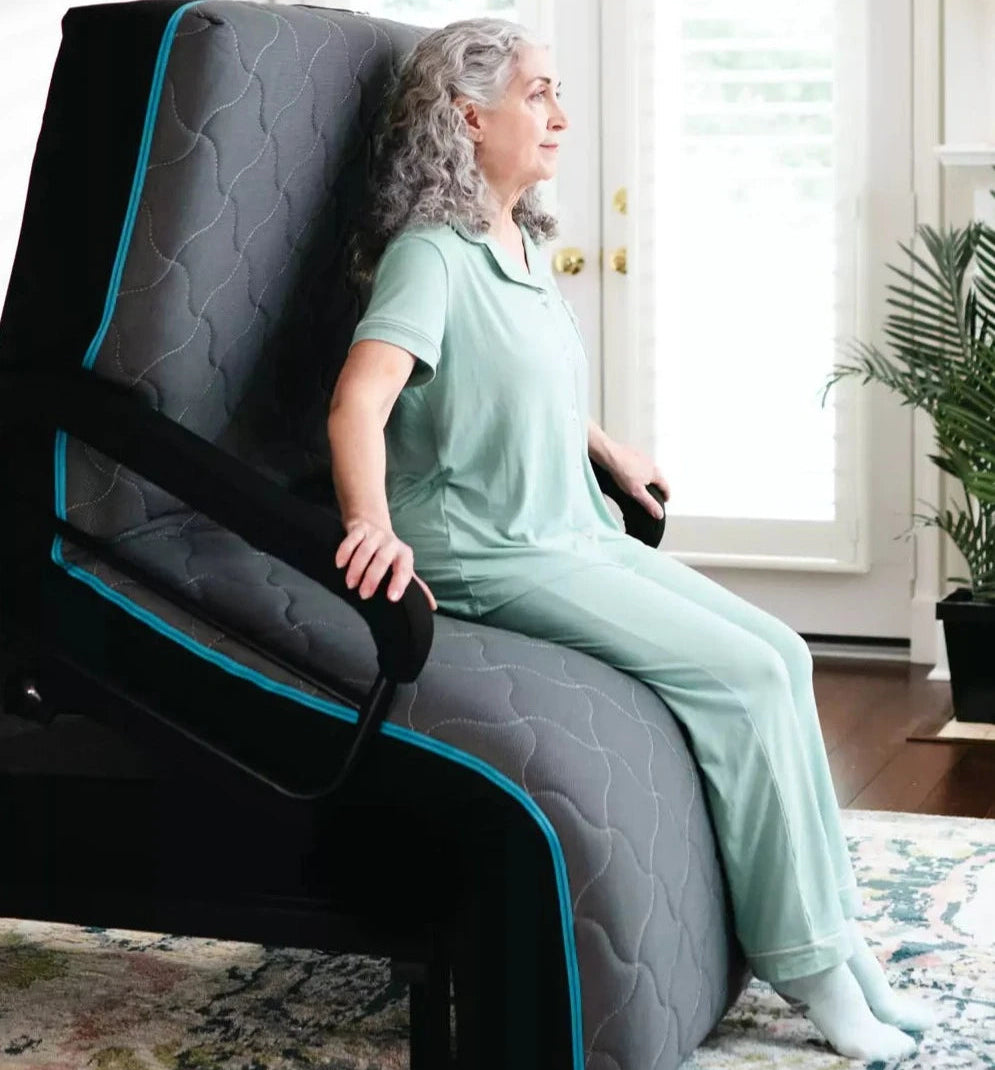
How big is a hospital bed? Most home care hospital beds share one standard size, with longer and wider options for taller or heavier people. This guide gives the dimensions from makers' spec sheets, how they compare with a Twin XL, why the mattress must match the frame and how Medicare groups beds by weight.
Latest News
Caring for someone with dementia changes how you talk, how you plan the day and how you set up the home. This guide gathers the National Institute on Aging's caregiving advice in one place: communication, behavior changes, bathing and dressing, home safety, wandering, outside help and looking after yourself.
Home modifications are the changes that let an older adult keep living safely at home. This guide follows the National Institute on Aging's room-by-room checklist, starts with the fixes NIA puts first, covers the bedroom, and explains where families can look for planning help and money for repairs.
Medicare can help pay for the seat lift mechanism in a lift chair, but only under strict rules. This guide explains what CMS covers, the four medical criteria, why Medicare does not pay for the chair itself, what you pay and how to order through a Medicare-enrolled supplier.
Bed sores are graded by stage, from red unbroken skin to deep wounds that reach muscle or bone. This guide explains each stage using MedlinePlus and the National Pressure Injury Advisory Panel, what care at home looks like, the signs that need a doctor right away and the daily habits that help prevent new sores.
Should you rent or buy a hospital bed for home? With Medicare, the rules mostly decide for you. This guide explains Medicare's 13-month rental rule, who repairs a rented bed, what changes when you own it, what to tell the supplier and how to think about renting or buying on your own.
Raising children while caring for an aging parent is now common, especially for people in their 40s. This guide pulls together the newest Pew Research Center and AARP data on sandwich generation caregivers, what the load does to work and money, what the Family and Medical Leave Act covers, and practical ways to ask for help.
Bed alarms are sold to families as a way to stop falls at night. This guide explains how pressure-pad alarms work, what three hospital trials found, why alarms often fail, what dementia groups suggest, and the steps that matter more than the alarm itself.
Medicare pays for some home health care, but the rules are narrow. This guide explains what Medicare.gov says is covered and not covered, who counts as homebound, the hour limits, what you pay, how to start care and what to do if services end too soon.
Moving someone from bed to a chair is one of the most common caregiving tasks, and one of the riskiest for both people. This guide walks through the MedlinePlus pivot transfer, how to tell when a lift is the safer choice, what gait belts can and cannot do, and how the same steps apply to a bedside commode.
Many older adults say no to assisted living, at least at first. This guide covers why a parent may refuse, how to talk about what they want, the middle steps between staying home and moving, and what the National Institute on Aging and the Family Caregiver Alliance suggest if a move is still the right answer.
When an older adult falls and hits their head, the CDC says they should see their doctor right away to check for a brain injury. This guide covers the 911 danger signs, first aid steps from MedlinePlus, why blood thinners matter, and what to watch for over the next few days.
A nursing home gives 24-hour medical and personal care to people with many conditions. Memory care is built for people living with dementia and often sits inside assisted living or a nursing home. This guide compares the two on who they serve, staffing, regulation, security and payment, using the Alzheimer's Association, the National Institute on Aging, Penn Memory Center and Medicare.gov.
Sundowning is restlessness, agitation or confusion that starts or gets worse as daylight fades. This guide pulls together what the National Institute on Aging, Mayo Clinic and the Alzheimer's Association say about what can trigger it, which daytime habits help, how to set up the bedroom and evening, and when to call the doctor.
Most fall prevention devices are simple: grab bars, handrails, nonskid mats, better lighting, a reach stick and a way to call for help. This guide walks through what the National Institute on Aging says about each one, where to put it, and why the person's health still matters more than any single device.
