




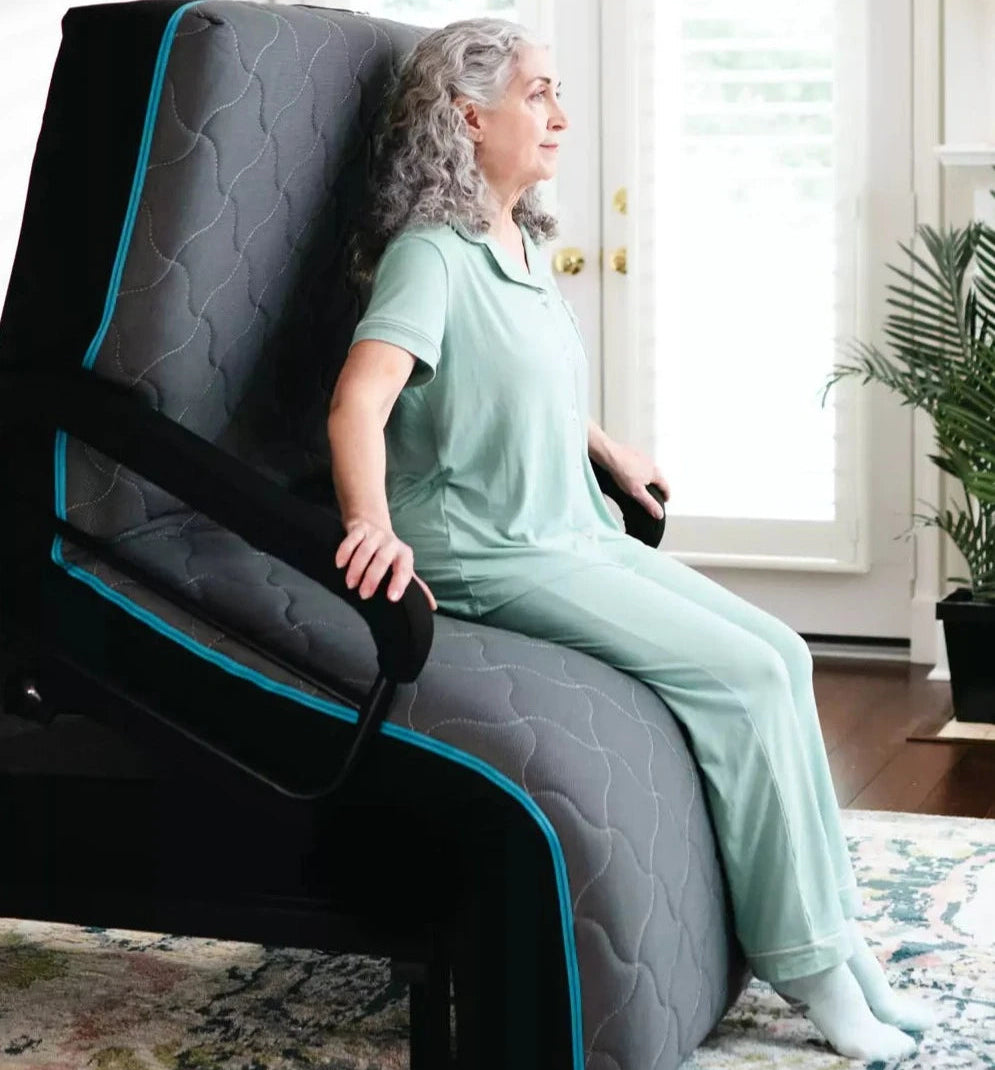
Hospital Bed Positions Explained (Fowler's, Trendelenburg and More)
Quick answer: Hospital bed positions are named for how the bed and the body are set. Supine is flat on the back. Semi-Fowler's raises the head of the bed 30 to 45 degrees, and Fowler's raises it 45 to 90 degrees. Trendelenburg tips the head below the feet for medical situations. Lateral and Sim's are side positions.
Hospital bed positions at a glance
The names below come from two open nursing textbooks used to train nurses: Open RN's Nursing Fundamentals and BCcampus's Clinical Procedures for Safer Patient Care. The angles differ slightly between books, which the table notes.
| Position | How it is set | What nursing texts say it is used for |
|---|---|---|
| Supine | Flat on the back | Flat resting position; pillows may be added for comfort or to prevent foot drop |
| Prone | On the stomach, head turned to the side | May improve oxygen levels in certain conditions |
| Lateral | On one side, top leg over the bottom leg | Relieves pressure on the tailbone (coccyx) |
| Sim's | Halfway between back and stomach, legs bent | Some procedures |
| Semi-Fowler's | Head of bed at 30 to 45 degrees (Open RN); 30 degrees (BCcampus) | Same purposes as Fowler's; better tolerated for long periods |
| Fowler's | Head of bed at 45 to 90 degrees (Open RN); 45 degrees (BCcampus) | Helps the lungs expand; helps prevent aspiration (food or fluid going into the lungs) while eating or tube feeding |
| High Fowler's | Head of bed at 90 degrees | The most upright version of Fowler's |
| Trendelenburg | Head of bed lower than the feet | Severe low blood pressure and medical emergencies |
Fowler's and semi-Fowler's: the head-up positions
Open RN Nursing Fundamentals says that in Fowler's position the head of the bed is set at a 45- to 90-degree angle, and high Fowler's means 90 degrees. The bed can be set to slightly bend the hips so the person does not slide down. The book says Fowler's is used to help the lungs expand and improve oxygen levels, and to prevent aspiration while eating or receiving tube feeding. (Open RN, Nursing Fundamentals, 13.2 Basic Concepts)
Semi-Fowler's sets the head of the bed at 30 to 45 degrees. Open RN says it is used for the same purposes as Fowler's but is generally better tolerated over long periods, because there is less pressure on the tailbone area. BCcampus gives 30 degrees for semi-Fowler's and says it is used for people with heart or breathing conditions and for people with a nasogastric tube. (BCcampus, Clinical Procedures for Safer Patient Care, 3.5 Positioning Patients in Bed)
For people who stay in bed, Open RN tells nurses to raise the head of the bed to 30 to 45 degrees to help the lungs expand, unless that is medically contraindicated. (Open RN, Nursing Fundamentals, 13.3 Applying the Nursing Process) The right angle depends on the person's condition. Ask the care team which one to use.
Trendelenburg: the head-down position
In Trendelenburg position, the head of the bed is placed lower than the feet. Open RN says it may be used in certain situations to promote blood flow back to the head and heart, such as severe low blood pressure and medical emergencies. BCcampus describes the same use.
This is a clinical position. Do not set a home bed head-down unless a nurse or doctor has told you to.
Flat, stomach and side positions
Supine means lying flat on the back. Open RN says pillows or other devices may be used to prevent foot drop, and pillows under the arms can add comfort. Prone means lying on the stomach with the head turned to the side, and the book says it may improve oxygen levels in certain medical disorders.
Lateral means lying on one side with the top leg bent over the bottom leg. Open RN says this helps relieve pressure on the tailbone, and a pillow may go under the top arm. Sim's position is halfway between lying on the back and lying on the stomach, with the legs bent and a pillow under the top leg. Open RN says the arms should rest beside the body, not underneath it.
There is also the tripod position. Open RN describes it as leaning forward while sitting, with elbows on the knees or resting on a table, and says people who are short of breath often take it on their own.
Can you sleep on your side in a hospital bed?
Often, yes. Side-lying is one of the standard positions in both nursing textbooks. Open RN says the position for a given person depends on their medical condition, preferences, and treatment. It also says repositioning a person who is confined to bed helps keep the body aligned and helps prevent pressure injuries, foot drop, and contractures. For bed-bound patients, the book tells nurses to turn and reposition them every two hours.
Any position near the rails needs a gap check. The FDA says that between January 1, 1985 and January 1, 2013 it received 901 reports of patients caught, trapped, entangled, or strangled in hospital beds, including 531 deaths. Most of those patients were frail, elderly or confused. The FDA's entrapment guidance covers beds in hospitals, nursing homes, and private residences. (FDA, Hospital Beds) Check that there are no gaps between the mattress, the rails, and the headboard. Our guide to bed rails for elderly adults covers this in more detail.
Using these positions at home
Open RN says to prevent friction and shear when moving a person up in bed, because both can cause pressure injuries. If the person cannot help, the book says to follow policy on lifting devices and mechanical lifts. At home, ask the care team which device to use. When you finish, Open RN says to lower the bed and make sure the call light is within reach.
Home beds differ in which parts move, so check the manual and ask the care team which positions the person needs. The FDA says facilities building a bed safety program should consult the hospital bed manufacturer. We think it is a good habit at home too.
If you are still choosing a bed, see hospital bed vs adjustable bed vs sleep-to-stand bed and what beds that go up and down are called. EzLift's adjustable lift beds are home beds. They are not a substitute for a hospital bed the care team has ordered.
FAQ
What are the main hospital bed positions?
Nursing textbooks list supine (flat on the back), prone (on the stomach), lateral (on the side), Sim's (halfway between back and stomach), semi-Fowler's, Fowler's, high Fowler's, and Trendelenburg (head lower than the feet). The tripod position is a sitting position for people who are short of breath.
What is the difference between Fowler's and semi-Fowler's position?
The angle. Open RN Nursing Fundamentals puts the head of the bed at 45 to 90 degrees for Fowler's and 30 to 45 degrees for semi-Fowler's. It says semi-Fowler's is generally better tolerated over long periods because there is less pressure on the tailbone area.
What is the Trendelenburg position used for?
In Trendelenburg position, the head of the bed is lower than the feet. Open RN Nursing Fundamentals says it may be used to promote blood return to the head and heart in situations such as severe low blood pressure and medical emergencies. It is a clinical position, so use it only if a clinician tells you to.
Can you sleep on your side in a hospital bed?
Often, yes. The lateral, or side-lying, position is a standard nursing position, and nursing texts say it helps relieve pressure on the tailbone. The right position depends on the person's condition and treatment, so ask the care team. Check that there are no gaps between the mattress and rails where a person could get trapped.
How often should a bed-bound person be repositioned?
Open RN Nursing Fundamentals tells nurses to turn and reposition bed-bound patients every two hours and to raise the head of the bed to 30 to 45 degrees unless that is medically contraindicated. At home, follow the plan from the person's own nurse or doctor.
Sources
- Open Resources for Nursing (Open RN), Nursing Fundamentals 2e, 13.2 Basic Concepts: https://wtcs.pressbooks.pub/nursingfundamentals/chapter/13-2-basic-concepts/
- Open Resources for Nursing (Open RN), Nursing Fundamentals 2e, 13.3 Applying the Nursing Process: https://wtcs.pressbooks.pub/nursingfundamentals/chapter/13-3-applying-the-nursing-process/
- BCcampus, Clinical Procedures for Safer Patient Care, 3.5 Positioning Patients in Bed: https://opentextbc.ca/clinicalskills/chapter/3-4-positioning-a-patient-in-bed/
- U.S. Food and Drug Administration, Hospital Beds: https://www.fda.gov/medical-devices/general-hospital-devices-and-supplies/hospital-beds
Written by the EzLift Team, EzLift's organizational authorship team. Last reviewed November 9, 2026. This guide summarizes open nursing textbooks and an FDA hospital bed safety page. It is not medical advice and it does not replace the care plan from a nurse, doctor, or therapist. Positions such as Trendelenburg are for clinical use. This article does not claim that any bed, including an EzLift bed, treats a condition, prevents pressure injuries, or prevents falls.