




Hospital Bed vs Adjustable Bed vs Sleep-to-Stand Bed: Which One Fits at Home?
Families shopping for help getting in and out of bed often hear three labels used as if they meant the same thing: hospital bed, adjustable bed and sleep-to-stand bed. They don't. Each one is built around a different job, and Medicare treats them very differently.
This guide explains what each type is for, how Medicare's hospital-bed rules draw the line, what FDA says about bed-rail safety, and how to choose with your clinician. It is general information drawn from Medicare.gov, CMS coverage documents, federal device regulations and FDA safety pages, not medical, benefits or legal advice. One disclosure up front: EzLift sells sleep-to-stand beds, and EzLift is not a Medicare-enrolled supplier. EzLift beds are not billed to Medicare, Medicaid or insurance.
The quick comparison
- Hospital bed: A medical device. Federal rules describe powered hospital beds as beds whose height and surface contour can be adjusted, with movable, latchable side rails. Medicare can cover one at home when a prescriber documents medical need and you use an enrolled supplier.
- Adjustable bed: In everyday shopping language, usually an adjustable base under a regular mattress that raises the head, the feet or both. It's mainly about comfortable positioning in bed.
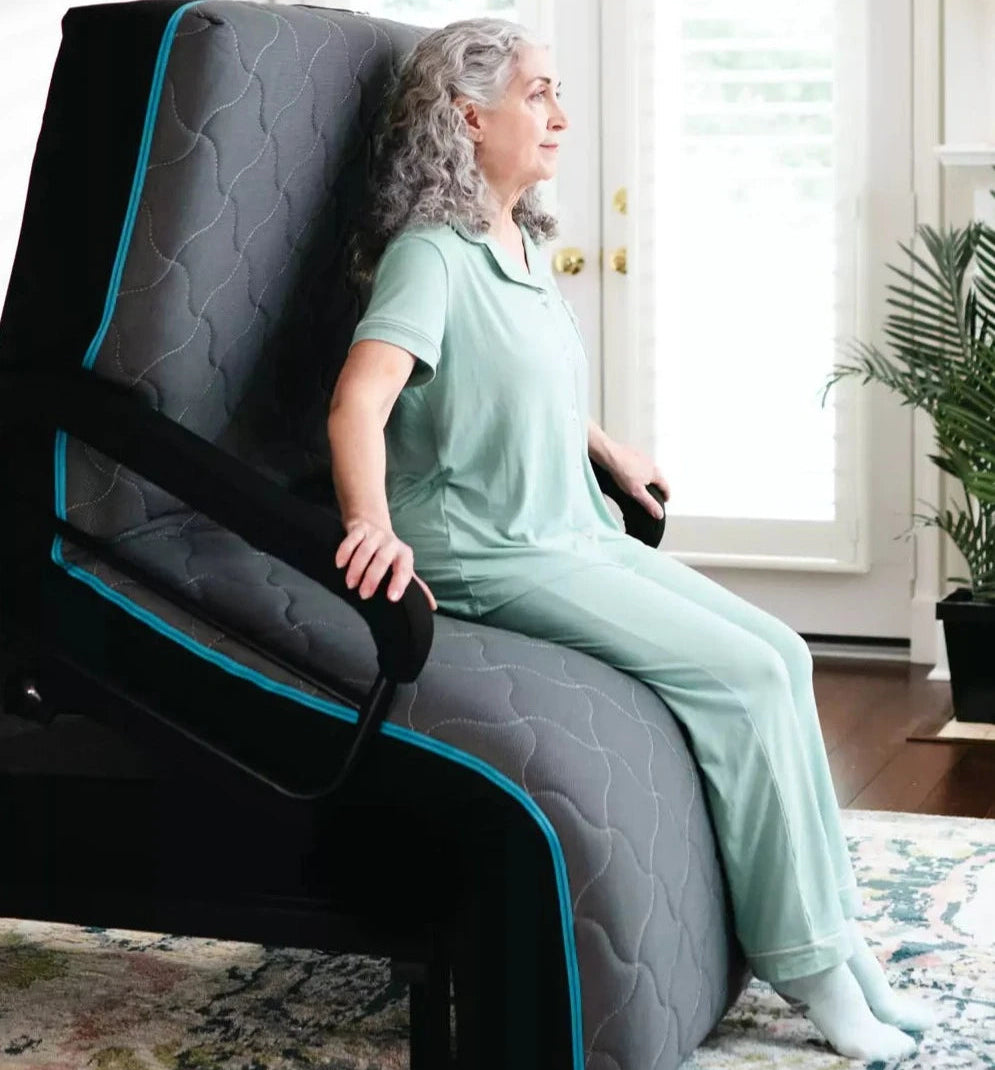
- Sleep-to-stand bed: A powered bed designed to move the user from lying down toward a standing position, to help with getting into and out of bed.
The right choice depends on the main problem you're solving: medical positioning in bed, comfort, or the move out of bed.
What makes a bed a hospital bed
The FDA regulation for an AC-powered adjustable hospital bed describes "a device intended for medical purposes that consists of a bed with a built-in electric motor and remote controls that can be operated by the patient to adjust the height and surface contour of the bed," and says the device "includes movable and latchable side rails." It is a Class II medical device. Read 21 CFR 880.5100. Neighboring sections cover hydraulic and manual hospital beds, which an attendant operates.
Medicare sorts hospital beds into types. Its contractors' coverage policy for hospital beds, Local Coverage Determination L33820, covers four main ones:
- Fixed height: covered when, for example, the person's condition requires body positioning not feasible with an ordinary bed, positioning to relieve pain, the head raised more than 30 degrees most of the time (for congestive heart failure, chronic lung disease or aspiration problems), or traction equipment that only attaches to a hospital bed. The policy notes that raising the head less than 30 degrees usually doesn't require a hospital bed.
- Variable height: covered when the person meets a fixed-height criterion and also needs a different bed height to make transfers to a chair, wheelchair or standing position possible.
- Semi-electric (electric head and foot, manual height): covered when the person meets a fixed-height criterion and needs frequent or immediate changes in body position.
- Total electric (electric height too): not covered. The policy calls the powered height adjustment a convenience feature.
Read LCD L33820, Hospital Beds and Accessories. Medicare's national coverage determination for hospital beds sets the base rule: a prescription and supporting records must show the person's condition requires positioning not feasible in an ordinary bed, or special attachments that can't be used on an ordinary bed. It also lists conditions where a variable height feature may be covered, such as severe arthritis or a fractured hip, when the person needs the bed at a height that lets them put their feet on the floor while sitting on the edge. Read NCD 280.7, Hospital Beds.
On cost, Medicare.gov says Part B covers medically necessary durable medical equipment your provider prescribes for use in your home. You may need to rent or buy, and after the Part B deductible you pay 20% of the Medicare-approved amount if the supplier accepts assignment. Medicare only pays for equipment from suppliers enrolled in Medicare. Read Medicare.gov on hospital beds.
What an adjustable bed is
A consumer adjustable base raises the head, the feet or both, which many people like for reading, watching TV or sleeping propped up. Our earlier article explains how a sleep-to-stand bed is different from an adjustable base.
Medicare doesn't treat comfort beds as hospital beds. Its national Durable Medical Equipment Reference List lists "Beds-Lounges (power or manual)" as denied because they are "not a hospital bed; comfort or convenience item; not primarily medical in nature." The same list denies "Bed Lifters (bed elevators)" as not primarily medical in nature. Read NCD 280.1, the DME Reference List. If a clinician has said the head of the bed should be raised for a medical reason, ask whether that need meets the hospital-bed criteria above before you buy a retail base.
For more on how clinicians think about these beds, see do doctors recommend adjustable beds for seniors?
What a sleep-to-stand bed is
A sleep-to-stand bed works on a different moment of the day: getting out of bed. Rather than only tilting the mattress, it moves the user from lying flat, through sitting up, toward a standing position, so the person isn't starting the stand from a low, flat mattress. Families usually look at one when getting up from bed has become the hard part of the day.
Medicare's hospital-bed policies above don't mention sleep-to-stand beds. And because EzLift is not a Medicare-enrolled supplier, an EzLift bed is not billed to Medicare, Medicaid or insurance. If a payer's help matters to your decision, read our guides on whether Medicare covers beds, whether Medicaid pays for a lift bed, whether the VA pays for a hospital bed or lift bed and using an HSA or FSA for a lift bed.
A sleep-to-stand bed isn't a substitute for a clinician's plan. If the person can't bear weight, has had recent surgery, or needs hands-on help to stand, ask the care team which equipment fits, and whether a hospital bed, a patient lift or another aid is needed.
Bed rails: the safety question that applies to every bed
Side rails come up with every bed type, and FDA's guidance is cautious. In its bed-safety guide, FDA lists possible benefits of rails, such as help turning in bed and a hand-hold for getting in or out, alongside serious risks: entrapment between rails or between the rail and mattress, strangling, suffocation, and worse injuries from falls when people climb over rails. The guide says most patients can be in bed safely without bed rails. It suggests options like a bed that can be lowered close to the floor, mats beside the bed when that doesn't create a greater risk, transfer or mobility aids, and frequent monitoring. Read FDA's guide to bed safety and bed rails.
Add-on rails for ordinary beds are called adult portable bed rails. FDA defines them as rails that attach to and detach from a bed and weren't designed as part of the bed by its manufacturer. Read FDA's adult portable bed rail safety page. FDA says people with confusion, restlessness, poor muscle control, dementia, Parkinson's disease, multiple sclerosis, balance disorders, stroke or low blood pressure are at higher risk of entrapment and injury. It recommends checking whether a rail complies with the ASTM F3186-17 standard, confirming the rail, mattress and bed frame are compatible, and inspecting regularly for gaps. Rails shouldn't stand in for proper monitoring. Read FDA's recommendations for consumers and caregivers.
Talk with the care team before adding rails to any bed.
Which one fits at home? Five questions
- What's the main problem? Medical positioning in bed points toward a hospital bed. Comfort points toward an adjustable base. Getting out of bed points toward a sleep-to-stand bed or another transfer aid.
- Does the person meet Medicare's hospital-bed criteria? Ask the prescriber directly, using the criteria in LCD L33820. If yes, the bed has to come from an enrolled supplier for Medicare to pay.
- Who helps at night? A caregiver who assists with transfers, and the person's own memory and judgment, both affect which bed and which safety setup make sense.
- What did the clinician or therapist say about transfers? Ask what bed height and type they recommend for this person, and whether a demonstration would help before you buy.
- What fits the room? Measure the space, the doorway and the side of the bed the person gets out on.
For more ideas, see devices that help the elderly get out of bed and creating a safe bedroom for seniors.
Questions to bring to your clinician
- Does this person's condition need positioning that an ordinary bed can't provide, or special attachments?
- Is the bigger problem positioning in bed, or getting in and out of it?
- Would a variable height or semi-electric hospital bed be appropriate, and would you document why?
- Are bed rails a good idea here, or would an alternative be safer?
- Does this person need other equipment, such as a patient lift, a trapeze or a walker, for transfers?
- Is there a bed height you'd recommend for safe sitting and standing?
Related reading
Still comparing? Read how to choose a bed for help getting out of bed. To compare models and current pricing, browse the EZLift Bed, EzLift Deluxe and Elevra Rotating Bed product pages.
Sources
- Medicare.gov: Hospital beds
- CMS Medicare Coverage Database: LCD L33820, Hospital Beds and Accessories
- CMS Medicare Coverage Database: NCD 280.7, Hospital Beds
- CMS Medicare Coverage Database: NCD 280.1, Durable Medical Equipment Reference List
- eCFR: 21 CFR 880.5100, AC-powered adjustable hospital bed
- FDA: A Guide to Bed Safety, Bed Rails in Hospitals, Nursing Homes and Home Health Care
- FDA: Adult Portable Bed Rail Safety
- FDA: Recommendations for Consumers and Caregivers about Adult Portable Bed Rails
Written by the EzLift Team, EzLift's organizational authorship team. Sources checked October 19, 2026, including Medicare.gov, CMS NCDs 280.1 and 280.7, LCD L33820, the current text of 21 CFR 880.5100 and FDA's bed-rail safety pages. This guide offers general information; it is not medical, benefits or legal advice and has not received clinical or benefits-professional review. Follow your clinician's advice for the person who will use the bed. Medicare and other payers decide coverage based on their own rules and your records.