


Why Do Older Adults Fall Out of Bed, and How to Prevent It
A fall at night can start with rolling too close to the edge, sitting up and feeling dizzy, or hurrying to the bathroom in the dark. For families, the question usually comes right after a scare. Why did Mom fall out of bed, and how do we keep it from happening again? This guide walks through the common reasons older adults fall from or around the bed, what federal health agencies suggest doing about them, and the questions to bring to a clinician.
It is general information drawn from the National Institute on Aging (NIA), the Centers for Disease Control and Prevention (CDC), the U.S. Food and Drug Administration (FDA) and MedlinePlus. It is not medical advice. A fall, even one without an obvious injury, is something to tell the person's doctor about.
How common are falls in older adults?
Falls are common, and they're often kept quiet. CDC says more than one out of four older people falls each year, but less than half tell their doctor. CDC also says falling once doubles your chances of falling again. See CDC's facts about older adult falls.
The consequences can be serious. According to CDC, there are about 4.5 million emergency department visits each year due to falls among older people, and falls are the most common cause of traumatic brain injuries for older adults. NIA notes that the risk of falling, and of fall-related problems, rises with age, but that many falls can be prevented. Read NIA's guide to falls and fractures in older adults.
Why older adults fall out of bed: the common causes
CDC says most falls are caused by a combination of risk factors, and the more risk factors a person has, the greater their chances of falling. At night, several of them tend to stack up at once: a person is drowsy, the room is dark, and they may be getting up in a hurry. Here are the causes worth looking at.
1. Getting up quickly and feeling dizzy
NIA lists blood pressure that drops too much when you get up from lying down or sitting, called postural hypotension, as a risk factor for falling. NIA's advice is to stand up slowly, because getting up too quickly can cause your blood pressure to drop and make you feel wobbly. NIA also suggests having blood pressure checked both lying down and standing.
2. Nighttime trips to the bathroom
NIA says conditions that cause rushed movement to the bathroom, such as incontinence, may increase the chance of falling. Waking up at night to urinate (called nocturia) has many possible causes. MedlinePlus lists drinking a lot of fluid, caffeine or alcohol in the evening, urinary tract infection, an enlarged prostate, diabetes, heart failure and certain medicines, including water pills (diuretics), among them. It also notes that waking often to urinate can be linked to obstructive sleep apnea and other sleep disorders. Read MedlinePlus on urinating more at night.
3. Medications that cause drowsiness or dizziness
NIA says some medications raise fall risk because of side effects such as dizziness or confusion, and that the more medications you take, the more likely you are to fall. CDC names tranquilizers, sedatives and antidepressants as examples and adds that even some over-the-counter medicines can affect balance and how steady you are on your feet.
4. Dementia, confusion and sundowning
NIA says older adults with mild cognitive impairment or certain types of dementia are at higher risk of falling. Alzheimer's disease often changes sleep: a person may sleep a lot or not enough, wake up many times during the night, or become restless, agitated and confused as daylight fades, which is known as sundowning. NIA's sleep guidance adds that Alzheimer's and related dementias can cause wandering or yelling at night, and that poor sleep can make dementia symptoms worse. Read NIA on managing sleep problems in Alzheimer's disease.
5. Sleep disorders and movement during sleep
NIA notes that sleep tends to get shorter and lighter with age and that people may wake up more often during the night. Some sleep disorders involve movement. In REM sleep behavior disorder, NIA explains, people can move their muscles and act out their dreams, which can be dangerous, and treatment includes a safe environment to prevent injuries while sleeping. NIA also lists an increased risk of falls or accidents among the effects of poor-quality sleep, and its falls guidance says that if you are tired, you are more likely to fall. Read NIA on sleep and older adults.
6. Weakness, balance problems, vision and the room itself
CDC's list of risk factors that can often be changed includes lower body weakness, difficulties with walking and balance, vision problems, foot pain or poor footwear, and home hazards such as throw rugs or clutter. NIA adds age-related loss of muscle mass (sarcopenia) and conditions such as diabetes, heart disease, and problems with the thyroid, nerves, feet or blood vessels, which can affect balance.
How to lower the risk of falling out of bed
No single step removes every risk, which is why NIA and CDC both point to a mix of health checks, habits and home changes. Use these as a starting checklist and adapt it with the person's care team.
Set up the bedroom for nighttime
From NIA's room-by-room and sleep safety guidance:
- Put night lights and light switches close to the bed, and have a lamp that's easy to reach and turn on.
- Use a night light in the hallway or bathroom, or leave a bathroom light on at night.
- Keep a flashlight by the bed in case the power goes out.
- Keep a landline or well-charged phone, with emergency numbers, near the bed.
- Remove area rugs, cords and other things you could trip over if you wake up during the night.
- Arrange furniture so it isn't in the way when you walk.
See NIA's guide to preventing falls at home, room by room. For more bedroom ideas, see our guide to creating a safe bedroom for seniors.
Build a slower, safer way to get up
- Stand up slowly. NIA says getting up too quickly can cause blood pressure to drop and make you feel wobbly.
- Wear nonskid, rubber-soled, low-heeled shoes, and don't walk on floors in socks or smooth-soled slippers (NIA).
- If a doctor has recommended a cane or walker, use it. NIA says to make sure it's the right size for you, and a physical or occupational therapist can help decide which devices might help and teach you to use them safely.
- Ask the doctor whether evening fluids, caffeine or the timing of medicines could be adding nighttime bathroom trips. MedlinePlus notes that if nighttime urination is due to diuretics, a provider may suggest taking the medicine earlier in the day.
Support better sleep
NIA suggests a regular sleep schedule, a relaxing bedtime routine, avoiding late-afternoon naps, avoiding caffeine late in the day and alcohol, and avoiding large amounts of liquid late in the day. For a person living with dementia, NIA adds daily exercise, activities that use more energy early in the day, a calm evening with low lights and less noise, and night lights in the bedroom, hall and bathroom.
Think carefully about bed rails
Bed rails can look like the obvious fix for rolling out of bed, but FDA says some people are at high risk for entrapment, falls or other injury from adult portable bed rails, including people with confusion, restlessness, lack of muscle control, Alzheimer's or dementia, Parkinson's disease, balance disorders, stroke or low blood pressure. FDA also says rails should be selected and placed to discourage climbing over them, which could lead to falls, and should not be used as a substitute for proper monitoring. Read FDA's recommendations for consumers and caregivers.
When bed rails aren't appropriate, FDA suggests alternatives such as roll guards, foam bumpers, lowering the bed as near to the floor as possible, concave mattresses that can help reduce rolling off the bed, or a bed trapeze to help with repositioning and getting in and out of bed. Our article on bed rail safety for elderly adults covers entrapment risks and the federal safety standard in detail.
Treat the health causes, too
NIA recommends staying physically active, trying balance and strength exercises, having eyes and hearing checked, and asking a doctor or pharmacist about medicines that make you sleepy or dizzy. CDC's STEADI program offers brochures for older adults and family caregivers, including a fall-risk checklist. Browse CDC's STEADI fall prevention resources. If someone has fallen, NIA notes that a doctor might suggest an occupational therapist, physical therapist or nurse visit the home to assess its safety.
What to do after a fall from bed
NIA's advice if you fall: breathe and stay still for a few moments, decide whether you're hurt, and don't get up too quickly or in the wrong way, which could make an injury worse. If you think you can get up safely, roll onto your side, rest, then slowly get onto your hands and knees and crawl to a sturdy chair. If you're hurt or can't get up, ask for help or call 911. CDC says an older person who falls and hits their head should see their doctor right away to make sure they don't have a brain injury.
Afterward, NIA says to always tell the doctor about a fall, even if it didn't hurt. A fall can point to a new medical problem, or to issues with medications or eyesight that can be corrected. If getting out of bed has become hard in general, our guide to what to do if you physically can't get out of bed may help.
Frequently asked questions
Why do older adults fall out of bed at night?
Usually more than one thing is going on. Common contributors named by NIA, CDC and MedlinePlus include dizziness from getting up too quickly, rushed trips to the bathroom, medicines that cause drowsiness or dizziness, dementia and sleep problems, muscle weakness, poor lighting and trip hazards.
Why do people with dementia fall out of bed?
NIA says people with mild cognitive impairment or certain types of dementia are at higher risk of falling, and that Alzheimer's can cause frequent waking, nighttime restlessness and confusion as daylight fades (sundowning). FDA also lists dementia among the conditions that raise the risk of injury from bed rails, so talk with the care team before adding them.
Are bed rails the best way to stop someone from falling out of bed?
Not always. FDA says some people are at high risk of entrapment, falls or other injury from bed rails, and when rails aren't appropriate it suggests alternatives such as a lower bed, roll guards, foam bumpers or a concave mattress. The right choice depends on the person, so make it with their clinician.
Should we call the doctor if there was no injury?
Yes. NIA says to tell the doctor about any fall since the last check-up, even if there was no pain, and CDC says anyone who hits their head should see a doctor right away.
Does a special bed prevent falls?
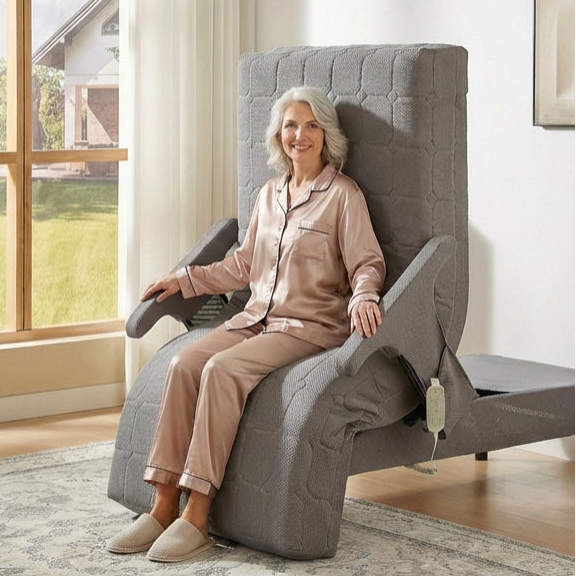
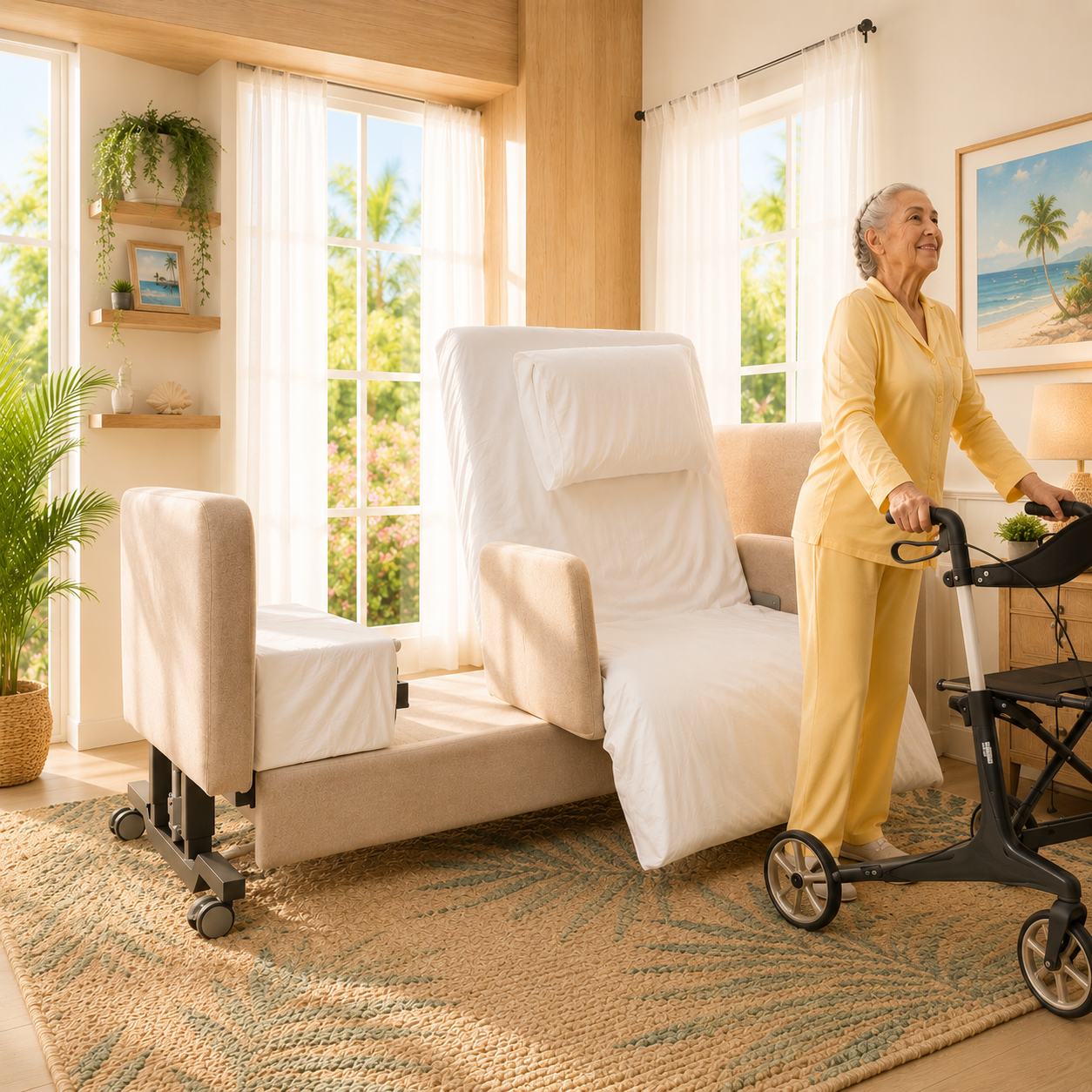
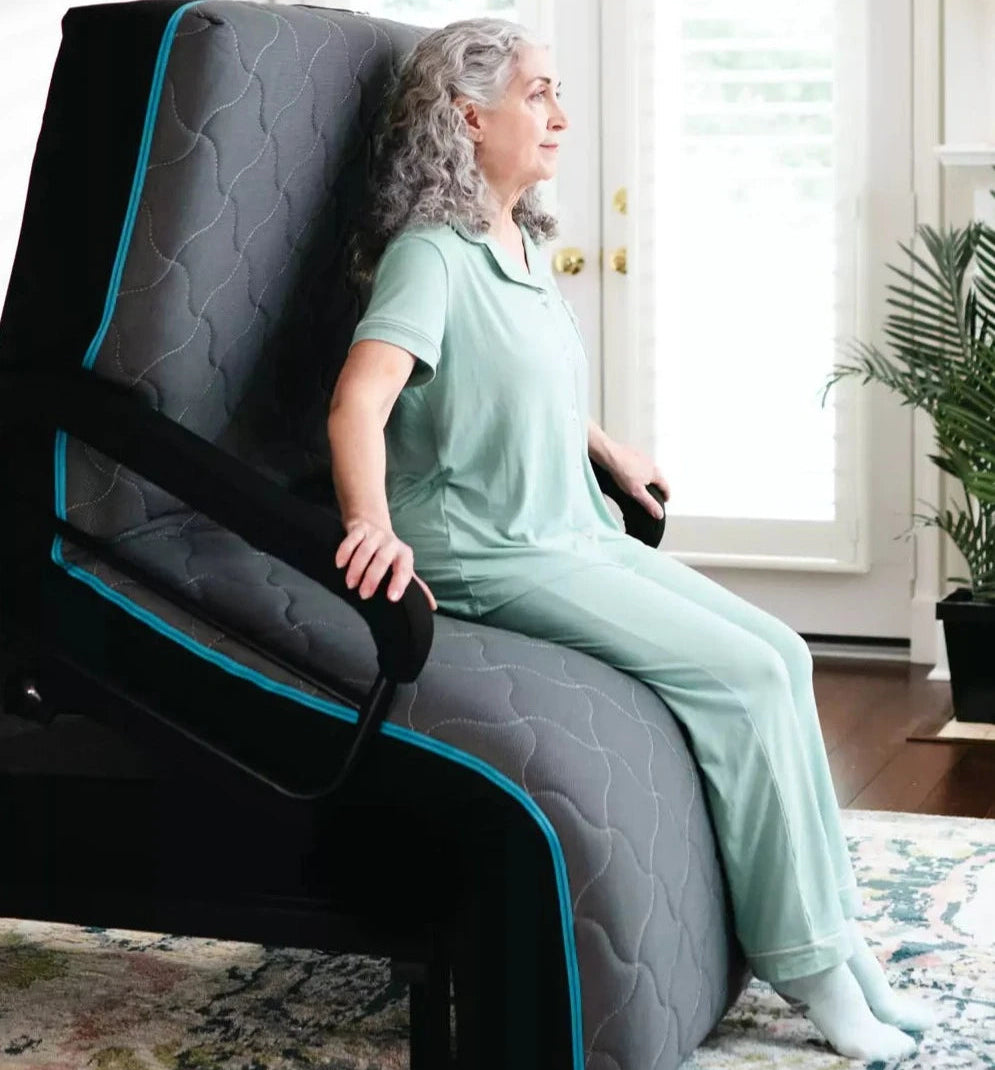
No bed can promise that. Falls usually have several causes, so the steps above, guided by the person's clinician, matter most. If getting in and out of bed is the main struggle, our guides to devices that help the elderly get out of bed and hospital beds vs adjustable beds vs sleep-to-stand beds explain the options. To compare sleep-to-stand bed models and current pricing, browse the EZLift Bed, EzLift Deluxe and Elevra Rotating Bed product pages.
Talk with your clinician
Every person's fall risk is different. Before changing medicines, adding or removing bed rails, or starting an exercise program, talk with the person's doctor, nurse, pharmacist, or physical or occupational therapist. They can look at the whole picture and suggest what fits.
Sources
- National Institute on Aging. Falls and Fractures in Older Adults: Causes and Prevention (content reviewed September 12, 2022).
- National Institute on Aging. Preventing Falls at Home: Room by Room (content reviewed September 12, 2022).
- National Institute on Aging. Sleep and Older Adults (content reviewed February 6, 2025).
- National Institute on Aging. Managing Sleep Problems in Alzheimer's Disease (content reviewed July 11, 2024).
- Centers for Disease Control and Prevention. Facts About Older Adult Falls (reviewed September 8, 2026).
- Centers for Disease Control and Prevention. STEADI: Older Adult Fall Prevention.
- U.S. Food and Drug Administration. Recommendations for Consumers and Caregivers about Adult Portable Bed Rails (content current as of February 27, 2023).
- MedlinePlus Medical Encyclopedia. Urinating more at night.
Written by the EzLift Team, EzLift's organizational authorship team. Sources checked October 22, 2026. This guide offers general information; it is not medical advice. Talk with the person's clinician about fall risk and any changes to their care, bed or bedroom.