




Power Outage Plan for Seniors Who Rely on Powered Beds and Medical Equipment
If you or someone you care for uses a powered lift bed, adjustable bed, or home medical equipment, start your power outage plan with the equipment you depend on. Ready.gov recommends listing the things you need that use electricity and talking with your medical provider about a plan for powered medical devices and refrigerated medicines. Use the steps below to organize that conversation and put your answers on paper. Ready.gov: power outages.
If you depend on your medical device to keep you alive, the FDA says to seek emergency services immediately. If possible, notify your local public health authority to request evacuation before adverse weather. FDA medical device safety tips.
Start with your needs and the people who can help
Ready.gov's approach for older adults is to assess your needs, create a plan, and engage your support network. Include family, friends, caregivers, or neighbors in planning, and practice the plan together. Think about the help you would need both to stay home and to leave. Ready.gov: older adults; Red Cross support planning.
HHS lists older adults and people with limited access to transportation among examples of at-risk populations. Its emPOWER Map supports community emergency planning using data about people who rely on electricity-dependent equipment, including electric bed equipment. For your own plan, use Ready.gov's advice to identify the assistance and transportation you need. HHS access and functional needs; HHS emPOWER Map; Ready.gov planning guidance.
Make a separate plan for each device
The FDA's power-outage booklet recommends completing a booklet for each medical device with help from a healthcare professional. Record the device and model, manufacturer and supplier phone numbers, healthcare contacts, current medicines, and where medicines are kept. Update the information when treatment, doctors, caregivers, or personal contacts change. FDA power-outage booklet.
Keep device instructions and manuals in a personal emergency file, along with medical records, your treatment plan, pharmacy details, and contact information for family and medical transportation. Include where to go during an emergency and where to obtain medical supplies. FDA emergency-file checklist.
Questions for the manufacturer or medical provider
Use these questions from the FDA booklet for each device. Write the answers beside the device name so you have a plan for that specific piece of equipment. FDA device-planning questions.
- Does the device have a backup system, where is it, and how long will it operate?
- Can it use another power source? Can it use batteries, and who can change them?
- Could a short interruption cause harm? What should happen if power fails during treatment?
- Could a surge stop the device from working, and what surge protector is needed?
- Do the device, supplies, or medicines need a certain temperature or a cooler?
Ask what your powered bed does without electricity
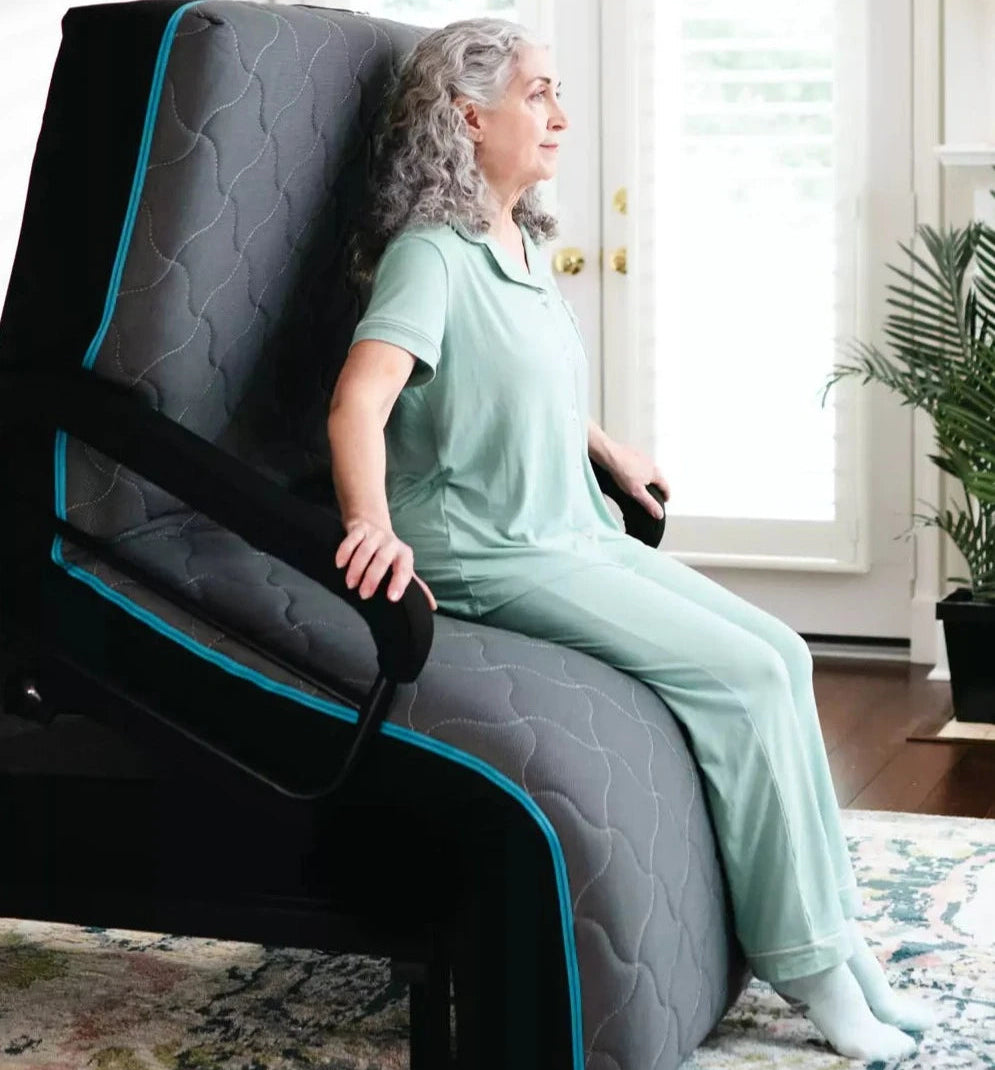
For a powered lift bed or adjustable bed, check the bed's manual or contact the maker about what your bed does without power. Ask about its backup options and instructions. The FDA advises reading user instructions or contacting the distributor or manufacturer to learn whether a device can be used with batteries or a generator. Its booklet also warns against taking an action with a device that you are unsure about. FDA power-outage guidance; FDA booklet.
EzLift sells a battery backup for the EzLift Deluxe.
For related reading while reviewing your bedroom equipment, see our guide to hospital beds, adjustable beds, and sleep-to-stand beds.
Plan your contacts, supplies, and place to go
Keep a paper contact list and identify people who can help you stay home or evacuate. Ready.gov recommends that at least one person in your support network have an extra house key, know where emergency supplies are kept, and know how to use lifesaving equipment or give medicine. Red Cross outage planning; Ready.gov support-network guidance.
Let your electric company and fire department know that you have a medical device requiring power. Discuss how and when to evacuate with your care team, arrange transportation if you need help, and plan to take assistive devices with you. The Red Cross recommends planning evacuation around needs such as powered medical equipment. FDA notification guidance; Ready.gov evacuation planning; Red Cross evacuation guidance.
Include medicines, medical supplies, batteries, and chargers in your emergency kit. Have a flashlight for each household member. Ask your medical provider how long refrigerated medicines can stay at higher temperatures and what to do about medicines that are critical for life. Ready.gov emergency supplies; Ready.gov medical-needs guidance.
Include communication in the plan, too. Check whether your home phone works during an outage and how long its battery backup lasts. The Red Cross recommends communication devices that work without home power, such as a crank or battery radio, plus chargers and batteries for cell phones. Sign up for local alerts and decide with your family how to reconnect if you become separated. Ready.gov communication planning; Red Cross communication guidance.
As you review the room, you can also read our safe bedroom guide for seniors and article on why older adults fall out of bed.
When the power goes out
Contact your support network, share whether you need help, and monitor local alerts. Use flashlights instead of candles. The Red Cross advises evacuating if your home becomes too hot or too cold, or if you have medical devices that need power. Red Cross actions during an outage.
Follow the FDA's generator safety instructions
The FDA gives these instructions to prevent carbon monoxide poisoning when generators are used during an outage. FDA carbon monoxide warning:
- Never run a generator, pressure washer, or any gasoline-powered engine inside a basement, garage, or other enclosed structure, even if the doors or windows are open, unless the equipment is professionally installed and vented.
- Never run a motor vehicle, generator, pressure washer, or any gasoline-powered engine outside an open window or door where exhaust can vent into an enclosed area.
Ready.gov also recommends carbon monoxide detectors with battery backup in central locations on every level of your home. If oxygen is in use, the FDA says to use battery-powered flashlights or lanterns instead of gas lights or torches to minimize fire risk. Ready.gov alarm guidance; FDA oxygen safety guidance.
Check equipment when power returns
Check your medical device's settings after power returns because devices may reset to a default mode when power is interrupted. Do not plug in a cord if it or the device is wet. The FDA booklet says not to use a device with signs of damage, including damaged power cords, or incorrect settings. FDA restoration guidance; FDA device checks.
Check medical supplies as well. The FDA booklet says not to use supplies with torn or damaged packaging, or supplies that are wet, dry, very hot, or very cold when they should not be. If your device appears damaged or you need a backup device, contact the distributor or manufacturer. FDA supply checks; FDA damaged-device guidance.
Printable power outage checklist for seniors and caregivers
Print this section and fill in the blanks together. The checklist draws on the FDA booklet, Ready.gov's older-adult plan, and the Red Cross support-network guidance.
- ☐ Device and model: __________. Maker or supplier phone: __________.
- ☐ Backup options reviewed with maker or provider; instructions kept here: __________.
- ☐ Medical provider phone: __________. Pharmacy phone: __________.
- ☐ Paper support list ready. Person with extra key: __________.
- ☐ Medicines, medical supplies, batteries, and chargers included in emergency kit.
- ☐ Working flashlight and extra batteries located here: __________.
- ☐ Evacuation destination: __________. Transportation contact: __________.
- ☐ Plan for taking assistive devices reviewed; emergency file located here: __________.
- ☐ Plan practiced with support network; device information updated for changes.
Frequently asked questions
Will my adjustable bed work during a power outage?
Check your bed's manual or contact the maker about what it does without power. Ask which backup options it supports. The FDA recommends checking device instructions or asking the manufacturer about batteries or generator use. FDA device guidance.
Who should know that I use powered medical equipment?
The FDA advises notifying your electric company and fire department. Include your support network in planning and practice the plan with them, as Ready.gov recommends. FDA notification advice; Ready.gov support planning.
What if my regular treatment location is affected?
If you receive routine treatment at a clinic or hospital, ask about its emergency plans and work with the facility to identify backup service providers. Ready.gov treatment planning.
Sources
- Ready.gov: Older Adults and Power Outages.
- HHS: emPOWER Map and Access and Functional Needs of At-Risk Individuals.
- FDA: Medical Devices and Natural Disasters and Home Use Devices: Power-Outage Booklet (PDF).
- American Red Cross: Power Outage Safety.
This article is general information, not medical advice. Talk to your doctor or care team about your specific equipment and needs.