




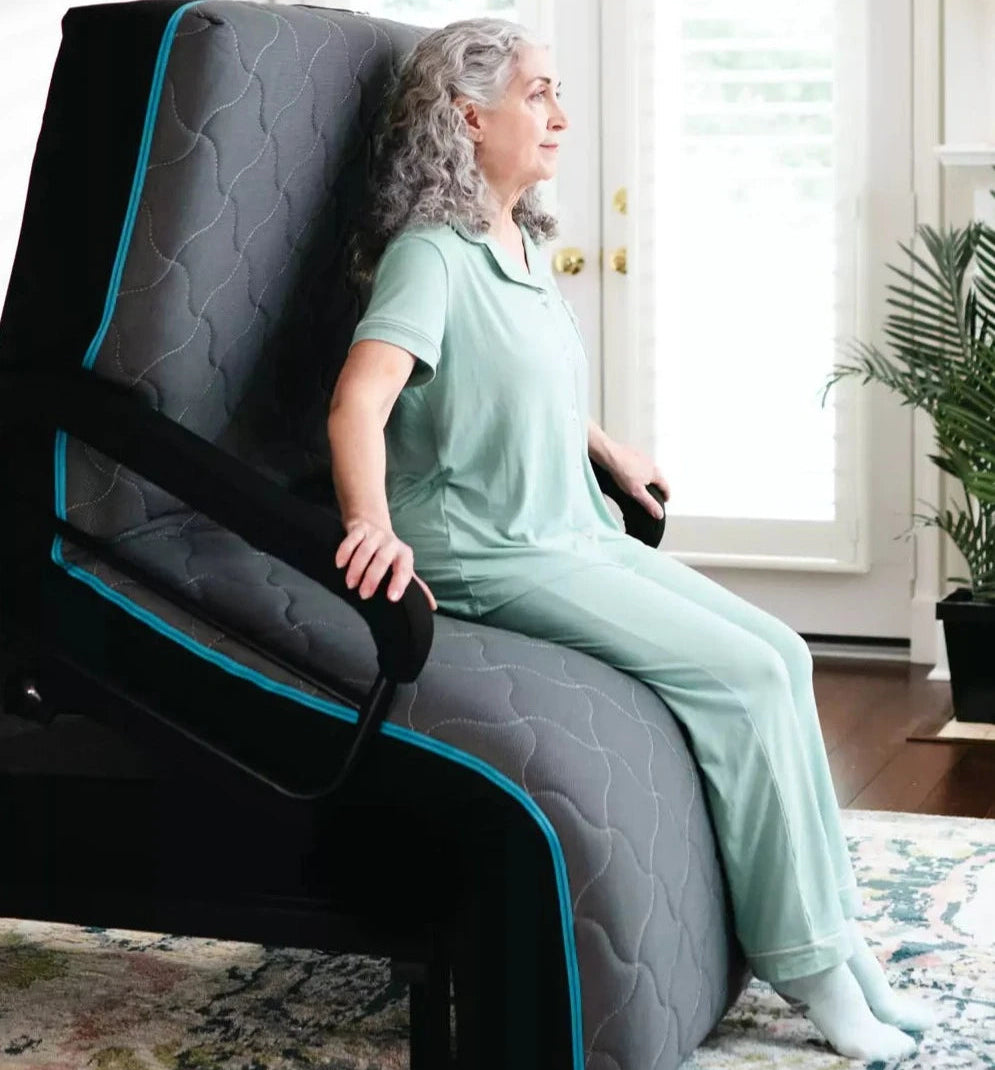

Adjustable Beds for Seniors: What to Look For
Quick answer: When you shop for an adjustable bed for seniors, start with whether the bed helps the person get in and out safely. A standard adjustable bed frame raises the head and feet. It does not lift the person toward standing. For many older adults, the features that matter most are a comfortable sitting and standing height, an easy remote, steady support to hold on to, and a setup that avoids bed-rail gaps.
What does an adjustable bed do for a senior?
An adjustable bed uses motors to change the shape of the mattress, usually raising the head section, the foot section, or both. That lets someone sit up to read, watch TV or eat without stacking pillows, and change position without as much effort. For a side-by-side look at bed types by need, see The Best Beds for Seniors with Mobility Issues.
For many families, the hardest part is getting out of bed: swinging the legs over, sitting on the edge, and standing up. Adjustable beds differ most in how much they help with that move.
Adjustable bed frame vs. a bed that helps you stand
An adjustable bed frame raises the head and feet of a mattress; a sleep-to-stand bed also moves the person toward standing. People searching for an "adjustable bed frame for seniors" usually mean one of three kinds of bed:
- Adjustable base or frame. Raises the head and feet under a regular mattress. It helps with sitting up in bed, but the edge of the bed usually stays at the same height.
- Home hospital bed. Raises the head and feet, and many models also adjust the height of the whole bed (on some, by hand crank). It is designed around care needs, not bedroom furniture, and is often used with rails.
- Sleep-to-stand (lift) bed. Moves from lying to sitting, then tilts and raises the person toward a standing position so they can step off.
| Type of bed | What it adjusts | Helps the person stand? |
|---|---|---|
| Adjustable base or frame | Head and feet | Usually no; the bed edge stays at the same height |
| Home hospital bed | Head and feet; many also adjust whole-bed height | Not directly; height can be set for transfers |
| Sleep-to-stand (lift) bed | Lying, sitting, and lift toward standing | Yes, that is its main purpose |
If the main problem is getting up rather than getting comfortable, an adjustable bed frame that only raises the head and feet may not solve it. Our comparison of hospital beds, adjustable beds and sleep-to-stand beds goes deeper on how each type works and how Medicare treats it.
What to look for in an adjustable bed for seniors
1. A sitting height that fits the person
The right height lets the person sit on the edge with feet flat on the floor and stand without straining. There is no single right number; it depends on the person's leg length and any surgical precautions. Our guide to the best bed height for seniors walks through how occupational therapists measure it. If someone has had a hip or knee replaced, follow the height their surgeon or therapist gives.
2. Help getting up, not just sitting up
Ask whether the bed only reclines or whether it also helps with the move to standing. Watch a video of the full motion before you buy, and picture the person doing it on a tired evening.
3. A simple, readable remote
Big buttons, clear labels and a backlit remote help anyone with low vision, arthritis or memory changes. Keep the remote within reach of the bed so it's not lost in the sheets.
4. Something steady to hold
Many older adults want a handhold when they stand, but add-on bed rails need care. The FDA warns that some people are at high risk for entrapment, falls or other injury from adult portable bed rails, including people with confusion, restlessness, dementia, Parkinson's disease or balance disorders. The FDA also notes that "not all bed rails, mattresses, and bed frames are interchangeable and not all bed rails fit all size beds." (FDA)
The FDA lists alternatives when rails aren't appropriate, such as roll guards, foam bumpers, lowering the bed as near the floor as possible, concave mattresses, or a bed trapeze. Read our full guide to bed rails for elderly adults before you add rails to any adjustable bed.
5. The right size for the person and the room
Many single adjustable beds, including the EzLift Deluxe, come in Twin and Twin XL. The Twin XL is longer, which helps taller people and anyone who slides down when the head is raised. Measure the room too, including space to walk and stand beside the bed.
6. Lighting and a phone by the bed
The room around the bed matters too. The National Institute on Aging recommends putting night lights and light switches close to the bed, keeping a flashlight by the bed in case the power goes out, and placing a landline or well-charged phone near the bed. (NIA)
Will Medicare pay for an adjustable bed for seniors?
Medicare Part B may cover hospital beds as durable medical equipment if you're eligible and your doctor orders one for use at home. After the Part B deductible, you pay 20% of the Medicare-approved amount, and Medicare only pays when the supplier is enrolled in Medicare. (Medicare.gov) Ask your doctor and Medicare before assuming a consumer adjustable bed qualifies.
EzLift is not a Medicare-enrolled supplier, and EzLift beds are not billed to Medicare, Medicaid or insurance.
Where the EzLift Deluxe fits
The EzLift Deluxe sleep-to-stand bed is an adjustable bed with a lift. Its 10-button backlit remote raises and lowers the head and foot, moves to a sitting position, and lifts toward standing. The Deluxe comes in Twin and Twin XL, includes a mattress, and ships free within the continental U.S. A sleep-to-stand bed isn't right for everyone. If the person can't bear weight or needs a full-body lift, talk with their care team first.

Questions to ask before you buy
- Does the person struggle more with getting comfortable or with getting up?
- Can they sit on the edge with feet flat on the floor?
- Will they use the remote on their own?
- Are bed rails safe for them, given the FDA's high-risk list?
- Does the room have space beside the bed to stand and turn?
- Has their doctor, physical therapist or occupational therapist weighed in?
FAQ
What is the difference between an adjustable bed and an adjustable bed frame?
The terms are often used the same way. An adjustable frame or base raises the head and feet under a mattress. Some adjustable beds, like sleep-to-stand beds, also move the person toward standing.
Are bed rails safe on an adjustable bed for seniors?
Not always. The FDA says rails and frames aren't always interchangeable and that some people, including people with dementia or balance problems, are at high risk of entrapment. Check fit with the manufacturers and consider the alternatives the FDA lists.
Will Medicare pay for an adjustable bed for seniors?
Medicare Part B may cover a hospital bed that a doctor orders for home use, from a Medicare-enrolled supplier. EzLift beds are not billed to Medicare.
Is a Twin or Twin XL adjustable bed better for a senior?
Both are the same width. Twin XL is longer, so it suits taller people and anyone who slides down when the head is raised.
Written by the EzLift Team, EzLift's organizational authorship team. Sources checked October 29, 2026: FDA (adult portable bed rails, consumers and caregivers), NIA (preventing falls at home, room by room), Medicare.gov (hospital beds). This guide offers general information; it is not medical advice.