



Best Bed Height for Seniors: How to Measure for Safe Sitting and Standing
If getting up from bed has become a struggle, the height of the bed may be part of the problem. A bed that is too low can make standing up harder, and a bed that is too high can leave a person's feet off the floor when they sit on the edge. This guide explains how occupational therapists and hospital teams approach bed height, how to take the two measurements they ask for, and what to do with the numbers.
It is general information drawn from NHS occupational therapy materials, a peer-reviewed study of furniture measurement guidance, a Centers for Medicare & Medicaid Services (CMS) quality-improvement organization and the Model Systems Knowledge Translation Center. There is no single "best" bed height for every older adult. The right height depends on the person's leg length, strength, balance and any surgical precautions. Ask an occupational therapist or physical therapist to assess the person, especially after surgery or a fall.
The short answer
- Fit the bed to the person, not to a number. When the person sits on the edge of the bed, their feet should be flat on the floor and their hips should be slightly higher than their knees, unless a clinician has said otherwise. That is the guidance in a fall-prevention sheet from Health Quality Innovators, a CMS quality-improvement organization.
- Two measurements matter: the person's lower-leg height (floor to the back of the knee while seated) and the bed height (floor to the top of the mattress while someone sits on it).
- After a hip replacement, NHS hospital guides say patients following hip precautions should keep their knees lower than their hips when they sit, and an occupational therapist will advise what height their furniture should be.
- For wheelchair transfers, the Model Systems Knowledge Translation Center says transferring downhill is easier and, at modest height, safer than transferring uphill.
Why bed height matters
Oxford University Hospitals' occupational therapy department reminds orthopaedic surgery patients that "when furniture is low, it may make getting on and off it more difficult." The Health Quality Innovators fall-prevention sheet lists "Keep bed at correct height" among its strategies, and it names incorrect bed height among the environmental hazards that cause falls in nursing homes.
There is also some early evidence from care settings. A quality-improvement project in a Dublin community unit for older people, presented as an abstract to the British Geriatrics Society, set each resident's bed height individually: a nurse and physiotherapist assessed each resident, keeping the hip or knee angle just above 90 degrees with feet flat on the floor and making sure the resident could move easily between sitting and standing. The project reported a 50% decrease in falls from bed over six months compared with the six months before. It was a small, single-site project, not a controlled trial, but it points the same way as the guidance: the right height is individual.
How to measure for the right bed height
A peer-reviewed study in Disability and Rehabilitation: Assistive Technology analyzed 13 UK leaflets that tell people how to measure their home furniture for minor assistive devices. For fitting a bed to the person, the study found the leaflets' content was consistent, and the method below follows them. Ask someone to help you, and write down whether you used inches or centimeters.
Step 1: Measure the person's lower-leg height
Have the person sit with their knees and ankles at 90 degrees and their feet flat on the floor. Measure from the floor to the back of the knee (the crease behind the knee, called the popliteal fossa). This is sometimes called the popliteal height.
Step 2: Measure the bed height
Have the person sit on the edge of the bed. Measure from the floor to the top of the mattress while it is pressed down by their weight. Oxford University Hospitals' occupational therapy home measurement form asks patients to measure "from the top of your mattress to the floor when you are sitting on the bed."
Step 3: Compare the two numbers
One of the leaflets in the study says the difference between the two measurements is the recommended height for raising the bed. Then do a simple sitting check: with the person on the edge of the bed, are their feet flat on the floor, and are their hips slightly higher than their knees? If the feet don't rest flat on the floor, the bed is higher than this guidance suggests. If the knees sit above the hips, it is lower.
Treat your numbers as a starting point for a conversation with a therapist, not a final answer. The same study found that 84% of the trusts it surveyed weren't using any measurement guidance, noted that the reliability and validity of the back-of-the-knee measurement has been questioned, and called for measurement guidance to be standardized.
Bed height after a hip replacement
Hip surgery changes the rules for a while. Leeds Teaching Hospitals' total hip replacement rehabilitation guide says the occupational therapist will have measured your leg length before surgery and discussed the right heights for your furniture. For patients following hip precautions, it says that when sitting, "your knees should always be lower than your hips," and that they should never be higher than your hips for six weeks after the operation. Cambridge University Hospitals' information for patients following hip precautions says to make sure your knee does not come above your hip when you sit on the edge of the bed, and that you may need equipment, recommended by your occupational therapist, to meet the recommended heights.
Not every patient has to follow hip precautions; the Leeds guide says your surgeon will make that decision. Follow your own surgeon's and therapist's instructions. Our guide on how to get out of bed after hip replacement covers the steps for getting up safely.
Bed height for wheelchair users
For people who move between a wheelchair and the bed, height affects the transfer itself. The Model Systems Knowledge Translation Center's factsheet on safe transfers after spinal cord injury says that "transferring downhill is easier and, at modest height, safer than transferring uphill." It also advises getting as close as possible to the surface you are moving to and locking the wheelchair's wheels, and it suggests working with your therapist to fine-tune the steps. A fixed-height bed can't be downhill in both directions, so ask a therapist how to set up the bed and chair for the transfers the person makes most often.
What if the bed is the wrong height?
- Ask for an assessment. The Health Quality Innovators sheet advises involving physical and occupational therapists to assess transfers and mobility and to make modifications. Oxford's occupational therapy form, for example, is completed before orthopaedic surgery so the team knows the heights of the furniture at home.
- Ask about equipment. Cambridge University Hospitals notes that patients may need equipment, such as chair or toilet seat raisers, recommended by their occupational therapist. Ask the therapist before you raise or lower a bed yourself.
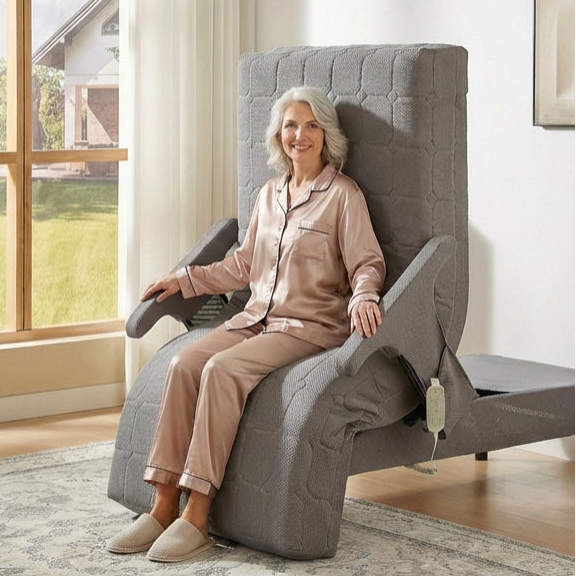
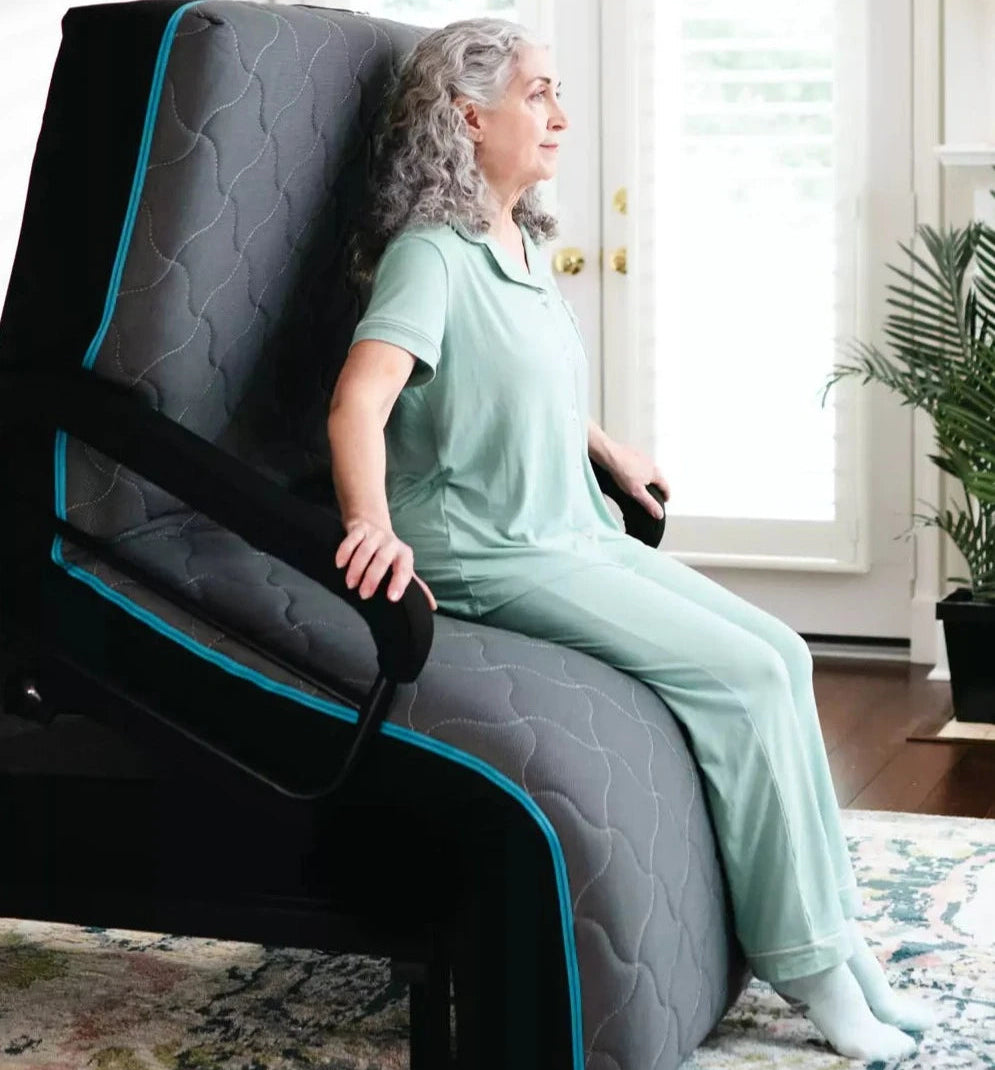
- Consider whether the person needs a different kind of bed. If the struggle is the move from lying down to standing, a sleep-to-stand bed is a powered bed designed to move the user from lying down toward a standing position. EzLift sells the EzLift Deluxe Sleep-to-Stand Bed, and the Elevra Deluxe Rotating Hi-Lo Lift Bed combines side rotation with whole-bed Hi-Lo height adjustment. Whatever bed you consider, compare its listed floor-to-mattress height with your measurements and talk it over with the person's therapist.
For more on keeping the bedroom safe, see why older adults fall out of bed, and how to prevent it and tips for creating a safe bedroom for seniors. If the person needs more help than a bed can give, our guide to the differences between sit-to-stand lifts, Hoyer lifts and sleep-to-stand beds explains the options.
Frequently asked questions
What is the best bed height for seniors?
There isn't one number that fits everyone. Fit the bed to the person: when they sit on the edge, their feet should be flat on the floor and their hips slightly higher than their knees, unless a clinician advises otherwise.
How do I measure bed height correctly?
Measure from the floor to the top of the mattress while the person is sitting on the edge of the bed, so the mattress is pressed down. Then measure the person's lower-leg height, from the floor to the back of the knee while they sit with knees and ankles at 90 degrees.
What bed height is best after a hip replacement?
Your occupational therapist will advise a height for you. NHS hospital guides for patients following hip precautions say your knees should stay lower than your hips when you sit, including on the edge of the bed. Follow your surgeon's instructions on whether precautions apply to you.
Should a bed be higher or lower than a wheelchair seat?
The Model Systems Knowledge Translation Center says transferring downhill is easier and, at modest height, safer than transferring uphill. Ask a therapist to help you set up the bed and wheelchair for the transfers you make most often.
Sources
- Oxford University Hospitals NHS Foundation Trust, Occupational Therapy Department (Trauma and Orthopaedics). Occupational Therapy Home Measurement Form (PDF, January 2024).
- Atwal A, McIntyre A, Spiliotopoulou G, Money A, Paraskevopoulos I. How are service users instructed to measure home furniture for provision of minor assistive devices? Disability and Rehabilitation: Assistive Technology, 2017;12(2):153–159 (PDF, University of Greenwich repository).
- Health Quality Innovators, a CMS Quality Innovation Network-Quality Improvement Organization. Simple Strategies for Fall Management: Environmental Safety and Fall Prevention (PDF).
- The Leeds Teaching Hospitals NHS Trust. Total Hip Replacement: A guide to your Rehabilitation (PDF, publication date 01/2025).
- Cambridge University Hospitals NHS Foundation Trust. Total hip replacement – for those following hip precautions.
- Model Systems Knowledge Translation Center. Safe Transfers After Spinal Cord Injury.
- Swaminathan S. Optimizing Bed Height To Reduce Long-Term Residents Fall From Bed To Enhance Patient Safety And Prevent Hospital Admissions. British Geriatrics Society abstract.
Written by the EzLift Team, EzLift's organizational authorship team. Sources checked October 25, 2026. This guide offers general information; it is not medical advice. Ask an occupational therapist or physical therapist to assess the person and recommend a safe bed height, and follow your surgeon's instructions after surgery.