



The Best Beds for Seniors with Mobility Issues: How to Choose by Need
Short answer: the best bed depends on where the trouble is. If getting up out of bed is the hard part, look at a sleep-to-stand or rotating lift bed. If a caregiver does hands-on care in bed, a hi-low hospital bed usually fits better. If the person mostly needs comfort and sitting up, an adjustable base may be enough. And if they just need something steady to push against, start with a bed handle or transfer pole before buying a new bed.
Falls are a real risk at this stage of life. The CDC reports that over 14 million, or 1 in 4, adults age 65 and older report falling every year (CDC). The bed is where every day starts and ends, so it's worth choosing carefully.
Disclosure: EzLift makes sleep-to-stand and rotating beds. We include them below where they genuinely fit, and we say plainly where another type is the better choice.
Quick picks by need
| If the main problem is… | Bed type to look at first | Watch out for |
|---|---|---|
| Getting from lying down to standing | Sleep-to-stand bed | Needs some leg strength to stand from the lifted position |
| Swinging legs out and turning to sit on the edge | Rotating lift bed | Larger footprint; needs wall clearance on the turning side |
| Caregiver bathing, changing or repositioning in bed | Hi-low hospital bed | Looks clinical; rails carry entrapment risk |
| Sitting up to read, eat or breathe easier | Adjustable base | Doesn't help with standing up |
| Needs a little push-off support only | Standard bed + bed handle/transfer pole | Handle must fit the bed; FDA rail warnings apply |
1. Sleep-to-stand beds — best when standing up is the hard part
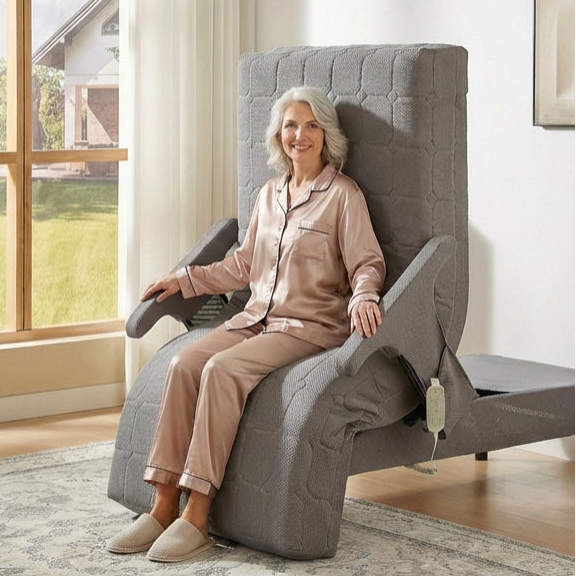
A sleep-to-stand bed raises the back like a recliner, then tilts and lifts the seat forward so the person ends up close to standing with feet on the floor, much like a lift chair. It looks like a regular bed.
Good for: people who can bear weight and walk (with or without a walker) but struggle with the push from sitting to standing; couples who don't want a clinical-looking bed. Not for: someone who can't bear weight at all, or who needs hands-on care in bed all day — a hospital bed or a mechanical lift fits better there.
Examples: EzLift Deluxe, UPbed Standard, Envyy. Compare specs in our sleep-to-stand bed comparison.
EzLift Deluxe, honestly: Twin $2,399 / Twin XL $2,699 (price as of Oct 26, 2026, see the product page). A mattress is included, and shipping within the continental U.S. is free by freight. The remote has sit and lift-up functions. It does not have whole-bed hi-low height adjustment, so it isn't a substitute for a caregiver-height hospital bed. Rated by the manufacturer for up to 550 lb user weight. Warranty: 6 years total (1-year manufacturer + 5-year Mulberry extended warranty).
2. Rotating lift beds — best when turning to the edge is the hard part
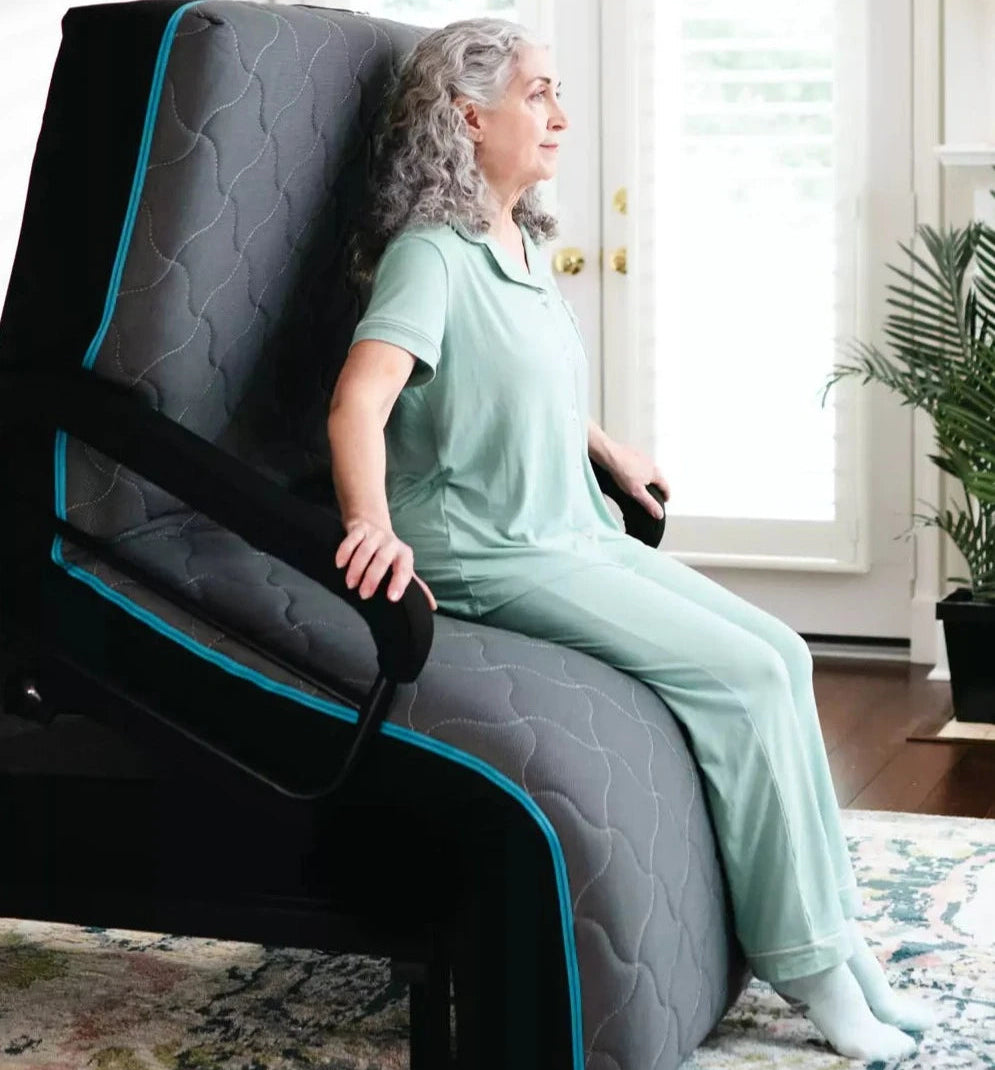
A rotating bed turns the person about 90 degrees toward the side of the bed, so they end up seated on the edge with feet down, then (on many models) lifts them toward standing.
Good for: people who find it hard to swing their legs out and turn; stroke survivors with one weaker side (choose the exit side carefully). Not for: small rooms. These beds need clearance on the exit side, and most are fixed to turn one way.
Examples: UPbed Independence, StarSleep Orin, Med-Mizer ActiveCare, EzLift Elevra. EzLift Elevra, honestly: the Elevra Rotating ($3,499 as of Oct 26, 2026) turns to a fixed left or right side and has no whole-bed hi-low. The Elevra Hi-Lo ($5,999) adds whole-bed height adjustment and is on pre-order (estimated ship Dec 15, 2026).
3. Hi-low hospital beds — best for in-bed care
A home hospital bed raises the head and knees and, on hi-low or full-electric models, raises and lowers the whole bed. The low height helps reduce fall injury; the high height saves a caregiver's back.
Good for: someone who spends most of the day in bed, needs repositioning, bathing or wound care, or whose clinician has prescribed one. Cost note: Medicare Part B may cover a hospital bed when a provider prescribes it for home use and you use a Medicare-enrolled supplier; after the deductible you pay 20% of the approved amount (Medicare.gov). EzLift is not a Medicare-enrolled supplier, and our beds aren't billed to Medicare, Medicaid or insurance.
See our three-way comparison, or our guide to the best hospital beds for home use.
4. Adjustable bases — best for comfort and sitting up
An adjustable base raises the head and feet. It helps with reading, reflux and getting to a sitting position, but it doesn't lift anyone toward standing. Read how it differs from a sleep-to-stand bed.
Good for: mostly independent seniors who want comfort. Not for: someone who can't get from sitting to standing.
5. Standard bed + bed handle or transfer pole — the low-cost start
If the person can mostly manage but wants something steady to push on, a bed handle or floor-to-ceiling transfer pole is the cheapest step. Make sure it fits the bed with no gaps: the FDA warns that bed rails and bed-attached handles carry entrapment risk (FDA: A Guide to Bed Safety). See our bed rails safety guide.
What to check before you buy (any type)
- Bed height. When seated on the edge, feet should rest flat with knees about level with hips. See best bed height for seniors.
- Weight capacity — and how it's measured. Some makers state the total safe load including mattress and accessories, others a user weight. Ask which.
- Exit side and room space. Rotating beds need side clearance; all beds need a clear, lit path to the bathroom.
- Power outage plan. Ask whether a battery backup is included or optional.
- Delivery and setup. Freight curbside vs. white-glove can change the real cost by hundreds of dollars.
- Returns and warranty. Read the frame, motor and mattress terms separately.
- Ask a professional. An occupational therapist can assess transfers and recommend the safest setup; ask the person's doctor for a referral.
FAQ
What is the best bed for an elderly person who can't get out of bed? It depends on why. If they can stand once they're up, a sleep-to-stand or rotating lift bed helps. If they can't bear weight, a hospital bed plus a caregiver-operated lift is usually safer — talk to their care team.
Are hospital beds better for seniors? For in-bed care, often yes. For an independent senior whose problem is standing up, a hospital bed alone doesn't lift them toward standing.
Does Medicare pay for a lift bed? Medicare Part B may cover a prescribed hospital bed from an enrolled supplier (Medicare.gov). EzLift beds are not billed to Medicare; see how families pay for a lift bed without Medicare.