




Caregiver Tips for Dementia: Communication, Daily Care and Safety at Home
Quick answer: Keep routines steady, speak simply and calmly, and adapt the home before problems happen. The National Institute on Aging suggests eye contact, yes or no questions and extra time to answer; the same times each day for bathing, dressing and meals; locked-up medicines and tools; and ID in case of wandering. Ask for help early.
In our view, dementia care is less one big decision than many small ones each day. The tips below come from NIA's Alzheimer's caregiving pages, grouped by topic. Ask the person's doctor how they apply to the type of dementia your family member has.
Understand what is driving the behavior
NIA lists common behavior changes in Alzheimer's: getting upset, worried and angry more easily, acting depressed or uninterested, hiding things or believing others are hiding things, feeling suspicious or threatened, and trouble sleeping through the night. (NIA, Managing Personality and Behavior Changes)
It also lists things besides the disease that can trigger distress:
- Emotions such as sadness, fear, stress, confusion or anxiety
- Health problems such as pain, lack of sleep, and trouble seeing or hearing
- Physical issues such as constipation, hunger or thirst
- A noisy or stressful setting, like several conversations at once or a loud TV
Two points from NIA are worth remembering. First, sudden or rapidly changing behavior, especially after an infection or a medication change, should go to a doctor right away. Second, keeping track of behavior changes can help you and the care team spot a pattern and find the cause.
How to communicate with someone who has dementia
NIA notes that people with Alzheimer's may struggle to pay attention in long conversations, keep their train of thought or block out background noise. Its suggestions: (NIA, Communicating With Someone Who Has Alzheimer's)
- Make eye contact and call the person by name.
- Watch your tone, volume, facial expression and body language, and aim for a warm, matter-of-fact manner.
- Allow more time for an answer, and try not to interrupt.
- Ask yes or no questions, and rephrase with different words if the person does not understand the first time.
- Use touch, such as holding the person's hand while you talk.
- Do not talk about the person as if they are not there, and do not use baby talk.
NIA gives a few simple swaps:
| Instead of | Try |
|---|---|
| What do you want for dinner? | Do you want fish or chicken for dinner? |
| That's not how you do it. | Let's try it this way. |
| Are you hungry? | Dinner will be ready in five minutes. |
NIA's do's and don'ts sheet adds one more don't: avoid asking the person whether they remember something or someone. (NIA, Do's and Don'ts)
Handling behavior changes day to day
NIA's tips for managing behavior changes: (NIA)
- Stay patient and avoid arguing; try not to let frustration show.
- Tell the person you are there to help.
- Redirect their attention to something new, such as music, a book or a walk.
- Reduce noise and clutter, and keep well-loved objects, like photos, around the home.
- Keep a routine, with bathing, dressing and eating at the same time each day.
- Look for ways to keep the person physically active.
For evening restlessness, our guide to sundowning at night covers bedtime and bedroom setup.
Bathing, dressing and grooming
Bathing can be one of the hardest tasks, NIA says, because the person may find it scary, embarrassing or physically unpleasant. Its suggestions: (NIA, Bathing, Dressing, and Grooming)
- Gather soap, washcloths, towels, shampoo and a bath chair first. A rubber bath mat and safety bars help prevent falls; skip bath oils that make the tub slippery.
- Keep the bathroom warm and not too dark, and check the water temperature.
- Be matter-of-fact ("It's time for a bath now"), or offer a choice of times.
- Bathe at the same time each day, and let the person do part of it, even if that is holding the washcloth.
- Use a handheld showerhead, say each step before you do it, and start with hands or feet.
- Never leave the person alone in the tub or shower.
For dressing, NIA suggests laying clothes out in the order they go on, handing over one item at a time, keeping only one or two outfits in the closet, and choosing loose clothes with elastic waists, large zipper pulls or hook-and-loop shoes instead of buttons and laces.
Make the home safer
NIA's home safety tips for Alzheimer's caregivers start the same way as general home safety: go room by room and fix immediate dangers, like loose stair railings and poor lighting, first. It explains that people with Alzheimer's face a higher risk of falling because they often have changes in depth perception. (NIA, Alzheimer's Caregiving: Home Safety Tips)
A few of its specific suggestions:
- Mark the edges of steps with brightly colored tape.
- Label the bathroom, bedroom and kitchen with bright signs or simple pictures.
- Set the water heater to 120 degrees F, and label hot and cold faucets.
- Install nightlights or automatic light sensors.
- Lock up or remove medicines, cleaning products, guns, knives and power tools.
- Put a safety knob and automatic shut-off switch on the stove.
- Use a room monitor at night to hear a fall or a call for help.
- Install grab bars in the tub or shower in a color that contrasts with the wall.
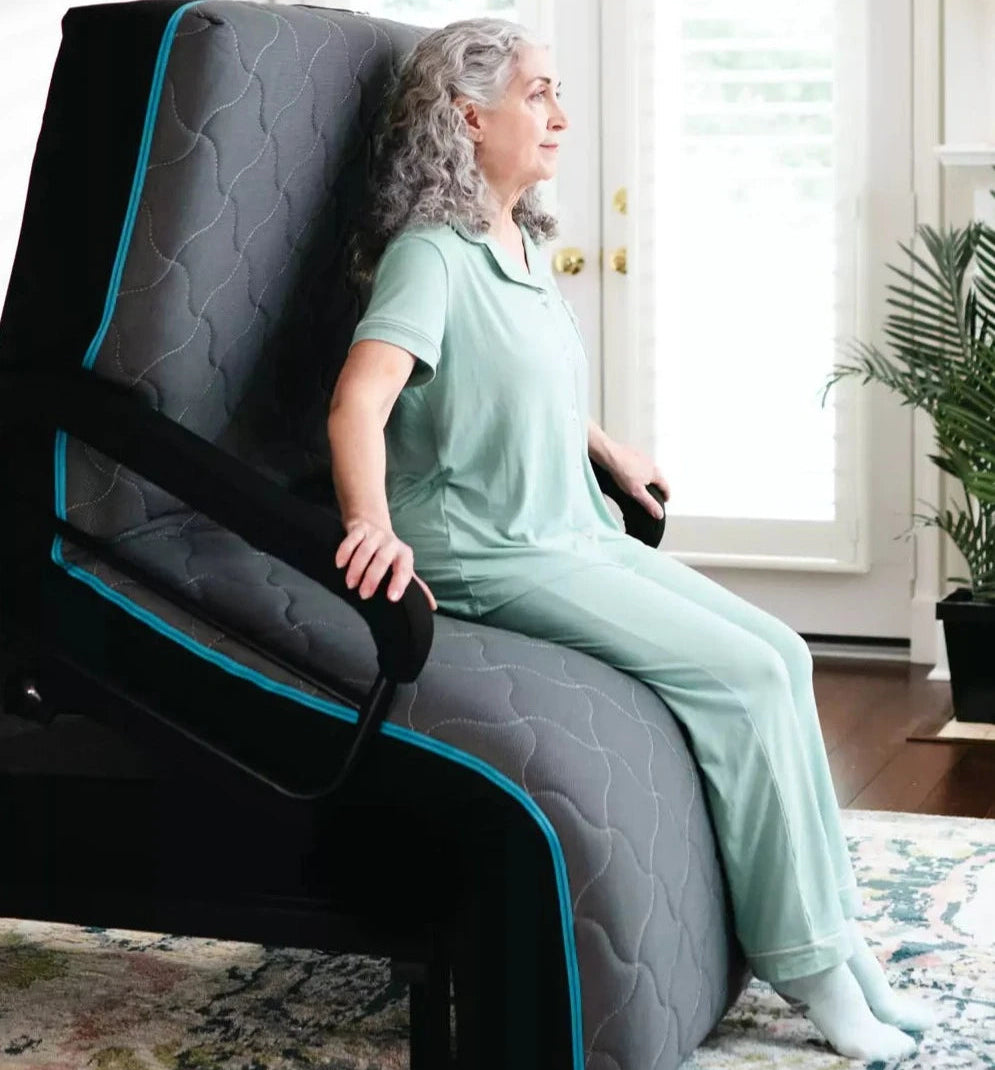
NIA's list also mentions bed rails and other transfer or mobility aids. Read our bed rails safety guide first, because rails carry their own entrapment risks. Our guides to fall prevention devices, bed alarms and bathroom safety go room by room. EzLift sells lift beds for home use.
If the person wanders
NIA splits its advice in two: make sure the person can be found and brought home, and make it harder to leave unnoticed. (NIA, Wandering and Getting Lost)
- Have the person carry ID or wear a medical bracelet with their name, address and your phone number, or label clothing if a bracelet may come off.
- Consider a GPS tracker as an extra or an alternative.
- Tell neighbors and local police, and keep a recent photo or video.
- Keep doors locked, with a keyed deadbolt or an extra lock placed up high or down low.
- Add a door chime or alarm, fence the yard and limit how far windows open.
- Keep shoes, keys, coats, hats and suitcases out of sight.
- Do not leave a person with a history of wandering alone.
NIA also mentions the MedicAlert and Alzheimer's Association Safe and Found service (800-432-5378). It notes that the program is not affiliated with NIA and may charge a fee.
Getting help with dementia care
NIA is blunt that dementia care often exceeds what one person can provide. It lists several kinds of outside help: (NIA, Getting Help With Alzheimer's Caregiving)
- Home care services send an aide to help with bathing, dressing, light housework and errands. They are not the same as home health care, and the aides do not give skilled medical care.
- Adult day care offers a supervised setting with activities, meals and some personal care, giving the caregiver a break.
- Respite care provides short-term care at home, in a facility or at an adult day center, from a few hours to several weeks.
- Geriatric care managers, often nurses or social workers, help assess needs and plan care.
To find local services, NIA points to the Administration for Community Living's Eldercare Locator at 800-677-1116. If you care for a veteran, NIA lists the VA caregiver support line at 855-260-3274. Our respite care handover checklist helps when you book a break, and when home care is no longer enough, nursing home vs memory care compares the options.
Take care of yourself, too
NIA's self-care list for Alzheimer's caregivers is short and down to earth: ask for help, join a support group, take breaks each day, see friends, keep up hobbies, eat healthy foods, exercise, see your own doctor and keep your health, legal and financial papers up to date. It suggests asking people for specific help, like making a meal or taking the person out for a while, and planning a "Plan B" in case care needs grow. (NIA, Caring for Yourself)
In our view, the Plan B step is worth doing early. NIA suggests keeping a notebook for whoever may take over, with emergency numbers, behavior challenges and what helps, and favorite activities. If you are running on empty, read our guide to caregiver burnout and how to choose a caregiver support group.
FAQ
What is the best way to talk to someone with dementia?
The National Institute on Aging suggests making eye contact and using the person's name, allowing extra time to answer, asking yes or no questions and rephrasing with different words if you are not understood the first time. It advises against talking about the person as if they are not there and against baby talk.
How do I handle sudden changes in behavior?
Call the doctor. NIA says sudden or rapidly changing behavior, especially after an infection or a medication change, should be brought to a doctor's attention right away. For everyday changes, it suggests staying patient, not arguing, reassuring the person and redirecting them to another activity.
How often should a person with dementia bathe?
NIA suggests trying a bath or shower two or three times a week while staying open to a more flexible schedule. If a full bath is too upsetting, a sponge bath of the face, hands, feet, underarms and private areas can work in between. Never leave the person alone in the tub or shower.
How can I stop a person with dementia from wandering?
NIA suggests keeping doors locked, including a lock placed up high or down low, adding a door chime or alarm, fencing the yard, limiting how far windows open and keeping shoes, keys and coats out of sight. Make sure the person carries ID or wears a medical bracelet, and tell neighbors and local police.
Where can dementia caregivers get help?
NIA lists home care aides, adult day care, respite care and geriatric care managers. The Eldercare Locator at 800-677-1116 can point you to local services, and caregivers of veterans can call the VA caregiver support line at 855-260-3274.
Sources
- National Institute on Aging, Communicating With Someone Who Has Alzheimer's Disease: https://www.nia.nih.gov/health/alzheimers-changes-behavior-and-communication/communicating-someone-who-has-alzheimers
- National Institute on Aging, Infographic: Do's and Don'ts: Communicating With a Person Who Has Alzheimer's Disease: https://www.nia.nih.gov/health/alzheimers-changes-behavior-and-communication/dos-and-donts-communicating-person-who-has
- National Institute on Aging, Alzheimer's Caregiving: Managing Personality and Behavior Changes: https://www.nia.nih.gov/health/alzheimers-changes-behavior-and-communication/alzheimers-caregiving-managing-personality-and
- National Institute on Aging, Alzheimer's Caregiving: Bathing, Dressing, and Grooming: https://www.nia.nih.gov/health/alzheimers-caregiving/alzheimers-caregiving-bathing-dressing-and-grooming
- National Institute on Aging, Alzheimer's Caregiving: Home Safety Tips: https://www.nia.nih.gov/health/safety/alzheimers-caregiving-home-safety-tips
- National Institute on Aging, Coping With Alzheimer's Behaviors: Wandering and Getting Lost: https://www.nia.nih.gov/health/alzheimers-changes-behavior-and-communication/coping-alzheimers-behaviors-wandering-and
- National Institute on Aging, Getting Help With Alzheimer's Caregiving: https://www.nia.nih.gov/health/alzheimers-caregiving/getting-help-alzheimers-caregiving
- National Institute on Aging, Alzheimer's Caregiving: Caring for Yourself: https://www.nia.nih.gov/health/alzheimers-caregiving/alzheimers-caregiving-caring-yourself
Written by the EzLift Team, EzLift's organizational authorship team. Last reviewed November 19, 2026. This guide summarizes National Institute on Aging caregiving guidance. It is not medical advice. Talk with the person's doctor or care team about their diagnosis, behavior changes and safety needs, and call 911 in an emergency.