

Fall Prevention Devices for Elderly Adults at Home: What the NIA Recommends
Quick answer: The National Institute on Aging (NIA) points to a short list of home devices: grab bars, handrails, nonskid mats and strips, night lights and motion lights, a reach stick, a correctly sized cane or walker, and a way to call for help. No device removes the risk, so also look at eyesight, medicines and strength.
Which devices does the NIA recommend?
The NIA says many falls happen at home, and that many changes to the home can help prevent them. (National Institute on Aging, Preventing Falls at Home: Room by Room) The table gathers the devices it names, with what the NIA says about each one.
| Device | What the NIA says | Source |
|---|---|---|
| Grab bars | Mount them near toilets and on both the inside and outside of the tub and shower. Consider one near the front door, for balance at the door lock. | NIA room by room |
| Handrails | Have secure handrails on both sides of any stairs. Hold them whenever you use the stairs, even when you carry something. | NIA room by room |
| Nonskid mats and strips | Place nonskid mats, strips or carpet on every surface that may get wet. Put no-slip strips on tile and wooden floors, and no-slip material on indoor and outdoor stairways. Fix carpets firmly to the floor. | NIA room by room; NIA tips sheet |
| Night lights and motion lights | Leave a light on in the bathroom at night or use a night light that turns on automatically in the dark. Put night lights and light switches close to the bed. Plug-in motion-activated lights can light stairwells and paths. | NIA room by room |
| Shower stool and hand-held shower head | The NIA home safety checklist asks whether a plastic shower stool and a hand-held shower head are installed, to make bathing easier. | NIA checklist |
| Reach stick | Use a reach stick, a grabbing tool sold at many hardware or medical-supply stores, instead of standing on a chair or table. If you use a step stool, it should be steady with a handrail on top, and someone should stand next to you. | NIA room by room |
| Cane or walker | Using canes and walkers correctly can help prevent falls. If your doctor says to use one, make sure it is the right size. Walker wheels should roll smoothly. A physical or occupational therapist can help you choose and use one. | NIA falls and fractures |
| Emergency response system, phone or smartwatch | An emergency response system has a button on a necklace or bracelet that alerts 911. It has a fee and is usually not covered by insurance. Some smartwatches can make emergency calls at the push of a button, and others can detect sudden fall-like movements and call for help. | NIA room by room |
| Step-edge tape | The checklist suggests marking the edges of steps with bright or reflective tape. | NIA checklist |
For help choosing a walker, see our guides on how to choose a rollator walker and walker vs cane.
Where to start, room by room
- Bathroom. Grab bars, nonskid surfaces and a light that stays on or turns on at night. Our bathroom safety checklist goes spot by spot.
- Bedroom. Night lights and light switches close to the bed, a flashlight by the bed in case the power goes out, and a landline or well-charged phone near the bed.
- Stairs and halls. Handrails on both sides, light switches at the top and bottom of the stairs and at each end of a long hall, and nothing left on the steps.
- Living areas. Keep electrical cords near walls and away from walking paths. Arrange furniture so it is not in your way. Skip throw rugs and small area rugs. Make sure sofas and chairs are the right height to get in and out of easily.
- Entrance and outdoors. Repair broken or uneven steps, add non-slip material to outdoor stairways, and keep the porch light on at night.
Devices do not fix the cause
The NIA says more than one in four people age 65 or older fall each year, and that the risk rises with age. It also says many falls can be prevented. The causes it lists are not about the home alone: eyesight, hearing and reflexes, conditions such as diabetes or heart disease, balance and gait problems, muscle loss, blood pressure that drops when you stand up, painful feet or unsafe footwear, and some medicines. Older adults with mild cognitive impairment or certain types of dementia are at higher risk. (National Institute on Aging, Falls and Fractures in Older Adults: Causes and Prevention)
That is why the NIA pairs the home advice with health steps: stay physically active, try balance and strength exercises, have eyes and hearing tested, review medicines with a doctor or pharmacist, stand up slowly, get enough sleep, limit alcohol and wear nonskid, rubber-soled, low-heeled shoes. (National Institute on Aging, Tips To Avoid Falls and Injuries, December 2023) In our view, do both in the same week: install the devices and book the check-up. One does not replace the other.
If a parent keeps falling
The NIA says to tell the doctor about any fall since the last check-up, even if there was no pain. A fall can point to a new medical problem or to an issue with medicines or eyesight that can be corrected. The doctor may suggest physical therapy, a walking aid or other steps. If someone has fallen, the doctor might also suggest that an occupational therapist, physical therapist or nurse visit the home and advise on changes to lower the risk of more falls.
The NIA also says many older adults fear falling, and that this fear can lead them to avoid walking, shopping and social activities. It says staying active helps prevent falls, so a plan should keep the person moving.
Write down a short plan for what to do after a fall. The NIA tips sheet says to breathe and stay still on the floor for a few moments, check whether you are hurt, and, if you think you can get up safely, crawl to a sturdy chair and rise slowly. It says to keep a well-charged phone or an emergency medical alert system within reach to get help.
Around the bed
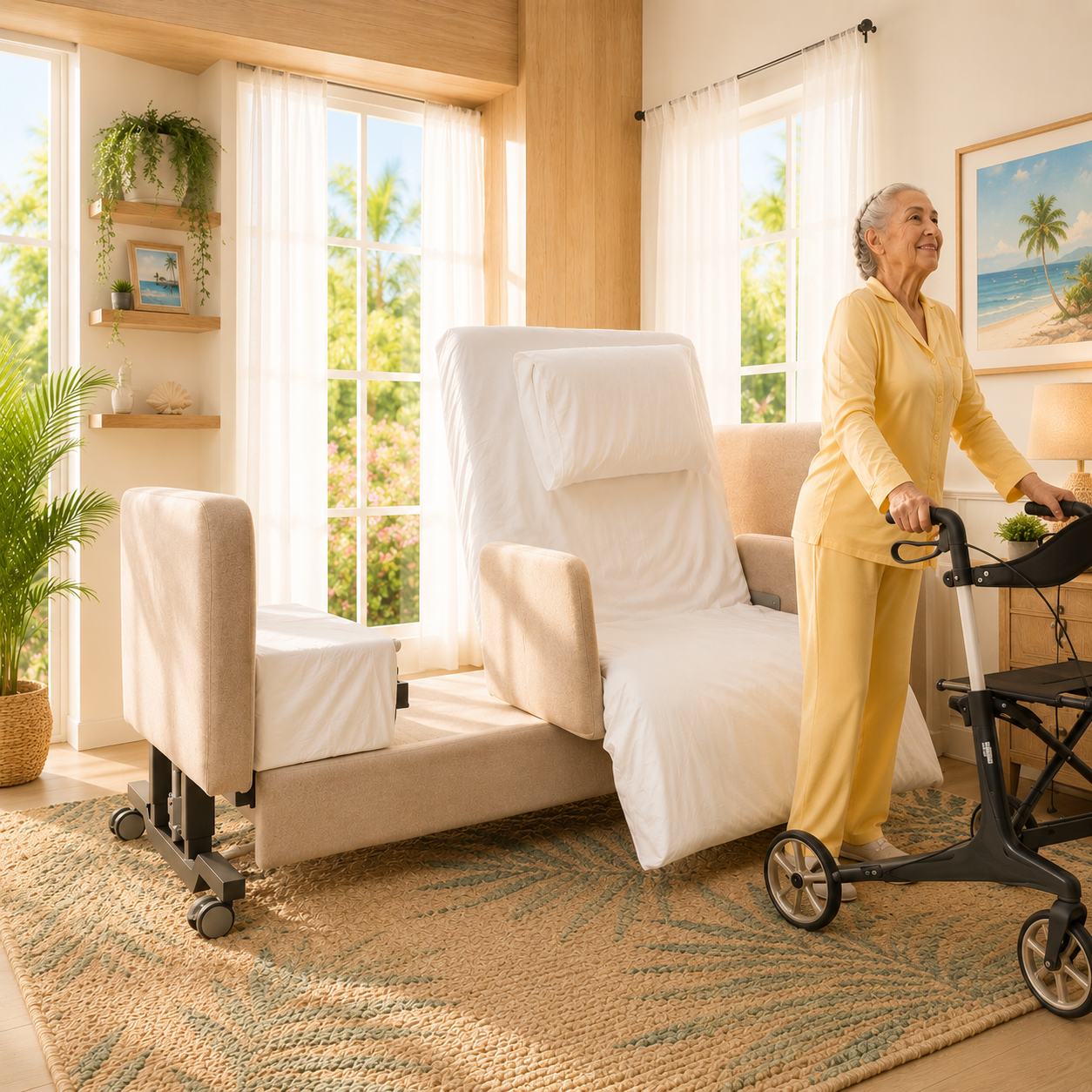
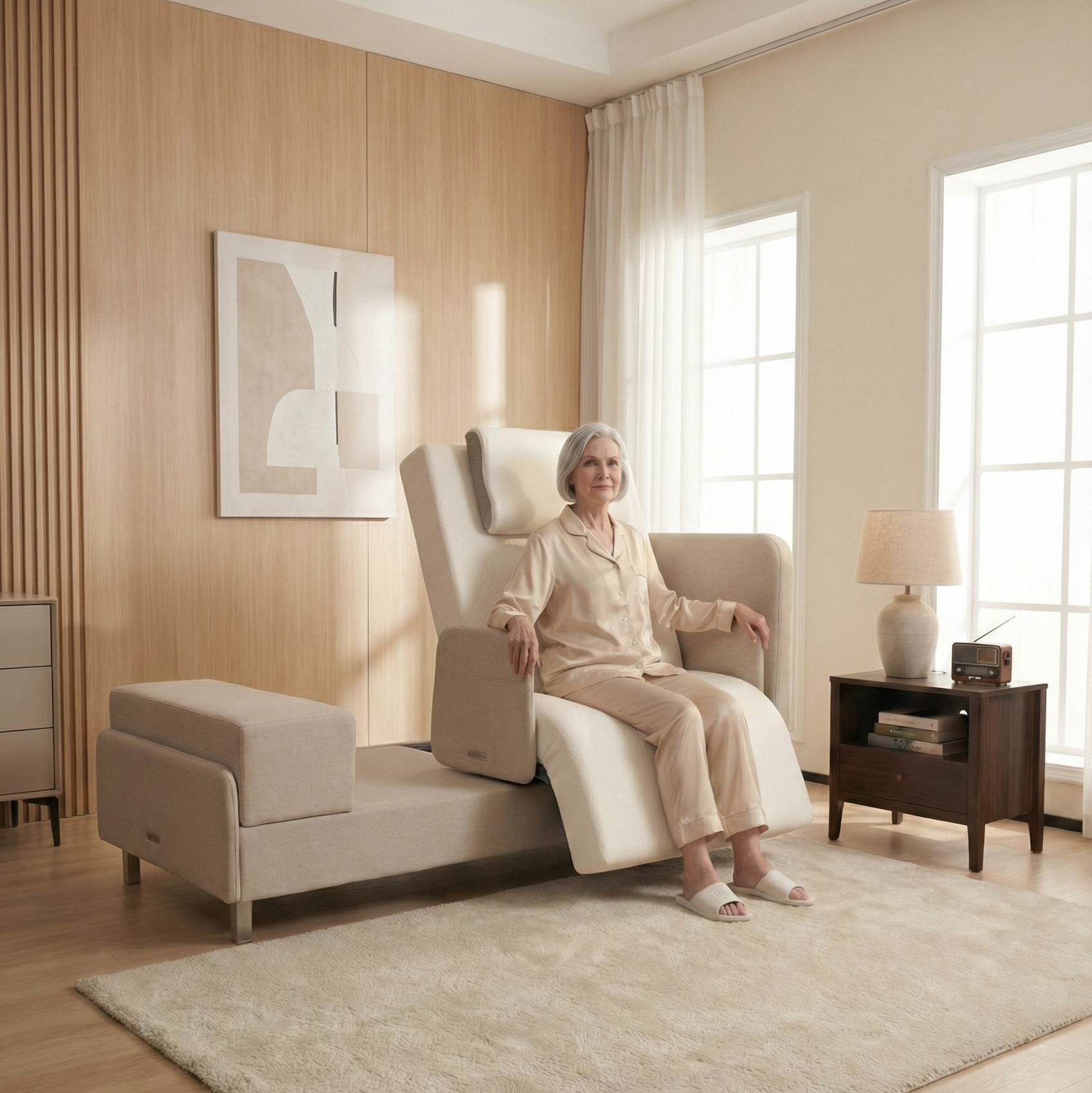
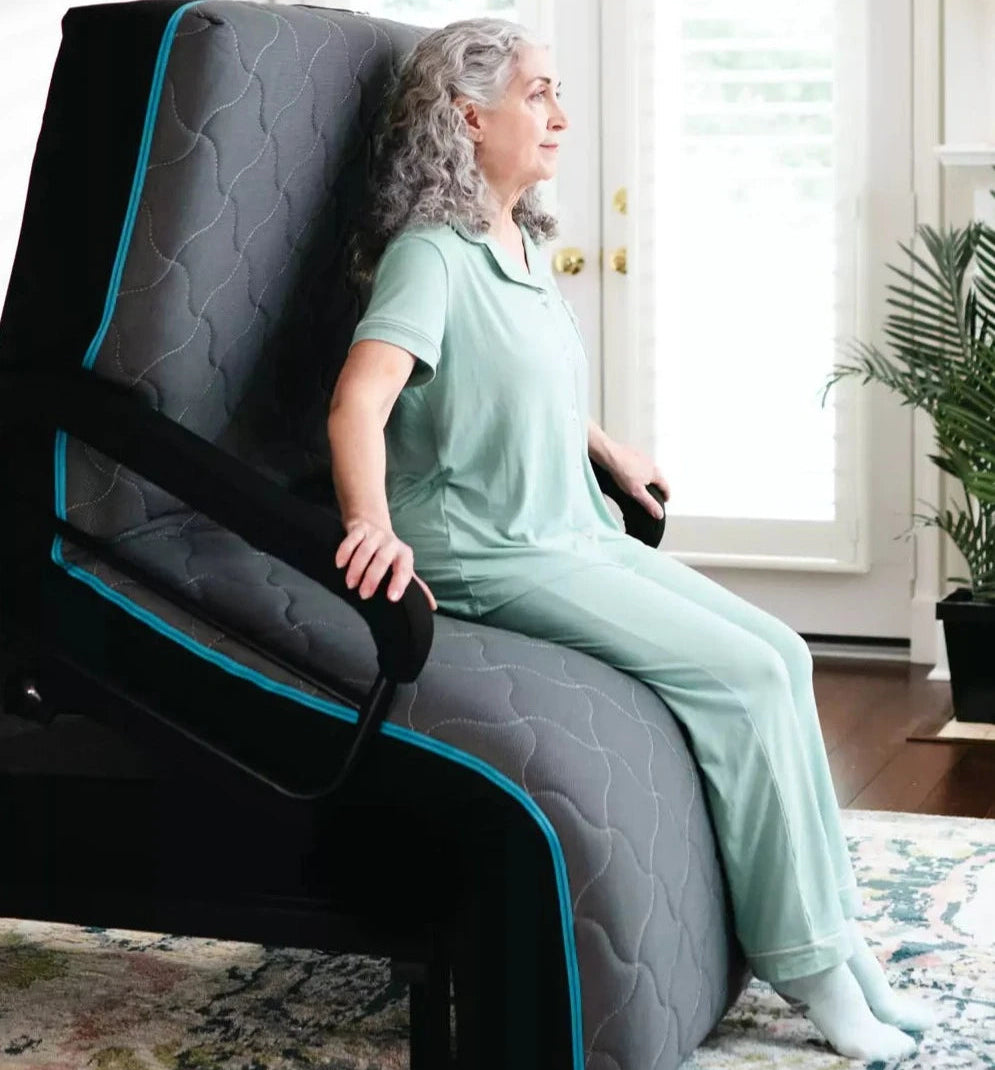
The bed is one more place to check. Our guides cover why older adults fall out of bed, bed bumpers and floor mats for adults and devices that help the elderly get out of bed. EzLift sells lift beds for home use. We do not claim that any bed or device prevents falls. Ask a physical or occupational therapist what suits the person.
FAQ
What are the best fall prevention devices for elderly adults?
The National Institute on Aging names grab bars, handrails, nonskid mats and strips, night lights and motion-activated lights, a reach stick, a correctly sized cane or walker, and an emergency response system or phone. It does not rank them. The right mix depends on the person's home and health, so a physical or occupational therapist can help.
Do grab bars and nonskid mats prevent falls?
The National Institute on Aging recommends both in its home safety advice, and says many falls can be prevented by steps such as making the home safer. The pages we read give no figure for how much any one device lowers risk, so we do not claim one. Fit and placement matter, so follow the instructions for each product.
Do night lights help older adults avoid falls?
The National Institute on Aging advises leaving a light on in the bathroom at night or using a night light that turns on automatically in the dark. It also suggests night lights and light switches close to the bed, and motion-activated lights for stairs and paths.
Do medical alert systems cost money?
Yes, usually. The National Institute on Aging says an emergency response system, with a button on a necklace or bracelet that alerts 911, has a fee and is usually not covered by insurance. A charged phone kept with the person, or a smartwatch set up for emergency calls, are other options it lists.
What should I do when an elderly parent keeps falling?
Tell the doctor about every fall, even one without pain. The National Institute on Aging says a fall can point to a new medical problem or an issue with medicines or eyesight, and the doctor may suggest physical therapy, a walking aid or other steps. A therapist or nurse can also visit the home to check it for hazards.
Sources
- National Institute on Aging, Preventing Falls at Home: Room by Room (content reviewed September 12, 2022): https://www.nia.nih.gov/health/falls-and-falls-prevention/preventing-falls-home-room-room
- National Institute on Aging, Falls and Fractures in Older Adults: Causes and Prevention (content reviewed September 12, 2022): https://www.nia.nih.gov/health/falls-and-falls-prevention/falls-and-fractures-older-adults-causes-and-prevention
- National Institute on Aging, Tips To Avoid Falls and Injuries (NIH Publication No. 23-AG-7180, December 2023): https://order.nia.nih.gov/sites/default/files/2023-12/tips-to-avoid-falls-and-injuries.pdf
- National Institute on Aging, Worksheet: Home Safety Checklist: https://www.nia.nih.gov/sites/default/files/2023-04/worksheet-home-safety-checklist_1.pdf
Written by the EzLift Team, EzLift's organizational authorship team. Last reviewed November 14, 2026. This guide summarizes National Institute on Aging pages and publications. It is not medical advice. Ask the person's doctor, physical therapist or occupational therapist which devices and changes fit their health and home, and tell the doctor about every fall.