




Does Medicare Cover Patient Lifts (Hoyer and Sit-to-Stand)?
Quick answer: Medicare Part B can cover a patient lift as durable medical equipment if you use a Medicare-enrolled supplier and meet CMS rules. LCD L33799 covers a lift when you need transfers between a bed and a chair, wheelchair, or commode and would be bed confined without it. Codes often cited are E0630, E0635, E0639, and E0640. Ask 1-800-MEDICARE before you buy.
Does Medicare cover patient lifts?
It can, when the rules below are met. Medicare's booklet Medicare Coverage of Durable Medical Equipment and Other Devices lists "Patient lifts to lift you from a bed or wheelchair" among examples of durable medical equipment that Medicare covers. The same booklet says Medicare only covers DME if you get it from a supplier enrolled in Medicare, meaning the supplier has been approved and has a Medicare supplier number. (Medicare.gov publication 11045)
Under Original Medicare, Part B covers eligible DME that your doctor or other treating health care provider prescribes for use in your home. A hospital or skilled nursing facility providing Medicare-covered care is not your home for this benefit. A long-term care facility can sometimes count as your home. A lift does not have to be described as “hospital-type” to meet the home-use rule. The prescribed device must meet the patient-lift coverage criteria. (M5: Medicare.gov publication 11045)
National Coverage Determination 280.1 (Durable Medical Equipment Reference List) has a line for Patient Lifts:
Covered if A/B MAC (HHH) or DME MAC medical staff determines patient's condition is such that periodic movement is necessary to effect improvement or to arrest/retard deterioration in condition.
DME contractors use the detailed coverage rules in Local Coverage Determination L33799, Patient Lifts, and its related Policy Article A52516. A CMS Medicare Learning Network tip sheet points to both NCD 280.1 and LCD L33799. (CMS LCD L33799; CMS Policy Article A52516; CMS MLN, Patient Lifts)
The coverage rule in LCD L33799
LCD L33799 states the basic coverage test this way:
A patient lift is covered if transfer between bed and a chair, wheelchair, or commode is required and, without the use of a lift, the beneficiary would be bed confined.
It then says:
A patient lift described by codes E0630, E0635, E0639, or E0640 is covered if the basic coverage criteria are met. If the coverage criteria are not met, the lift will be denied as not reasonable and necessary.
A multi-positional patient transfer system (codes E0636, E1035, and E1036) is covered only if the basic lift criteria are met and the beneficiary requires supine positioning for transfers. If Medicare covers E1035 or E1036, LCD L33799 says payment will be discontinued for other mobility assistive equipment, including canes, crutches, walkers, rollabout chairs, transfer chairs, manual wheelchairs, power-operated vehicles, or power wheelchairs.
Code E0621 is covered as an accessory when it is ordered as a replacement for a covered patient lift. Policy Article A52516 also says heavy-duty and bariatric lifts are included in the patient-lift codes E0630, E0635, E0636, E0639, and E0640.
A52516 notes that some specified DME items require a face-to-face encounter and a written order prior to delivery. The list of those codes is updated by CMS and the DME MACs. Ask the supplier whether the lift you need is on the current list before it is delivered.
For E0636, E0639, E0640, E1035 and E1036, A52516 requires written PDAC coding verification and listing on its Product Classification List. (M3: CMS A52516)
Does Medicare cover Hoyer lifts?
Policy Article A52516 describes code E0635 this way:
Code E0635 describes a patient lift used to transfer the bed-bound beneficiary by way of a sling or seat which is attached to the boom. The boom is attached to a spreader bar (base) to counterbalance the weight of the patient. The original device coded E0635 was the Hoyer by Ted Hoyer & Company, Inc.
The Hoyer name appears in CMS coding history for the electric boom-and-sling style of lift billed as E0635. A lift still has to meet the L33799 transfer and bed-confined criteria, come from a Medicare-enrolled supplier, and be billed under the correct code. The brand name on the frame is not enough by itself.
E0630 describes a hydraulic or mechanical patient lift, including its seat, sling, straps or pads. E0635 describes an electric patient lift with a seat or sling. A hydraulic Hoyer-type lift may qualify under E0630 when the coverage rules are met. Electric lifts and ceiling-track lifts are not excluded as whole categories: LCD L33799 lists E0635 and E0640 among codes that can be covered. The exact model, correct code and medical need still matter. (M2: CMS LCD L33799; M6: CMS E0630; M7: CMS E0635)
Does Medicare cover sit-to-stand lifts?
LCD L33799, Policy Article A52516, NCD 280.1, and the CMS MLN tip sheet do not use the phrase "sit-to-stand lift" as a separate coverage category. Coverage depends on whether the specific device is correctly coded as a patient lift that meets the L33799 rules, not on the name used in a catalog.
A sit-to-stand lift is generally used when a person can bear some weight and needs help moving from sitting to standing during a transfer. That clinical distinction matters for safety. Ask a clinician or therapist to assess whether a standing lift is safe for you. Some weight bearing alone is not enough: safe use also depends on strength, sitting balance, ability to cooperate and the exact device. Use a person-specific handling plan and trained help. (H1: HSE, Annex 1) It is also why you should ask a Medicare-enrolled DME supplier which HCPCS code applies to the exact model, then confirm with 1-800-MEDICARE. For a plain-language comparison of lift types, see sit-to-stand lift vs Hoyer lift vs sleep-to-stand bed and patient lifts for home use.
Patient lift types and the CMS notes we can document
| Item | CMS code or note | What the CMS pages say |
|---|---|---|
| Hydraulic or mechanical patient lift | E0630 | Listed in LCD L33799 with E0635, E0639, and E0640 as covered when the basic transfer and bed-confined criteria are met. |
| Electric lift with a sling or seat on a boom (original device: Hoyer) | E0635 | Described in Policy Article A52516. Covered when the basic L33799 criteria are met. |
| Floor-to-ceiling pole lift used outside a bathroom | E0639 | Described in A52516. No separate payment for installation. A device used only in a bathroom is coded E0625 instead. |
| Ceiling-track or wall-mounted lift used outside a bathroom | E0640 | Described in A52516. No separate payment for installation. Bathroom-only use is coded E0625. |
| Toilet or tub lift | E0625 | A52516 says E0625 is non-covered; not primarily medical in nature. |
| Replacement sling or seat | E0621 | LCD L33799 says this accessory is covered when ordered as a replacement for a covered patient lift. |
| Multi-positional transfer system | E0636, E1035, E1036 | Covered only if basic lift criteria are met and the person requires supine positioning for transfers. |
| Sit-to-stand lift (catalog name) | Ask the supplier | The CMS pages reviewed for this article do not name sit-to-stand lifts as their own category. |
What you typically pay
With Original Medicare, you generally pay 20% of the Medicare-approved amount after the yearly Part B deductible, when the coverage and supplier rules are met. The approved amount is the lower of the actual charge or the fee Medicare sets. The booklet also says you may be able to rent or buy the equipment, and that the amount you pay can vary by item. (Medicare.gov publication 11045)
The same booklet tells you to ask whether the company is a Medicare-enrolled supplier and whether it accepts assignment. If the supplier does not have a Medicare supplier number, Medicare will not pay the claim, even if the store is a large chain. To look up suppliers, Medicare points people to Medicare.gov/medical-equipment-suppliers.
Medicare Advantage plans must cover the medically necessary DME categories covered by Original Medicare. Your plan can have different costs, supplier networks and approval steps. Contact your plan before you order the lift, and check its Evidence of Coverage. Do not assume the Original Medicare 20% rule is your plan's cost. (M5: Medicare.gov publication 11045)
What these rules do not cover
Policy Article A52516 says E0625 (a patient lift for a toilet or tub) is non-covered because it is not primarily medical in nature. It also says home modifications are noncovered, so suppliers must not submit claims for structural changes or remodeling needed to install a lift system. For E0639 and E0640, A52516 says no separate payment is made for installation and that installation costs are included in payment for the device.
These pages describe patient lifts used to transfer a person. They do not say that a consumer bed, including a sleep-to-stand bed, counts as a patient lift.
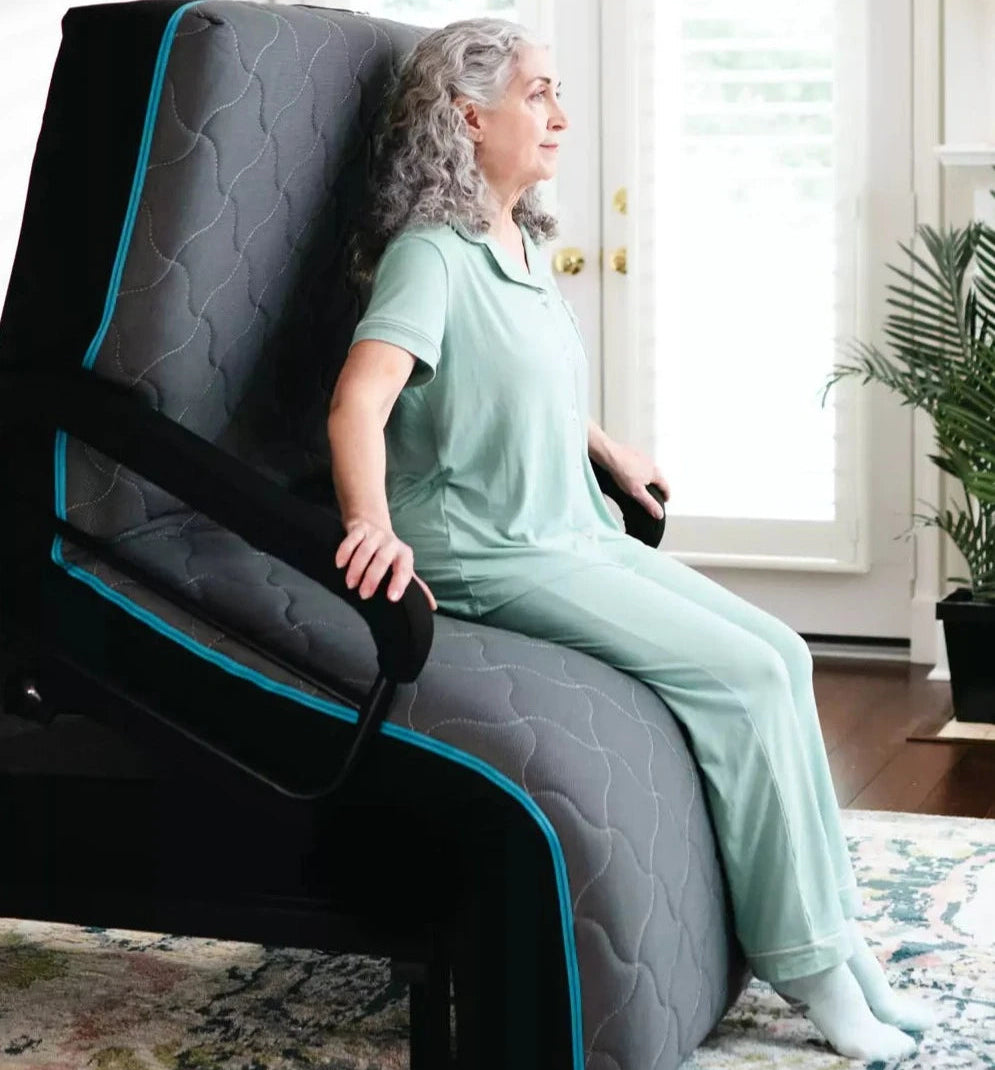
EzLift beds are not billed as patient lifts
A sleep-to-stand bed is a home bed that can help a person move toward sitting or standing. It is not a Hoyer-style or sit-to-stand patient lift, and it does not replace a patient lift for someone who cannot bear weight. For Medicare rules on beds, see does Medicare cover beds?
EzLift is not a Medicare-enrolled supplier. EzLift beds are not billed to Medicare, Medicaid or insurance.
FAQ
Does Medicare cover Hoyer lifts?
CMS Policy Article A52516 says the original device coded E0635 was the Hoyer, an electric lift that uses a sling or seat on a boom. Medicare can cover that style of lift when LCD L33799's transfer and bed-confined criteria are met and you get the lift from a Medicare-enrolled supplier. The brand name alone does not create coverage. E0630 describes a hydraulic or mechanical patient lift, including its seat, sling, straps or pads. A hydraulic Hoyer-type lift may qualify under E0630 when the coverage rules are met.
Does Medicare cover sit-to-stand lifts?
The CMS coverage pages reviewed here do not list "sit-to-stand lift" as its own category. Ask a Medicare-enrolled DME supplier which HCPCS code applies to the specific model and whether it meets the patient-lift criteria in LCD L33799. Confirm with 1-800-MEDICARE before you buy.
What are the Medicare coverage rules for a patient lift?
LCD L33799 says a patient lift is covered if transfer between bed and a chair, wheelchair, or commode is required and, without the lift, the beneficiary would be bed confined. Codes E0630, E0635, E0639, and E0640 can be covered when that test is met. NCD 280.1 also requires a determination that periodic movement is needed to improve the condition or slow its deterioration. Under Original Medicare, Part B covers eligible DME prescribed by your doctor or other treating health care provider for use in your home.
How much do I pay for a Medicare-covered patient lift?
For Original Medicare, Medicare publication 11045 says you generally pay 20% of the Medicare-approved amount after the yearly Part B deductible, if you use an enrolled supplier. Ask whether the supplier accepts assignment. Call 1-800-MEDICARE if you need the current details for your case.
Does Medicare pay for an EzLift bed instead of a patient lift?
No. EzLift is not a Medicare-enrolled supplier. EzLift beds are not billed to Medicare, Medicaid or insurance. A bed also does not replace a patient lift for someone who cannot bear weight.
Sources
- Medicare.gov, Medicare Coverage of Durable Medical Equipment and Other Devices (publication 11045): https://www.medicare.gov/publications/11045-medicare-coverage-of-dme-and-other-devices.pdf
- CMS, National Coverage Determination 280.1, Durable Medical Equipment Reference List: https://www.cms.gov/medicare-coverage-database/view/ncd.aspx?ncdid=190
- CMS, Local Coverage Determination L33799, Patient Lifts: https://www.cms.gov/medicare-coverage-database/view/lcd.aspx?lcdid=33799
- CMS, Policy Article A52516, Patient Lifts: https://www.cms.gov/medicare-coverage-database/view/article.aspx?articleId=52516
- CMS Medicare Learning Network, Patient Lifts compliance tip sheet: https://www.cms.gov/training-education/medicare-learning-networkr-mln/compliance/medicare-provider-compliance-tips/patient-lifts
- Medicare.gov, Medical equipment suppliers directory: https://www.medicare.gov/medical-equipment-suppliers
- CMS E0630, hydraulic or mechanical patient lift: https://www.cms.gov/data-research/monitoring-programs/medicare-fee-service-compliance-programs/medical-review-and-education/master-list-dmepos-items-potentially-subject-conditions-payment/e0630
- CMS E0635, electric patient lift: https://www.cms.gov/data-research/monitoring-programs/medicare-fee-service-compliance-programs/medical-review-and-education/master-list-dmepos-items-potentially-subject-conditions-payment/e0635
- HSE, Getting to grips with hoisting people, Annex 1: https://www.hse.gov.uk/PUBNS/hsis3.pdf
Written by the EzLift Team, EzLift's organizational authorship team. Last reviewed November 8, 2026. This guide summarizes Medicare.gov publication 11045 and CMS public coverage documents (NCD 280.1, LCD L33799, Policy Article A52516, and the MLN Patient Lifts tip sheet). It is not insurance advice or a coverage decision for any person. Coverage rules can change, and individual claims depend on medical documentation and the supplier. Confirm current rules with Medicare (1-800-MEDICARE) or a Medicare-enrolled DME supplier before you buy. EzLift is not a Medicare-enrolled supplier. EzLift beds are not billed to Medicare, Medicaid or insurance. This article does not claim that an EzLift bed is a patient lift or that a bed replaces a lift for someone who cannot bear weight.