




Does Medicaid Pay for a Lift Bed or Hospital Bed?
Sometimes. Medicaid can pay for medical equipment used at home, and a hospital bed is a familiar example of that kind of equipment. But Medicaid is run by each state, so whether it pays for a particular bed, including a lift bed or sleep-to-stand bed, depends on your state's rules, your health plan and the medical documentation behind the request.
This guide explains the federal rules every state Medicaid program works within, how home and community-based services waivers fit in, what changes when someone has both Medicare and Medicaid, and the questions to ask before you order. It is general information drawn from federal regulations and CMS sources, not legal or benefits advice. EzLift does not decide whether Medicaid will pay for any purchase.
Why the answer depends on your state
CMS, the federal agency that oversees Medicaid, notes that Medicaid coverage can vary by state. Some state programs pay for care directly, and others deliver Medicaid through managed care plans or other integrated care models. Read CMS's guide to people eligible for both Medicare and Medicaid. In practice, that means the people who can give you a real answer are your state Medicaid agency, your Medicaid managed care plan if you have one, or your case manager.
Federal rules still set a floor that every state has to meet, and knowing them helps you ask better questions.
The federal rule: medical equipment is part of home health
Under federal Medicaid regulations, home health services include "medical supplies, equipment, and appliances suitable for use in any setting in which normal life activities take place." The regulation lists these as required items that must be covered according to the home health coverage rules, and it says home health can't be limited to people who are homebound. Read 42 CFR 440.70.
The same regulation defines equipment and appliances as items that are:
- primarily and customarily used to serve a medical purpose,
- generally not useful to a person in the absence of a disability, illness or injury,
- able to withstand repeated use, and
- reusable or removable.
It also says state Medicaid coverage of equipment "is not restricted to the items covered as durable medical equipment in the Medicare program." So a state isn't bound by Medicare's list, but the item still has to meet the definition above.
What states can and can't do
42 CFR 440.70 lets states keep a list of preapproved medical equipment for administrative ease, but it prohibits states from having absolute exclusions of coverage on medical equipment, supplies or appliances. States must have a process, with reasonable and specific criteria, for people to request items that aren't on the state's list. When a state denies a request, it must tell the person about the right to a fair hearing.
That matters for less common equipment. If a bed you're considering isn't on your state's list, the regulation gives you a path to request it, though it doesn't promise approval.
The paperwork Medicaid requires
The federal rules describe several steps before Medicaid pays for medical equipment through home health:
- An order and a plan of care: Equipment is provided on orders from a physician or another licensed practitioner acting within the scope of state law, as part of a written plan of care.
- A face-to-face encounter: A practitioner must document a face-to-face visit related to the main reason the person needs the equipment, no more than 6 months before services start. The regulation says this visit may happen through telehealth, as implemented by the state.
- Ongoing review: A physician or other licensed practitioner must review the person's need for medical supplies, equipment and appliances annually.
Your state or plan may add its own forms or a prior approval step, so ask what it needs before anything is ordered.
Where a lift bed or sleep-to-stand bed fits
Hospital beds are a recognized category of medical equipment. Medicare, for example, lists hospital beds among the durable medical equipment Part B may cover. See Medicare's hospital bed coverage page.
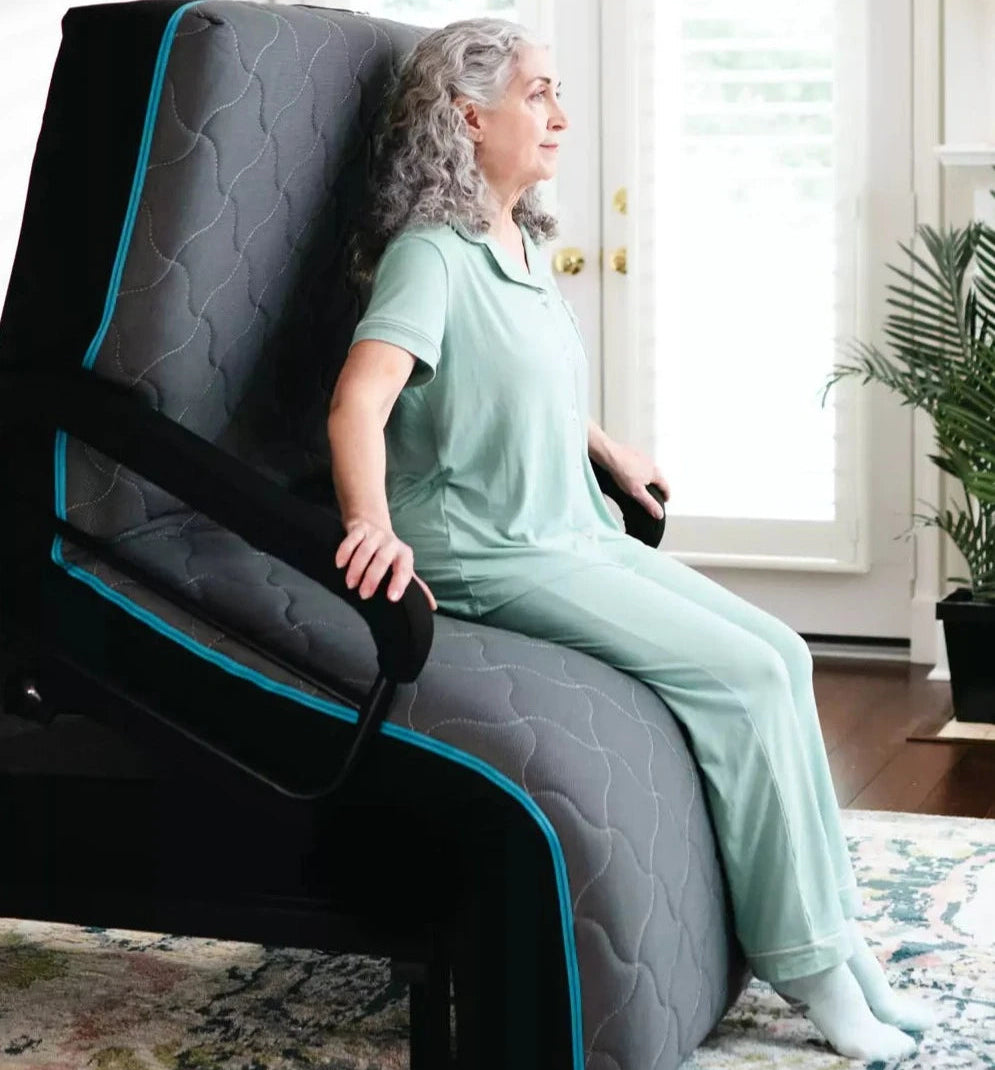
Beds that look and work more like home furniture raise a harder question under the Medicaid definition, because equipment must generally not be useful to someone without a disability, illness or injury. Whether a particular lift bed, sleep-to-stand bed or adjustable bed meets that standard is a decision for your state or plan, based on the person's documented medical needs. The federal regulation doesn't name these beds either way.
If you aren't sure which kind of bed you need, a practitioner or occupational therapist who knows the person's condition is the best starting point. Our explainer on how a sleep-to-stand bed differs from an adjustable base can help you describe the options in that conversation.
Home and community-based services waivers
Some Medicaid help at home comes through home and community-based services (HCBS) waivers rather than the regular home health benefit. Medicaid.gov says nearly all states and DC offer services through these waivers, which serve people who prefer to receive long-term care at home or in the community rather than in an institution. Eligible people must need a level of care that would qualify them for an institutional setting under the state's rules, and states choose the maximum number of people each waiver serves. Read Medicaid.gov's overview of 1915(c) HCBS waivers.
CMS's technical guide for these waivers includes a standard service called "specialized medical equipment and supplies." Its core definition covers devices, controls or appliances specified in the plan of care that help participants increase their ability to perform activities of daily living, as well as durable medical equipment not available under the state plan that is necessary to address functional limitations. It excludes items that aren't of direct medical or remedial benefit to the participant. Read CMS's 1915(c) waiver technical guide.
Each state decides which services its waivers offer and can narrow that definition, so ask the waiver's case manager whether equipment like this is covered in your state's program. The Congressional Research Service notes that states can cap waiver enrollment and that many maintain waiting lists. Read the CRS report on 1915(c) waivers.
If you have both Medicare and Medicaid
Medicare.gov says that for people with both Medicare and full-benefit Medicaid, Medicare pays first for Medicare-covered services and Medicaid pays last, after Medicare and any other insurance. Read how Medicare works with Medicaid. CMS adds that Medicaid may cover costs Medicare doesn't cover or only partly covers.
For a hospital bed, that usually means starting with Medicare's rules. Medicare's hospital bed page says Part B covers medically necessary equipment prescribed for use at home, that you generally pay 20% of the Medicare-approved amount after the Part B deductible, and that Medicare only pays for equipment from suppliers enrolled in Medicare. Our article on whether Medicare covers beds covers that side in more detail.
The supplier also matters on the Medicaid side. CMS guidance on dual eligibility describes state Medicaid payment for items provided by a Medicaid-enrolled provider or supplier. Read CMS's FAQ on provider enrollment for dually eligible people. Before you order, ask your plan or state agency which suppliers it will pay.
Questions to ask before you order
Copy these into a call or email to your state Medicaid agency, managed care plan or case manager:
- Does my coverage include a hospital bed, an adjustable lift bed or a sleep-to-stand bed as medical equipment, and is it on your preapproved list?
- If it isn't on the list, how do I request it, and what criteria will you use?
- Do you need prior approval, and what should the practitioner's order and plan of care include?
- Has the required face-to-face visit already happened, or do we need to schedule one?
- Which suppliers can you pay, and must they be enrolled with Medicaid (and Medicare, if I have both)?
- Does my HCBS waiver cover specialized medical equipment, and is there a dollar limit or waiting list?
- If you deny the request, how do I get the decision in writing and ask for a fair hearing?
Keep the answers in writing. If a request is denied, the federal rule described above requires the state to tell you about your right to a fair hearing.
Other ways families pay for a bed
EzLift beds are not billed to Medicare, Medicaid or other insurance. If Medicaid doesn't cover the bed you want, some families use a health savings account or flexible spending account, and EzLift's checkout offers Flex for paying with HSA or FSA funds (eligibility depends on your plan, and Flex may require a letter of medical necessity). Our guide on using an HSA or FSA for a lift bed explains the IRS rules. For broader help arranging care, see how to get help for an elderly parent.
Related reading
Still choosing a bed? Read how to choose a bed for help getting out of bed and how to file a Medicare claim for a bed. To compare models and current pricing before you talk to your plan, browse the EZLift Bed, EzLift Deluxe, Elevra Rotating Bed and Hi-Lo Pro product pages.
Written by the EzLift Team, EzLift's organizational authorship team. Sources checked October 17, 2026, including the current text of 42 CFR 440.70, Medicare.gov, Medicaid.gov, CMS publications and the CMS 1915(c) waiver technical guide (Version 3.6). This guide offers general information about federal Medicaid rules; it is not legal, benefits or medical advice and has not received benefits-professional review. Your state's rules, your plan and your own circumstances determine coverage.