




Getting In and Out of Bed With Parkinson's: Tips From Parkinson's Specialists
Quick answer: Parkinson's specialists teach a roll-then-push method. Bend your knees, roll onto your side, lower your legs off the bed and push up with your arms. A firm mattress, a satin panel across the middle of the bed and, if your care team agrees, a bedside grip can help. If bed moves get harder, ask the doctor about medication timing and see a therapist.
Why bed is hard with Parkinson's
The National Institute of Neurological Disorders and Stroke (NINDS) lists four common symptoms of Parkinson's disease: tremor, rigidity (muscle tightening that can cause stiffness), bradykinesia (slower movement), and postural instability, meaning balance problems that can increase the risk of falls. It says simple daily tasks that once came automatically may take much longer. (NINDS, Parkinson's Disease)
And bed asks for exactly those skills: rolling, sitting up, shifting your weight, standing. The Parkinson's Foundation says pain, stiffness or limited mobility can make turning over in bed harder, and that Parkinson's medications may wear off during the night and make it worse. (Parkinson's Foundation, Sleep Disorders and Problems) It also says moving from bed to standing can be difficult, even nerve-wracking, during "off" time. (Parkinson's Foundation, Activities of Daily Living)
So start with the doctor, not a gadget. The Foundation's Practical Pointers guide says to discuss trouble getting in and out of bed, or turning over, with your health care provider, because your medication may need adjusting. (Parkinson's Foundation, Practical Pointers)
How to get out of bed, step by step
This sequence comes from the Parkinson's Foundation guides. A physical or occupational therapist can teach it and help you practice it safely at home.
- Start on your back. Bend your knees so your feet rest flat on the mattress. If mornings are stiff, the Foundation suggests moving the knees side to side from here to loosen up first.
- Roll toward the edge. Let your knees fall toward the side you are rolling to. Reach across your body with your top arm, and turn your head to look the way you are rolling.
- Use a grip if you have one and your care team has agreed to it. For people helping a loved one, the Foundation suggests reaching across to hold a side rail or bed pole for a firmer hold.
- Legs down, body up. Lower your feet off the bed as you push with your arms into a sitting position.
Sources: Parkinson's Foundation, Sleep and Moving in Bed; Practical Pointers; Activities of Daily Living.
How to get into bed
The Practical Pointers guide treats getting into bed like sitting in a chair, then lying down in one motion:
- Approach the bed as you would a chair, and feel the mattress behind both legs.
- Lower yourself slowly to sitting, using your arms to control the descent.
- Lean onto your forearm and let your trunk go down to the side. As your trunk goes down, your legs will want to come up, like a see-saw.
- Once your legs are on the bed, roll onto your back.
One thing not to do: put a knee up on the mattress first and crawl in. The Foundation says this makes it hard to get your body in good alignment.
Turning over and scooting in bed
To turn over, the Foundation's steps are the same opening move: bend your knees with your feet flat, turn your head, reach your arm, and let your knees fall the way you want to roll. To scoot sideways, bend your knees, push into the bed with your feet and hands to lift your hips, shift them, then move your feet to match.
Bedding can help. The Parkinson's Foundation suggests a piece of slippery satin fabric across the middle third of the bed, under the shoulders and hips, and says to avoid flannel sheets and nightwear that add friction. It also suggests skipping the top sheet in favor of a lightweight comforter, so feet do not get tangled.
Parkinson's UK adds two cautions. Keep an area with some friction at the end or sides of the bed so you can still get a grip. And do not use satin sheets and satin pyjamas at the same time, because together they can make you slide out of bed too quickly. (Parkinson's UK, Bedroom equipment)
Bed set-up and equipment
| Item | What the specialists say it does | What to watch |
|---|---|---|
| Firm mattress | Makes rolling and moving easier (Parkinson's Foundation) | Avoid water beds or very soft mattresses |
| Bed rail or bed pole | Gives a hand grip for turning, sitting up and getting out (Parkinson's Foundation) | Talk with your care team first; FDA lists Parkinson's among higher-risk conditions for rail entrapment |
| Bed raisers | Lift the bed a few inches, usually 3 to 6, to make getting in and out easier (Parkinson's UK) | Not too high, and the bed legs must sit deep inside the raisers |
| Mattress raiser | Lifts you toward sitting; mechanical, electric or air types (Parkinson's UK) | Can make you slide down and out of the bed in the raised position |
| Electric profiling or hospital bed | Raises and lowers the head and knee sections to help you sit up (Parkinson's UK) | Keep cords, lines and bedding clear of moving parts |
| Over-bed trapeze or rope ladder | Lets a person pull up from lying to sitting (Parkinson's UK) | Needs a lot of upper body strength, so it does not suit many people with Parkinson's |
The Foundation's bed guide also lists slide sheets, which make turning easier, and blanket supports, which keep blankets off the feet. For couples, it suggests separate blankets, twin beds or separate rooms if both of you are losing sleep, with a call button or monitor if you sleep apart.
About rails: FDA's advice for consumers names Parkinson's disease in its list of conditions linked to a higher risk of entrapment and injury from adult portable bed rails. (FDA, Recommendations for Consumers and Caregivers about Adult Portable Bed Rails) The Parkinson's Foundation also says to talk with your care team before using one. Our guide to bed rails for elderly adults covers the safety rules and fit checks.
Tips for care partners
- Give simple cues so the person lines their body up before sitting. Make sure the backs of both legs touch the bed first.
- Help bring the legs up as they lie down, keeping the body in line.
- Avoid pulling on arms or shoulders. The Foundation suggests pillows or a slide sheet instead.
- Ask for a physical or occupational therapy session so you both learn the moves in person.
Plan the night trip to the bathroom as well. The Practical Pointers guide suggests a well-lit path from bed to bathroom and a floor kept clear of shoes and papers. The Foundation's sleep page says a portable commode next to the bed can cut the effort if mobility is a concern.
Where a lift bed fits
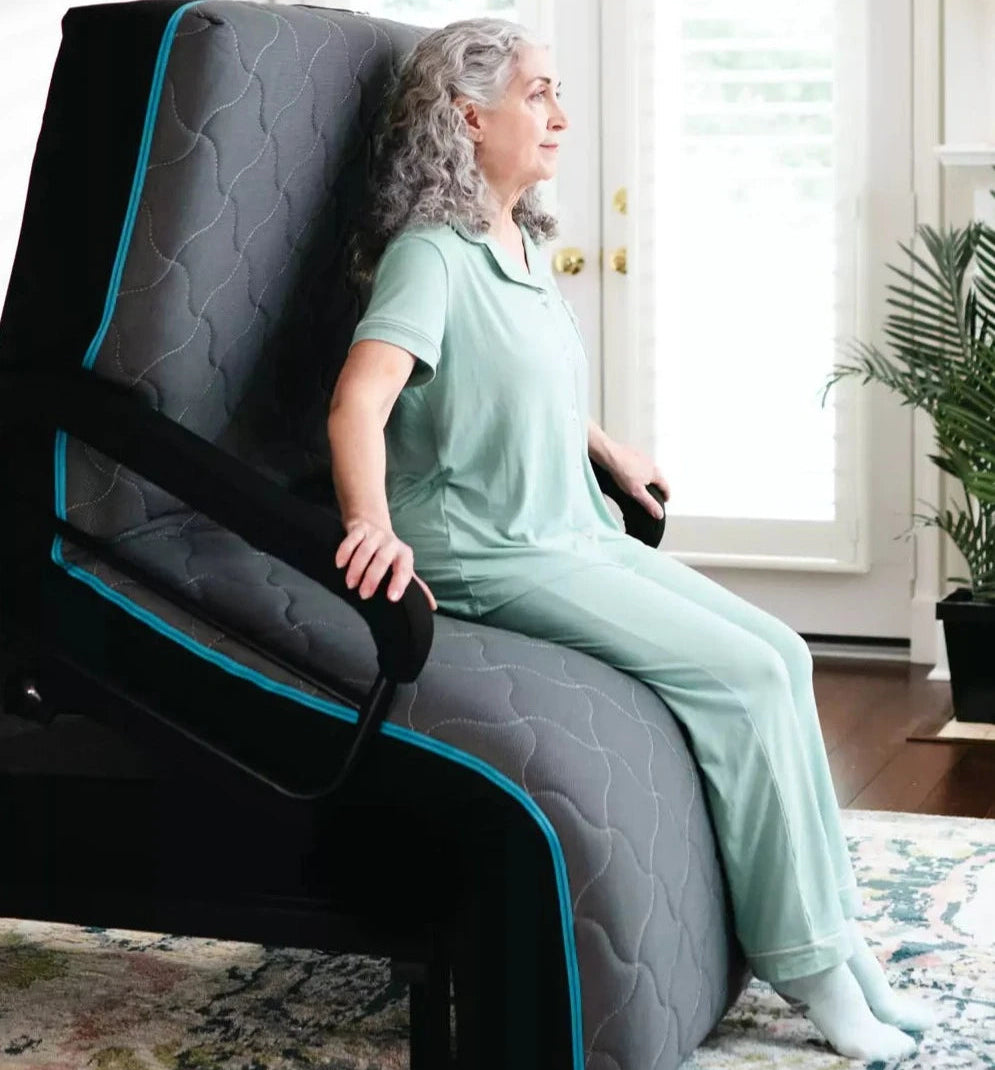
Both groups mention powered beds. The Foundation's bed guide says adjustable beds let you raise or lower parts of the bed to help with comfort, sitting up and getting in and out. EzLift sells lift beds for home use. We do not claim that any bed treats Parkinson's or prevents falls. If you are comparing types, our guide to hospital, adjustable and sleep-to-stand beds sets out the differences, and best bed height for seniors shows how to measure for sitting and standing.
FAQ
What is the easiest way to get out of bed with Parkinson's?
The Parkinson's Foundation teaches a roll-then-push method. Bend your knees with your feet flat on the bed, let your knees fall toward the edge as you reach across with your top arm and turn your head, then lower your feet off the bed while you push up with your arms to sit. A physical therapist can teach it in person.
Do satin sheets help with Parkinson's?
The Parkinson's Foundation and Parkinson's UK both suggest satin to make turning over easier, often as a panel across the middle of the bed. Parkinson's UK says to keep an area with some friction at the end or sides of the bed for grip, and not to use satin sheets and satin pyjamas together, because together they can make you slide out of bed too quickly.
What kind of mattress is best for Parkinson's?
The Parkinson's Foundation suggests a firm mattress so rolling and moving are easier, and says to avoid water beds or very soft mattresses that make it hard to roll or move. Lie on a mattress and try turning over before you buy.
Is a hospital bed or adjustable bed good for someone with Parkinson's?
It can help some people. Parkinson's UK says electric profiling beds and hospital beds let you raise and lower the head and knee sections, which can help you sit up from lying down. The Parkinson's Foundation says a hospital bed can be raised for dressing and bathing and lowered when the person gets up. Ask an occupational therapist what suits you.
Are bed rails safe for someone with Parkinson's?
Use caution. FDA's bed rail advice names Parkinson's disease in its list of conditions linked to a higher risk of entrapment and injury. The Parkinson's Foundation says to talk with your care team before using bed rails. If a rail is used, follow FDA's fit checks and inspect it for gaps.
Sources
- National Institute of Neurological Disorders and Stroke, Parkinson's Disease: https://www.ninds.nih.gov/health-information/disorders/parkinsons-disease
- Parkinson's Foundation, Activities of Daily Living (care partners): https://www.parkinson.org/resources-support/carepartners/advanced/daily-living
- Parkinson's Foundation, Sleep Disorders and Problems: https://www.parkinson.org/understanding-parkinsons/non-movement-symptoms/sleep-disorders
- Parkinson's Foundation, Sleep and Moving in Bed (Practical Pointers Guide pages): https://www.parkinson.org/sites/default/files/documents/Sleep-Bed-Pointers.pdf
- Parkinson's Foundation, Activities of Daily Living: Practical Pointers for Parkinson Disease: https://secure.parkinson.org/site/DocServer/Practical_Pointers.pdf
- Parkinson's UK, Bedroom equipment (last updated July 10, 2026): https://www.parkinsons.org.uk/information/equipment-technology/bedroom
- U.S. Food and Drug Administration, Recommendations for Consumers and Caregivers about Adult Portable Bed Rails: https://www.fda.gov/medical-devices/adult-portable-bed-rail-safety/recommendations-consumers-and-caregivers-about-adult-portable-bed-rails
Written by the EzLift Team, EzLift's organizational authorship team. Last reviewed November 12, 2026. This guide summarizes NINDS, Parkinson's Foundation, Parkinson's UK and FDA material. It is not medical advice. Work with your neurologist, physical therapist and occupational therapist on bed moves, equipment and medication timing. This article does not claim that any bed, rail or EzLift product treats Parkinson's disease, prevents falls or prevents injury.