




Hospital Bed Trapeze Bars: Who They Help and How to Use One Safely
Quick answer: A hospital bed trapeze bar is a triangle handle that hangs over the bed so a person with enough upper-body strength can pull to reposition. Medicare Local Coverage Determination L33820 covers trapeze equipment (HCPCS E0910 and E0940) if the person needs the device to sit up because of a respiratory condition, to change body position for other medical reasons, or to get in or out of bed. Heavy-duty trapeze codes (E0911 and E0912) apply when those criteria are met and the person's weight is more than 250 pounds. A trapeze is an assistive aid, not a full-body lift. Ask a physical or occupational therapist how to use one safely. EzLift is not a Medicare-enrolled supplier. EzLift beds are not billed to Medicare, Medicaid or insurance.
What a hospital bed trapeze bar is
A trapeze is a triangle-shaped handle hung from a frame above the mattress. The frame may clamp to a hospital bed or stand on the floor beside it. Able patients pull with their arms to shift their trunk or hips in bed. The Texas Department of Insurance's health-care back-injury safety training describes a trapeze as a triangle-shaped device suspended above the bed that able patients can use to reposition themselves and to assist during a transfer. It also says to adjust the bar so the patient's elbows are slightly bent while grasping it. (Texas Department of Insurance, Back Injury Prevention Safety Training Program for the Health Care Industry (PDF))
The FDA lists a bed trapeze among alternatives caregivers may consider when adult portable bed rails are not appropriate, noting a trapeze can help a person reposition in bed and get in and out of bed. (FDA recommendations for adult portable bed rails)
Who a trapeze may help
A trapeze only helps if the person can grip the handle and pull part of their body weight with the arms. Typical use cases caregivers ask about:
- Repositioning toward the head of the bed
- Lifting the hips for a bedpan or clothing change
- Assisting a sit-up or bed-edge transfer when a clinician has cleared upper-body loading
It is a poor fit when the person is confused, cannot grip safely, has clinician limits on shoulder or chest loading, or needs a full mechanical lift. For full lifts, see our guide to patient lifts for home use and sit-to-stand lift vs Hoyer lift vs sleep-to-stand bed.
Does Medicare cover trapeze bars? (LCD L33820 E0910)
CMS Local Coverage Determination L33820 states:
Trapeze equipment (E0910, E0940) is covered if the beneficiary needs this device to sit up because of a respiratory condition, to change body position for other medical reasons, or to get in or out of bed.
Heavy duty trapeze equipment (E0911, E0912) is covered if the beneficiary meets the criteria for regular trapeze equipment and the beneficiary's weight is more than 250 pounds.
(CMS LCD L33820; same accessory wording on the CMS MLN Hospital Beds tip sheet and the Noridian Hospital Beds and Accessories documentation checklist (PDF))
You still need a Medicare-enrolled supplier, medical records that support the need, and the other hospital-bed accessory rules in L33820 and related articles. Confirm your plan and supplier before you order.
EzLift is not a Medicare-enrolled supplier. EzLift beds are not billed to Medicare, Medicaid or insurance. For hospital bed coverage basics, see does Medicare cover beds? and how to pay for a lift bed without Medicare.
| HCPCS (LCD L33820) | What the LCD says |
|---|---|
| E0910, E0940 | Covered if needed to sit up for a respiratory condition, change body position for other medical reasons, or get in or out of bed |
| E0911, E0912 | Same criteria as regular trapeze, and beneficiary weight more than 250 pounds |
How to use a trapeze more safely
Follow the bed maker's installation manual and the therapist's instructions. The Texas Department of Insurance training says to set the trapeze bar so the person's elbows are slightly bent while grasping it. It also says to position required equipment correctly and lock its wheels during patient transfers. Ask your physical or occupational therapist to assess grip, upper-body loading, rail position and the device's rated load before first use. This article does not provide product-specific installation or loading instructions.
EzLift beds and trapeze bars
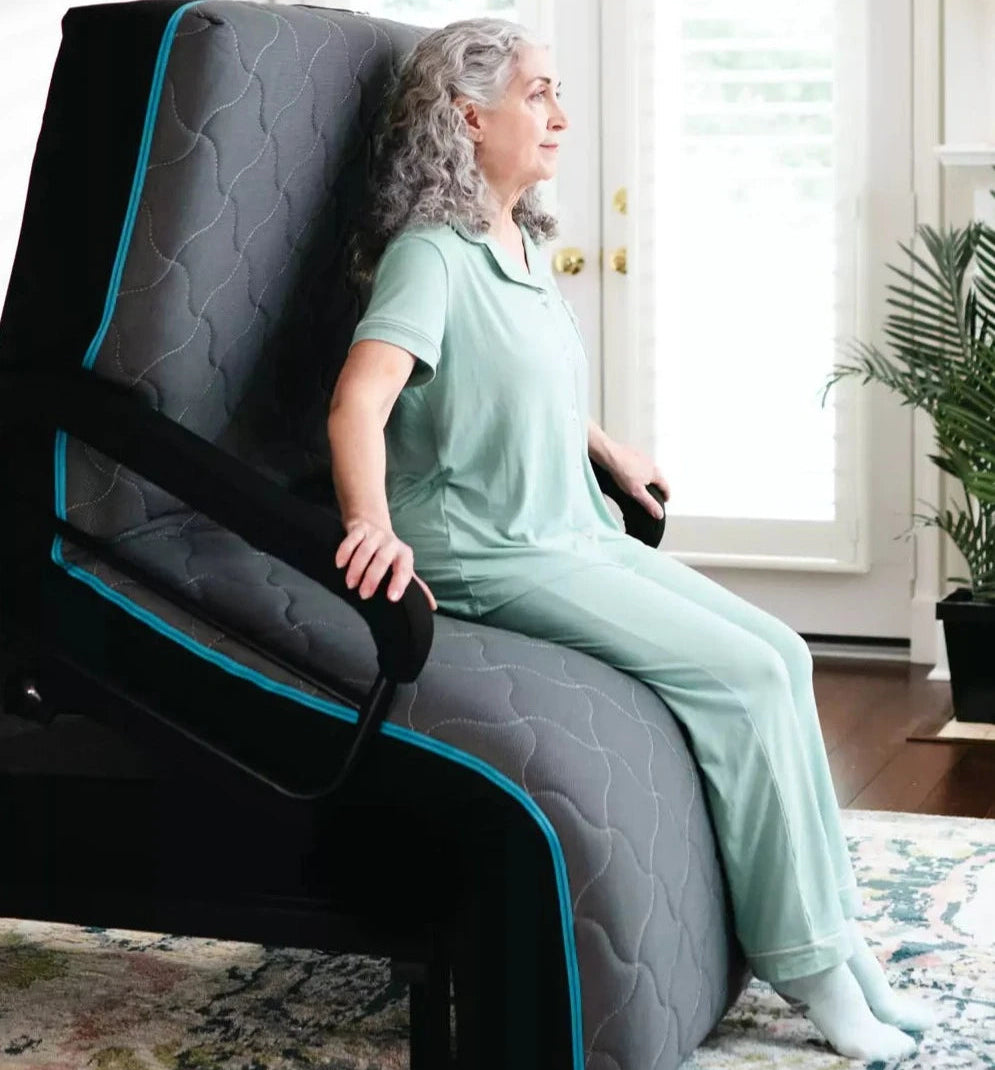
EzLift sleep-to-stand and rotating beds are home lift beds, not Medicare hospital beds with trapeze accessory coding. They are designed so the bed itself helps a person move from lying to a standing or seated exit path, which is a different approach than an overhead pull bar. See EzLift Deluxe Sleep-to-Stand, Elevra Rotating, and hospital bed vs adjustable vs sleep-to-stand.
FAQ
What is a hospital bed trapeze bar?
It is a triangle handle hung over the bed so a person with enough arm strength can pull to reposition. The frame may attach to the bed or stand on the floor.
Does Medicare cover trapeze bars?
Under LCD L33820, trapeze equipment (E0910, E0940) is covered if the person needs it to sit up because of a respiratory condition, to change body position for other medical reasons, or to get in or out of bed. Heavy-duty codes apply over 250 pounds when the base criteria are met. Confirm with Medicare or an enrolled supplier.
Who should not use a trapeze?
People who cannot grip safely, who have clinician limits on upper-body loading, or who need a full mechanical lift. Ask PT or OT before first use.
Do EzLift beds include a trapeze?
EzLift beds are sleep-to-stand and rotating lift beds. They are not sold as Medicare hospital beds with E0910 trapeze accessories. Compare features on the product pages linked above.
Sources
- CMS, Local Coverage Determination L33820, Hospital Beds And Accessories (E0910 / E0940 / E0911 / E0912 wording): https://www.cms.gov/medicare-coverage-database/view/lcd.aspx?lcdid=33820
- CMS MLN, Hospital Beds & Accessories compliance tip sheet: https://www.cms.gov/training-education/medicare-learning-networkr-mln/compliance/medicare-provider-compliance-tips/hospital-beds
- Noridian, Documentation Checklist for Hospital Beds and Accessories (PDF): https://med.noridianmedicare.com/documents/2230715/26734435/Documentation+Checklist+-+Hospital+Beds+and+Accessories.pdf
- Texas Department of Insurance, Back Injury Prevention Safety Training Program for the Health Care Industry (trapeze description and elbow-bend adjustment): https://www.tdi.texas.gov/pubs/videoresource/stpbkinjhc.pdf
- FDA, Recommendations for Consumers and Caregivers about Adult Portable Bed Rails (lists bed trapeze as a repositioning alternative): https://www.fda.gov/medical-devices/adult-portable-bed-rail-safety/recommendations-consumers-and-caregivers-about-adult-portable-bed-rails
Written by the EzLift Team, EzLift's organizational authorship team. Last reviewed November 7, 2026. This guide summarizes CMS LCD L33820 and public clinical safety training; it is not medical or insurance advice. Confirm coverage with Medicare (1-800-MEDICARE) or your plan, and ask a physical or occupational therapist before first use. EzLift is not a Medicare-enrolled supplier and does not sell Medicare-coded trapeze bars as hospital bed accessories.