



How to Pay for a Lift Bed Without Medicare: State Assistive Technology Programs and Other Help
If Medicare won't pay for the bed you want, you still have options. Every state has a federally funded assistive technology program that can help you try equipment before you buy it, find used equipment and look for funding, and many of them offer loan programs for assistive devices. Your local Area Agency on Aging is a second place to call. This guide explains what those programs do, how to reach them and what to ask.
It is general information drawn from federal program sources, not legal, financial or benefits advice. No program described here promises to pay for any particular bed, including a lift bed or sleep-to-stand bed, and EzLift doesn't decide or arrange any program's funding.
Why Medicare usually isn't the route for a lift bed
Medicare Part B may cover a hospital bed as durable medical equipment when a provider prescribes it for use at home. After the Part B deductible, you generally pay 20% of the Medicare-approved amount if the supplier accepts assignment, and Medicare only pays for equipment from suppliers enrolled in Medicare. See Medicare's hospital bed coverage page.
EzLift is not a Medicare-enrolled supplier, and EzLift beds are not billed to Medicare, Medicaid or insurance. If you're weighing a hospital bed against other kinds of beds, our guide to hospital beds vs adjustable beds vs sleep-to-stand beds explains how Medicare treats each, and Does Medicare Cover Beds? covers Medicare's rules in more detail.
So for many families the real question is how to plan, compare and pay for a bed outside Medicare. That's where state assistive technology programs come in.
Start with your state assistive technology program
The federal Assistive Technology Act funds a State Grant for Assistive Technology Program in every state, the District of Columbia, Puerto Rico and the U.S. territories. The Administration for Community Living (ACL), the federal agency that oversees the grants, says the program makes assistive technology devices and services more available and accessible to people with disabilities of all ages and their families. Each state gets one grant, and the size of the award is based largely on state population. Read ACL's overview of the assistive technology programs.
ACL defines assistive technology broadly: any item, device or piece of equipment used to maintain or improve the independence and function of people with disabilities and seniors in daily living, work, school and recreation. It also includes services such as assessment, customization, repair and training.
To find your program, use the State AT Program directory from the AT3 Center, which provides training and technical assistance to state AT programs. Pick your state and the directory lists the program's phone, website and contacts for each service it offers.
For example, Florida's entry lists the Florida Alliance for Assistive Services and Technology (FAAST), with contacts for device loan, device demonstration, device reutilization and financial loans. Not every state lists every service, so check your own state's entry.
What state AT programs can do for you
ACL describes four main state-level activities under the Assistive Technology Act. Here's what each one means for a family shopping for a bed or other equipment.
1. Device demonstrations
Demonstrations let you get familiar with types of assistive technology and compare the functions and features of devices through hands-on exploration guided by a knowledgeable professional. Explore AT, the AT3 Center's public information site, says there's most often no charge for information and assistance or a device demonstration. See Explore AT's tips on finding and buying assistive technology.
2. Short-term device loans
Device loan programs let you borrow equipment for a limited time to see whether it meets your needs before you buy. Explore AT notes there is sometimes a small fee for borrowing a device to help cover shipping. What's in each lending library varies by state, so ask what your program has. It may have related equipment rather than the exact item you're considering.
3. Reuse programs
Reutilization programs pass along assistive technology that its original owner no longer needs, so a new owner can get it at substantial cost savings. Inventory depends on donations, so ask what's available and how pickup or delivery works.
4. Financing help, including low-cost loans
State financing activities help people buy assistive technology through financial loans or other programs that provide equipment at no cost or save buyers money. ACL says every state AT program includes financing activities, and since fiscal year 2015 Congress has also funded separate Alternative Financing Program grants.
Explore AT points out why this matters. If you put a purchase on a credit card and don't pay the bill in full each month, it says interest could add anywhere from 12% to 24% to the cost of the item, depending on your rate. An alternative financing program may offer better terms. Explore AT also says your state program may know of other funding possibilities, such as public programs, community organizations, grants or cash loans, even if you think paying out of pocket is the only option.
Loan rules, eligibility and which sellers a loan can be used with differ by state, so get the details from your program before you choose a bed.
Describe the need, not just the product
Explore AT suggests thinking about assistive technology by function, meaning what the device will help a person do, like "rise more easily from a chair," rather than by diagnosis or age. That framing helps when you call your state program. "My mother has trouble getting from lying down to standing at the side of the bed" gives them more to work with than a brand name.
Depending on the cost and complexity of what you're considering, Explore AT says a state program may suggest a formal evaluation or borrowing a device first. A clinician or occupational therapist who knows the person's condition is also a good partner for that conversation. If you're still sorting out the categories, our roundup of devices that help the elderly get out of bed is a useful starting point.
Call your Area Agency on Aging
An Area Agency on Aging (AAA) is a public or private nonprofit agency that a state designates to address the needs of older adults in a city, county or multi-county area. ACL says AAAs coordinate and offer services that help older adults stay in their homes, if that's their preference, such as home-delivered meals and homemaker help. Local names vary. Read ACL's description of Area Agencies on Aging.
Find your local agency through the Eldercare Locator, a public service of ACL, or by calling 1-800-677-1116. You can call or text trained staff, chat online or email.
If a family member is the caregiver, ask about the National Family Caregiver Support Program. It funds information, help getting services, counseling and training, respite care, and "supplemental services, on a limited basis" for eligible caregivers, including adult family members and other informal caregivers of people 60 and older. What counts as a supplemental service, and whether funds are available, depends on your state and local agency. Read ACL's overview of the National Family Caregiver Support Program.
Other ways families pay
A few other routes have their own rules, and we've covered each one separately:
- Medicaid and home and community-based services waivers: Coverage depends on your state and plan. See Does Medicaid Pay for a Lift Bed or Hospital Bed?
- Veterans' benefits: See Does the VA Pay for a Hospital Bed or Lift Bed?
- HSA or FSA funds: At EzLift, you may be able to use HSA or FSA funds through Flex. Eligibility depends on your plan, and Flex may require a letter of medical necessity. Our guide on using an HSA or FSA for a lift bed explains the IRS rules.
Questions to ask before you buy
Copy these into a call or email to your state AT program or Area Agency on Aging:
- Can I see a demonstration of bed or transfer equipment that helps someone get in and out of bed?
- Does your lending library have similar equipment I can borrow, for how long, and is there a fee?
- Do you run a reuse program, and does it have any beds or bed accessories right now?
- Do you offer a financial loan for assistive technology? What are the interest rate, term and eligibility rules?
- Can the loan be used to buy from any seller, or only from certain vendors?
- Do you know of grants, community organizations or other programs in my area that help pay for equipment?
- For the caregiver: does the local caregiver support program offer supplemental services, and how do I apply?
Keep the answers in writing, including any loan terms, before you place an order.
Related reading
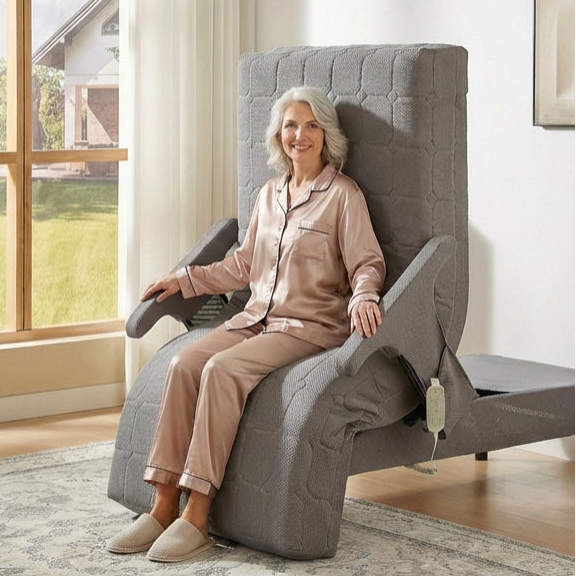
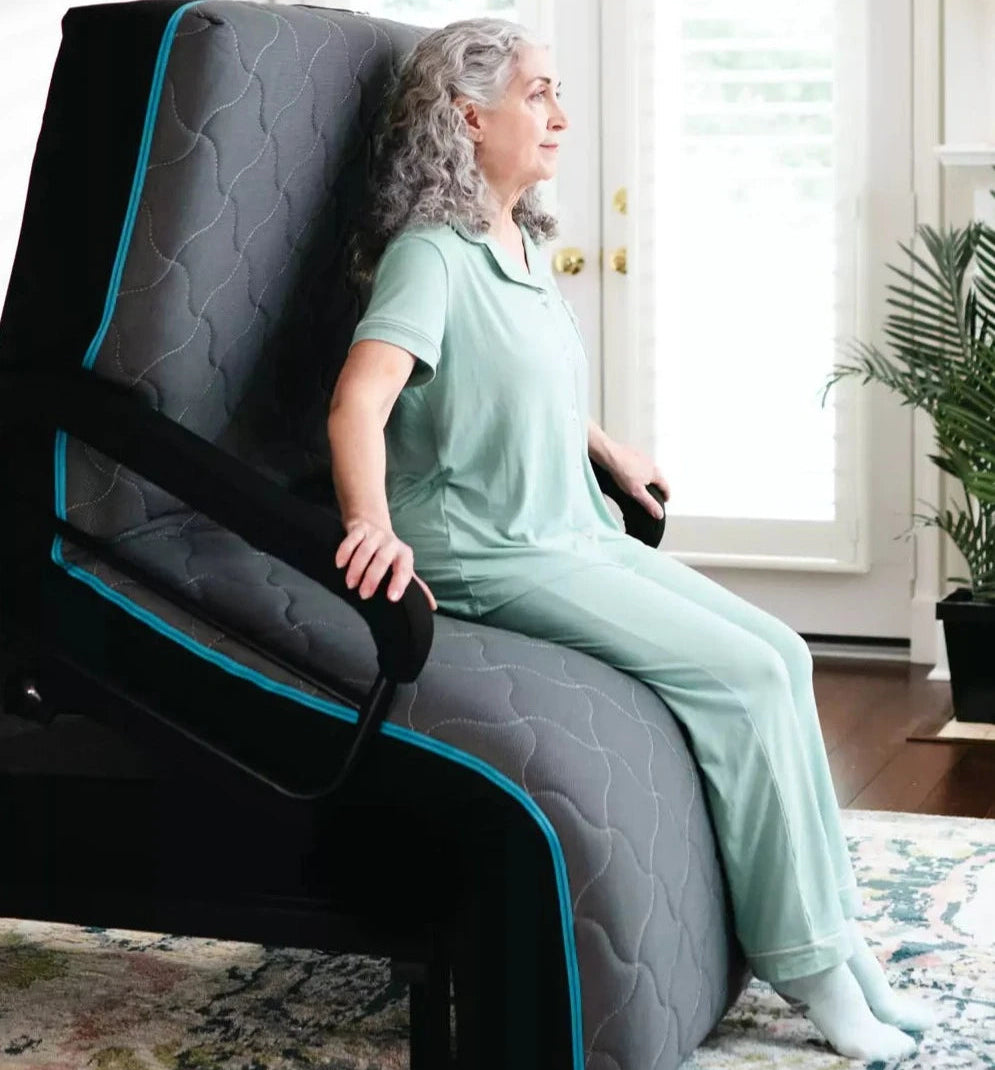
For broader help arranging care, see how to get help for an elderly parent and how to find a certified aging-in-place specialist. To compare models and current pricing before you talk to a program, browse the EZLift Bed, EzLift Deluxe and Elevra Rotating Bed product pages.
Written by the EzLift Team, EzLift's organizational authorship team. Sources checked October 20, 2026: Medicare.gov, the Administration for Community Living's assistive technology, Area Agency on Aging and National Family Caregiver Support Program pages, the Eldercare Locator, and the AT3 Center's State AT Program directory and Explore AT site. This guide offers general information; it is not legal, financial, benefits or medical advice. Program services, eligibility and funding vary by state and can change, so confirm details with each program.