




How to Get Out of Bed After Knee Replacement: Step-by-Step Guidance
Quick answer: To get out of bed after knee replacement, hospital physiotherapy guides say to use your strong leg and arms to move to the edge, swing your legs over the side and sit up. Then stand by pushing up from the bed, not pulling on your walker, with your operated leg slightly forward. Follow your own therapist's steps.
Before your first try
Most people do not do this alone the first time. The Cape Breton Regional Hospital patient guide (Nova Scotia Health) says you will get up and walk on the day of your surgery, and to make sure a nurse or physiotherapist is with you the first few times you get out of bed. You may feel weak or dizzy, and the guide says to tell staff if you do. (Nova Scotia Health, Knee Replacement Surgery guide)
Getting in and out of bed is also a test you have to pass. The American Academy of Orthopaedic Surgeons (AAOS) lists getting in and out of bed by yourself among the goals to reach before you are discharged from the hospital. (AAOS OrthoInfo, Activities After Knee Replacement) MedlinePlus says the same: by the time you go home, you should be able to get into and out of your bed or a chair by yourself. (MedlinePlus, Knee joint replacement: discharge)
Treat the steps below as a refresher. What your physiotherapist shows you on the ward is what you follow at home.
Getting out of bed, step by step
The Cape Breton guide gives the most detailed sequence of the handouts we read:
- Make sure you can reach your walking aid.
- Using your elbows for support, bend your non-operated leg and use it to slide your bottom to the edge of the bed.
- From a semi-lying position, push up on your elbows and hands.
- Slide your hips and legs over to the edge of the bed.
- Swing your body around to sit up.
- Stand up, using your non-operated leg for support.
- Once you have your balance, use your walking aid.
Two other hospital booklets shorten this to one line. Kemptville District Hospital in Ontario and the Horder Centre in East Sussex both say to use your strong leg and your arms to move closer to the edge of the bed, then swing your legs over the side and sit up. Both also say you can lead with either leg. (Kemptville District Hospital, Knee Replacement booklet; The Horder Centre, Total Knee Replacement guide)
The leg hook trick
For many people the hard part is the operated leg. It can feel heavy and stiff in the first days. So several guides let the good leg do the work.
The West Parry Sound Health Centre booklet tells patients to hook their legs by bringing the good leg under the operated leg. Then push up with your arms to bring your upper body upright, and use your arms to steady yourself as you turn and bring your legs off the bed and your feet to the floor. (West Parry Sound Health Centre, A Patient Guide for Knee Replacements) Kemptville District Hospital calls the strong leg a helper hooked under the operated leg. The Horder Centre adds that you can use your stronger leg or a suitable aid under the operated leg for support.
A small but honest note from the West Parry Sound booklet: once your foot is touching the floor, the pain should decrease. That is worth knowing on the first morning at home.
Standing up from the edge of the bed
Sitting up is only half of it. On standing, the guides agree:
- Operated leg slightly forward. Kemptville District Hospital and the Horder Centre say to place your operated leg slightly forward when you stand up, for the first few weeks.
- Push, do not pull. Kemptville says do not pull up from your walker; push from a seated position. The Horder Centre says not to pull or push on walking aids when standing up. Calderdale and Huddersfield NHS says not to use the frame to pull yourself up.
- Weight on the good leg. The Cape Breton guide says to stand using your non-operated leg for support, then reach for your walking aid once you have your balance.
If standing from the bed is much harder than standing from a chair with armrests, tell your therapist. Bed height is often the reason.
Getting back into bed
Most guides just say do the reverse. The detailed ones add a few points worth knowing.
The Cape Breton guide says to back up with your walking aid until you feel the bed behind you, slide your operated leg forward and sit on the edge of the bed. Move the walking aid out of the way. Then use your arms to slide your bottom across the bed and bring both legs up, using your arms or your other leg to lift the operated leg if needed, or having someone help.
Calderdale and Huddersfield NHS recommends getting into bed with the un-operated leg leading because it makes the transfer easier, but says this is not essential. It says to reach back with your hands as you lower yourself, sit back far enough to fully support the operated leg, and then swing your legs onto the bed keeping them together and avoiding any twisting. If that is too difficult, use your arms to lift yourself back onto the bed. (Calderdale and Huddersfield NHS, Therapy Advice Following Total Knee Replacement)
West Parry Sound adds one more warning for getting in: do not flop backwards, because it will only hurt more.
Set up the bed before surgery
The easiest transfer starts with the right bed. MedlinePlus wants the bed low enough that your feet reach the floor as you sit on the edge, and suggests setting up your home so you do not have to climb steps, with a bed or bedroom on the same floor. It also says that when lying in bed you should keep a pillow under your heel or ankle, not your knee.
The Cape Breton guide says your mattress should be at about knee height. If it is too low, think about a box spring or bed blocks. If it is too high, remove the box spring while you recover. And to prevent falling, it says do not use a stool or step to get into your bed. Kemptville District Hospital suggests a firm mattress and raising a low bed on blocks.
The Horder Centre booklet asks patients who are unsure whether their bed is a suitable height to bring the bed's height measurement to the pre-assessment clinic. It's a small step. Honestly, it's the one we'd never skip. West Parry Sound goes further and encourages practicing getting in and out of bed before surgery, and suggests a bed rail if you have trouble.
For more on measuring, see our guide to the best bed height for seniors. Our list of equipment you'll need after hip or knee replacement covers leg lifters and other aids, and how to sleep after knee replacement covers positions once you are in bed.
When getting out of bed stays hard
Recovery takes a while. MedlinePlus notes that walkers or crutches may be needed for up to 3 months. If getting out of bed is still a struggle after you are home, ask your surgeon or physiotherapist before changing your routine. Our article on knee replacement recovery time for older adults walks through the usual timeline, and how to get out of bed after hip replacement covers the hip version, which has different precautions.
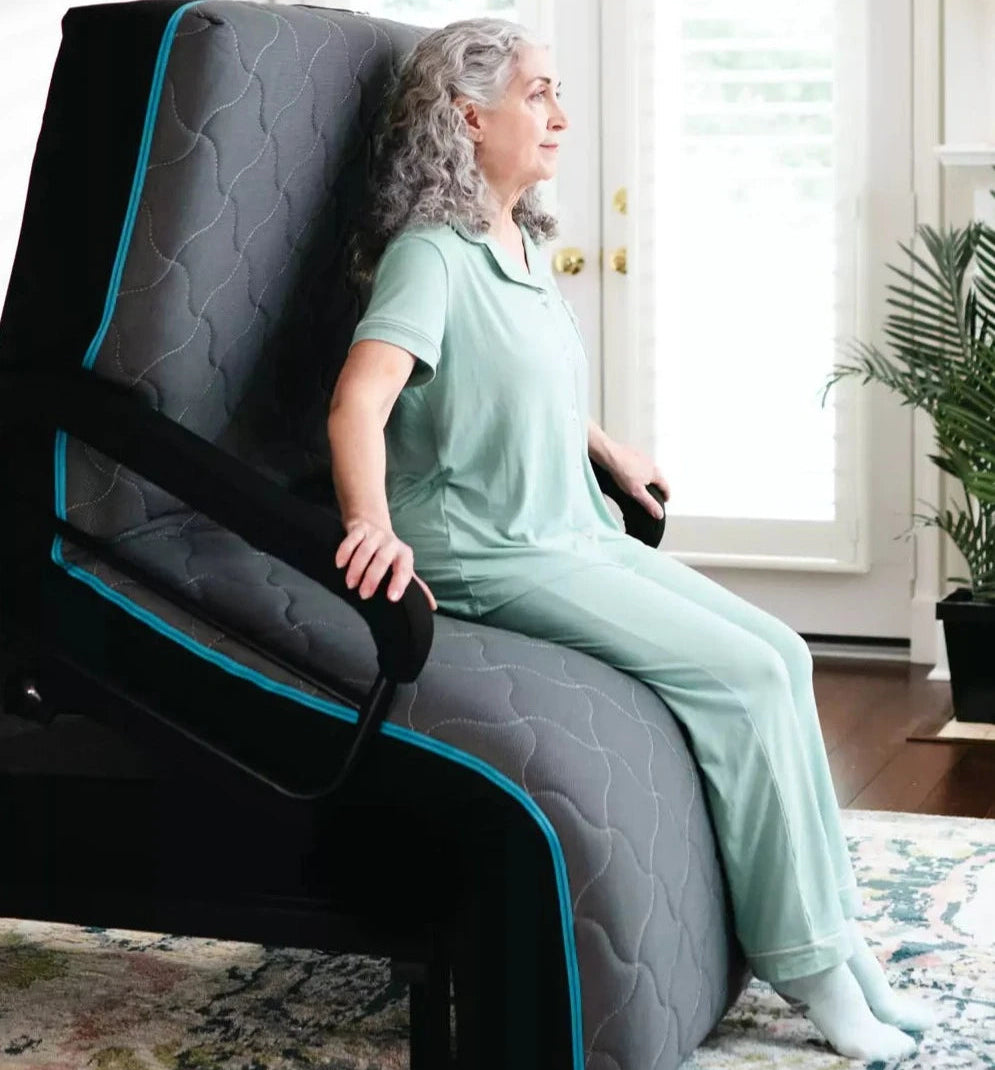
Some families also look at a bed that changes height or helps with sitting up and standing. EzLift sells lift beds for home use. They are not medical treatment and do not replace the plan your surgeon and therapist give you.
FAQ
Which leg goes first when getting out of bed after knee replacement?
Several hospital guides say you can lead with either leg. The Kemptville District Hospital and Horder Centre booklets both say this. Calderdale and Huddersfield NHS recommends getting into bed with the un-operated leg leading because it makes the transfer easier, but says this is not essential. Follow what your own physiotherapist shows you.
How soon can I get out of bed after knee replacement?
Often on the day of surgery. The Cape Breton Regional Hospital guide says you will get up and walk on the day of your surgery, with a nurse or physiotherapist present the first few times. Calderdale and Huddersfield NHS says morning patients are highly likely to get out of bed the same day, and afternoon patients are usually seen the next morning.
How do I lift my operated leg into bed?
Hospital guides describe a leg hook: slide your strong leg under the operated leg and use it as a helper. You can also use your arms to lift the operated leg, have someone help, or use a suitable aid under the operated leg. Ask your therapist which method suits you.
Should I use a bed rail after knee replacement?
The West Parry Sound Health Centre booklet encourages practicing getting in and out of bed before surgery. It says that if you have difficulty, it is well advised to rent or buy a bed rail and have it installed before your surgery day. Ask your care team whether a rail is right for your bed.
How high should my bed be after knee replacement?
According to MedlinePlus, the bed should be low enough that your feet touch the floor when you sit on its edge. The Cape Breton Regional Hospital guide says the mattress should be at about knee height and warns against using a stool or step to get into bed.
Sources
- Nova Scotia Health, Cape Breton Regional Hospital, Knee Replacement Surgery: Patient and Family Guide: https://www.nshealth.ca/sites/default/files/documents/2240-2026.01.07.pdf
- Kemptville District Hospital, Knee Replacement: Patient Information Booklet (2026): https://www.kdh.on.ca/wp-content/uploads/2026/02/KDH-TKR-Patient-education-booklet-2026.pdf
- Calderdale and Huddersfield NHS Foundation Trust, Therapy Advice Following Total Knee Replacement Surgery: https://www.cht.nhs.uk/fileadmin/site_setup/contentUploads/Services/Clinical/Enhanced_Recovery_After_Surgery/CHFT_therapy_guide_following_total_knee_replacement-surgery-a4_2021_06_24_134835.pdf
- The Horder Centre (East Sussex MSK), A Patient's Guide to Total Knee Replacement: https://eastsussexmsk.nhs.uk/wp-content/uploads/2020/04/total-knee-replacement-booklet-1.pdf
- West Parry Sound Health Centre, A Patient Guide for Knee Replacements: https://www.wpshc.com/wp-content/uploads/2025/04/Total-Knee-Replacement-Education-Booklet-Dec-23-2024.pdf
- American Academy of Orthopaedic Surgeons, OrthoInfo, Activities After Knee Replacement: https://www.orthoinfo.org/bodypart/kneelower-leg/activities-after-knee-replacement/
- MedlinePlus (U.S. National Library of Medicine), Knee joint replacement: discharge: https://medlineplus.gov/ency/patientinstructions/000170.htm
Written by the EzLift Team, EzLift's organizational authorship team. Last reviewed November 11, 2026. This guide summarizes hospital patient handouts, AAOS and MedlinePlus material. It is not medical advice. Your surgeon, physiotherapist or occupational therapist may give you different instructions, and theirs come first. This article does not claim that any bed or EzLift product speeds recovery, prevents falls, prevents injury or treats any condition.