




Hospice Bed vs Hospital Bed: Is There a Difference?
Quick answer: A hospice bed is usually a hospital bed supplied through hospice. The difference is the coverage route: under the Medicare hospice benefit the hospice supplies it as part of the plan of care, with no cost to you for covered hospice care. Under Part B, a doctor orders a medically necessary bed, and you usually pay 20% after the deductible if the supplier accepts assignment.
Why people say "hospice bed"
When a family member starts hospice at home, one of the first things to arrive is often an adjustable bed with rails. Families call it the hospice bed simply because the hospice brought it. The federal hospice rules do not describe a special kind of bed. They describe equipment.
The regulation that lists covered hospice services, 42 CFR 418.202, says appliances may include covered durable medical equipment as well as other self-help and personal comfort items related to the palliation or management of the patient's terminal illness. It adds that equipment is provided by the hospice for use in the patient's home while he or she is under hospice care. (eCFR, 42 CFR 418.202 Covered services) The CMS Medicare Benefit Policy Manual repeats that wording in its hospice chapter. (CMS, Medicare Benefit Policy Manual, Chapter 9) The American Hospice Foundation names hospital beds, wheelchairs and walkers as examples of the medical equipment the Medicare hospice benefit covers. (American Hospice Foundation, What services are typically covered by hospice benefits?)
The CMS policy for hospital beds, LCD L33820, sorts beds by type, such as fixed height and semi-electric, with codes for each. (CMS, LCD L33820 Hospital Beds and Accessories) So the useful question is which set of rules you are under.
Hospice benefit vs Part B: side by side
| Question | Under the Medicare hospice benefit | Under Medicare Part B (no hospice) |
|---|---|---|
| Who qualifies | A person with Part A whose hospice doctor and regular doctor certify a terminal illness with a life expectancy of 6 months or less, who accepts comfort care and signs a hospice election statement | A person whose doctor orders a medically necessary bed for use in the home and who meets the LCD L33820 criteria |
| Who supplies the bed | The Medicare-approved hospice provider, as part of the plan of care | A DME supplier enrolled in Medicare |
| What you pay | Nothing for covered hospice care from a Medicare-approved hospice | 20% of the Medicare-approved amount after the Part B deductible, if the supplier accepts assignment |
| How long it stays | While the person is under hospice care | Depends on the item: rent, buy, or choose; some items become yours after a certain number of rental payments |
Sources: Medicare.gov, Hospice care; Medicare.gov, Hospital beds; 42 CFR 418.202.
How the hospice route works
Medicare.gov describes hospice as end-of-life care for people with illnesses that can't be cured. To qualify you must have Part A, your hospice doctor and your regular doctor (if you have one) must certify that you are terminally ill with a life expectancy of 6 months or less, you accept comfort care instead of care to cure the illness, and you sign a statement choosing hospice.
Once you choose hospice, Medicare.gov says your hospice benefit should cover everything you need, and you and your family work with the hospice team to set up a plan of care. The Medicare hospice booklet lists what that plan can include, from doctor and nursing services to medical equipment like wheelchairs or walkers and medical supplies like bandages and catheters. (Medicare, Medicare Hospice Benefits booklet)
On cost, Medicare.gov says you pay nothing for hospice care from a Medicare-approved hospice provider. There is a copayment of up to $5 per prescription for outpatient drugs for pain and symptom management, and you may pay 5% of the Medicare-approved amount for inpatient respite care. Our guide to Medicare and respite care covers that part.
Two limits surprise a lot of families. First, Medicare does not cover room and board when hospice care is given at home or in a nursing home where the person lives. Second, care for the terminal illness has to come from, or be arranged by, the hospice you chose. Medicare.gov says to contact your hospice team before getting hospital or ambulance services, or you might have to pay the entire cost. So ask the hospice team before you buy or rent a bed on your own.
How long can you keep a hospital bed at home?
Under hospice, the rules tie the equipment to the hospice period: it is provided for use in the home while the person is under hospice care. Medicare.gov says a person who qualifies can get hospice care for two 90-day benefit periods, followed by an unlimited number of 60-day benefit periods, with recertification by the hospice medical director or hospice doctor.
The National Institute on Aging notes that doctors have a hard time predicting how long an older, sick person will live. If the doctor continues to certify that the person is still close to dying, Medicare can continue to pay for hospice. NIA adds it is possible to leave hospice for a while and return later if the provider still believes the person has less than six months to live. (National Institute on Aging, What Are Palliative Care and Hospice Care?) If hospice ends, ask the hospice and your doctor how equipment will be handled before it is picked up.
Under Part B, it depends on the item. Medicare.gov says you may need to rent the equipment, buy it, or choose, and some items become your property after a certain number of rental payments. For rented equipment, it says to make sure the supplier will accept assignment for all rental months.
Getting a hospital bed without hospice
Plenty of people who need a hospital bed at home are not on hospice. Medicare.gov says Part B covers medically necessary durable medical equipment when your doctor or other health care provider orders it for use in your home. The supplier has to be enrolled in Medicare.
LCD L33820 sets the medical criteria. A fixed height bed is covered if at least one of four conditions applies, such as needing body positioning that an ordinary bed cannot provide or needing the head of the bed raised more than 30 degrees most of the time. Higher-feature beds have extra requirements. Our guide does Medicare cover beds walks through them.
EzLift is not a Medicare-enrolled supplier. EzLift beds are not billed to Medicare, Medicaid or insurance.
Safety checks for any hospital bed at home
Whoever brings the bed, check the rails and how the mattress fits. The FDA counted 901 reports of patients caught, trapped, entangled or strangled in hospital beds between January 1, 1985 and January 1, 2013, including 531 deaths, and says most of those patients were frail, elderly or confused. FDA publishes dimensional guidance on bed entrapment that covers private residences as well as hospitals and nursing homes. (FDA, Hospital Beds) Ask the supplier to check that the mattress fits the frame and rails before the first night.
Our guides to bed rails for elderly adults and hospital bed positions cover rail safety and the settings a care team may ask for. For the wider decision, see is hospice care right for you.
Where a home lift bed fits
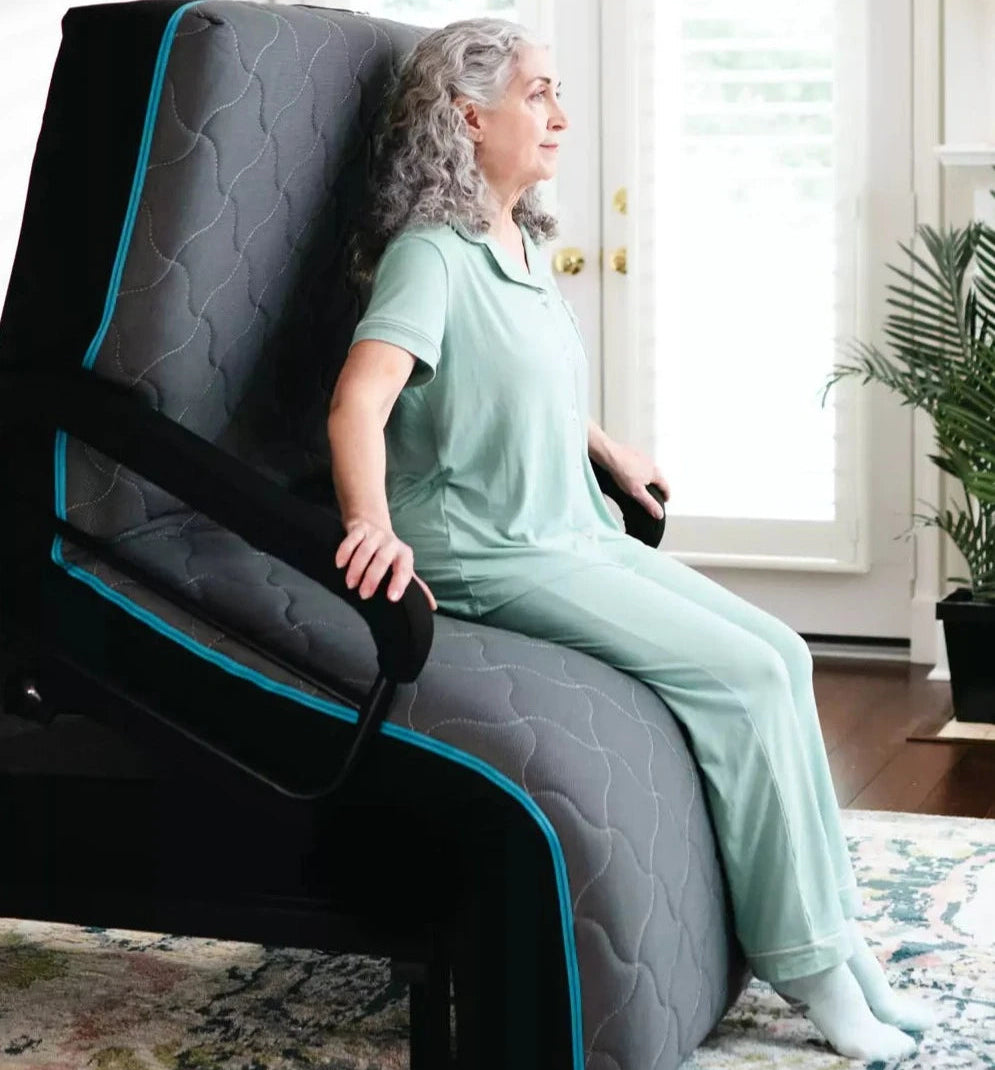
A bed the hospice brings and a bed you buy yourself are separate decisions. The rules differ too. EzLift sells lift beds for home use. They do not replace a hospital bed that a doctor or hospice team has ordered. If you are comparing types, our article on hospital bed vs adjustable bed vs sleep-to-stand bed sets out the differences.
FAQ
Is a hospice bed the same as a hospital bed?
Usually. The American Hospice Foundation lists hospital beds among the medical equipment the Medicare hospice benefit covers. Federal hospice rules say covered appliances may include durable medical equipment, provided by the hospice for use in the patient's home while the patient is under hospice care. A hospital bed is one kind of durable medical equipment. Ask the hospice what model they supply.
Does Medicare pay for a hospital bed under hospice?
Medicare.gov says your hospice benefit should cover everything you need related to your terminal illness and related conditions, and you pay nothing for hospice care from a Medicare-approved hospice provider. The hospice team sets up the plan of care, which can include medical equipment.
How long can you keep a hospital bed at home under hospice?
Federal rules say hospice equipment is provided for use in the home while the patient is under hospice care. Medicare.gov says hospice can continue through two 90-day benefit periods and then an unlimited number of 60-day periods, as long as the person is recertified as terminally ill. Ask the hospice what happens to the equipment if hospice care ends.
Can you get a hospital bed from Medicare without hospice?
Yes, under Part B, if a doctor orders it for use in your home and it is medically necessary. The CMS hospital bed policy (LCD L33820) sets the criteria. After the Part B deductible, you pay 20% of the Medicare-approved amount if the supplier accepts assignment, and the supplier must be enrolled in Medicare.
Who brings the bed and takes it away?
Under hospice, the hospice provides the equipment. Medicare.gov says all care for the terminal illness must be given or arranged by the hospice team you chose. Under Part B, you get the bed from a DME supplier enrolled in Medicare. Ask either one about delivery, setup and pickup before the bed arrives.
Sources
- Medicare.gov, Hospice care: https://www.medicare.gov/coverage/hospice-care
- Centers for Medicare and Medicaid Services, Medicare Hospice Benefits (CMS Product No. 02154, March 2026): https://www.medicare.gov/publications/02154-medicare-hospice-benefits.pdf
- eCFR, 42 CFR 418.202 Covered services: https://www.ecfr.gov/current/title-42/chapter-IV/subchapter-B/part-418/subpart-F/section-418.202
- CMS, Medicare Benefit Policy Manual, Chapter 9, Coverage of Hospice Services Under Hospital Insurance (section 40.1.6): https://www.cms.gov/Regulations-and-Guidance/Guidance/Manuals/downloads/bp102c09.pdf
- American Hospice Foundation, What services are typically covered by hospice benefits?: https://americanhospice.org/learning-about-hospice/what-services-are-typically-covered-by-hospice-benefits/
- Medicare.gov, Hospital beds: https://www.medicare.gov/coverage/hospital-beds
- CMS, Local Coverage Determination L33820, Hospital Beds and Accessories: https://www.cms.gov/medicare-coverage-database/view/lcd.aspx?lcdid=33820
- National Institute on Aging, What Are Palliative Care and Hospice Care?: https://www.nia.nih.gov/health/hospice-and-palliative-care/what-are-palliative-care-and-hospice-care
- U.S. Food and Drug Administration, Hospital Beds: https://www.fda.gov/medical-devices/general-hospital-devices-and-supplies/hospital-beds
Written by the EzLift Team, EzLift's organizational authorship team. Last reviewed November 11, 2026. This guide summarizes Medicare.gov, CMS, eCFR, American Hospice Foundation, NIA and FDA material. It is not medical, legal or billing advice. Coverage rules can change, so confirm with Medicare (1-800-MEDICARE), your hospice provider, your doctor and a Medicare-enrolled supplier. This article does not claim that any bed, accessory, or EzLift product prevents falls, prevents injury or treats any condition.