




Bariatric Hospital Beds for Home: Weight Ratings, Medicare Rules and What to Check
Quick answer: A bariatric hospital bed is a heavy-duty, extra-wide hospital bed. Medicare's codes rate them in two weight bands: more than 350 up to 600 pounds, and more than 600 pounds. Medicare Part B may cover one if a doctor orders it, the person meets a hospital bed criterion, and an enrolled supplier provides it.
What makes a hospital bed "bariatric"
Medicare does not use the word bariatric in its code names. It uses "heavy duty, extra wide" and "extra heavy duty, extra wide." The CMS Master List of durable medical equipment gives the official descriptions for the four codes:
| Code | CMS description (short) | Weight capacity | Mattress |
|---|---|---|---|
| E0301 | Hospital bed, heavy duty, extra wide, with any type side rails | Greater than 350 pounds, but less than or equal to 600 pounds | Without mattress |
| E0303 | Hospital bed, heavy duty, extra wide, with any type side rails | Greater than 350 pounds, but less than or equal to 600 pounds | With mattress |
| E0302 | Hospital bed, extra heavy duty, extra wide, with any type side rails | Greater than 600 pounds | Without mattress |
| E0304 | Hospital bed, extra heavy duty, extra wide, with any type side rails | Greater than 600 pounds | With mattress |
Sources: CMS Master List pages for E0301, E0303, E0302 and E0304.
The descriptions say "extra wide" but do not give a width. If you need a particular size, ask the supplier for the exact frame and mattress dimensions in writing.
When Medicare may cover a bariatric bed
The coverage rules are in the CMS local coverage determination for hospital beds and accessories, LCD L33820. A heavy duty extra wide bed (E0301, E0303) is covered if the person meets one of the criteria for a fixed height hospital bed and weighs more than 350 pounds but not more than 600 pounds. An extra heavy-duty bed (E0302, E0304) is covered if the person meets one of the criteria for a hospital bed and weighs more than 600 pounds. (CMS, LCD L33820 Hospital Beds and Accessories)
Weight alone is not enough. The fixed height criteria come first. The LCD lists four, and one or more must be met:
- A medical condition that requires positioning of the body in ways not feasible with an ordinary bed. The LCD adds that elevating the head or upper body less than 30 degrees does not usually require a hospital bed.
- Positioning of the body in ways not feasible with an ordinary bed in order to alleviate pain.
- The head of the bed must be elevated more than 30 degrees most of the time due to congestive heart failure, chronic pulmonary disease, or problems with aspiration.
- Traction equipment that can only be attached to a hospital bed.
The CMS Medicare Learning Network tips page for suppliers repeats the same weight bands and adds that if the documentation does not justify the medical need for the type of bed billed, payment is denied. (CMS MLN, Hospital Beds and Accessories)
Bed height gets its own rule. The LCD says a total electric hospital bed is not covered, because the height adjustment feature is a convenience feature. A variable height bed is covered only if the person meets a fixed height criterion and needs a bed height different from a fixed height bed to permit transfers to a chair, wheelchair or standing position.
Paperwork and costs
Medicare.gov says Part B covers medically necessary durable medical equipment (DME) when your doctor or other health care provider orders it for use in your home. After the Part B deductible, you pay 20% of the Medicare-approved amount. Depending on the item, you may need to rent it, buy it, or choose between the two. Medicare only pays for DME from suppliers enrolled in Medicare, and Medicare.gov says to make sure your doctors and DME suppliers are enrolled and will accept assignment. (Medicare.gov, Hospital beds)
Two of the four codes add a step before delivery. The CMS Master List shows that E0301 and E0304 require a face-to-face encounter and a written order prior to delivery, effective 08/12/2024. The pages for E0302 and E0303 show No for that requirement. Prior authorization shows No for all four. Rules can change, so confirm with your doctor and supplier before delivery.
EzLift is not a Medicare-enrolled supplier. EzLift beds are not billed to Medicare, Medicaid or insurance. For the wider coverage rules, see does Medicare cover beds.
What to check before the bed arrives
The Disabled Living Foundation (DLF), a UK charity that publishes equipment factsheets, lists what to think through before getting a bariatric bed. (Disabled Living Foundation, Choosing a bed and bed accessories)
- Room and access: whether the bed can be delivered into the room you want, and whether there is enough space around it for the person, their carers and other equipment such as hoists.
- Mattress fit: the mattress should fit the dimensions of the bed frame, including its height. DLF says this is important to avoid entrapment or falls.
- Weight: the user's weight decides the safe working load the bed needs, both to avoid accidents and to let the bed operate fully.
- The user and carers: whether the person can use the equipment safely, including understanding and following instructions, and whether carers have training in transfers and manual handling.
- Cost: DLF notes bariatric beds can be expensive to buy and suggests looking at funding or a bariatric hospital bed rental.
The mattress point is really about entrapment. The FDA says that between January 1, 1985 and January 1, 2013 it received 901 incidents of patients caught, trapped, entangled, or strangled in hospital beds, including 531 deaths. Most patients were frail, elderly or confused. FDA's dimensional guidance on entrapment includes recommendations for facilities with existing beds, including hospitals, nursing homes, and private residences. (FDA, Hospital Beds) For mattress add-ons, see hospital bed mattress toppers.
Heavy-duty accessories
A trapeze bar has its own heavy-duty codes. LCD L33820 says regular trapeze equipment (E0910, E0940) is covered if the person needs it to sit up because of a respiratory condition, to change body position for other medical reasons, or to get in or out of bed. Heavy duty trapeze equipment (E0911, E0912) is covered if the person meets those criteria and weighs more than 250 pounds. See our guide to hospital bed trapeze bars.
If a person cannot bear weight to stand, a bed alone may not be enough for transfers. Our guide to patient lifts for home use covers lift types and space needs, and hospital bed positions explains the settings a care team may ask for.
Hospital bed or home lift bed?
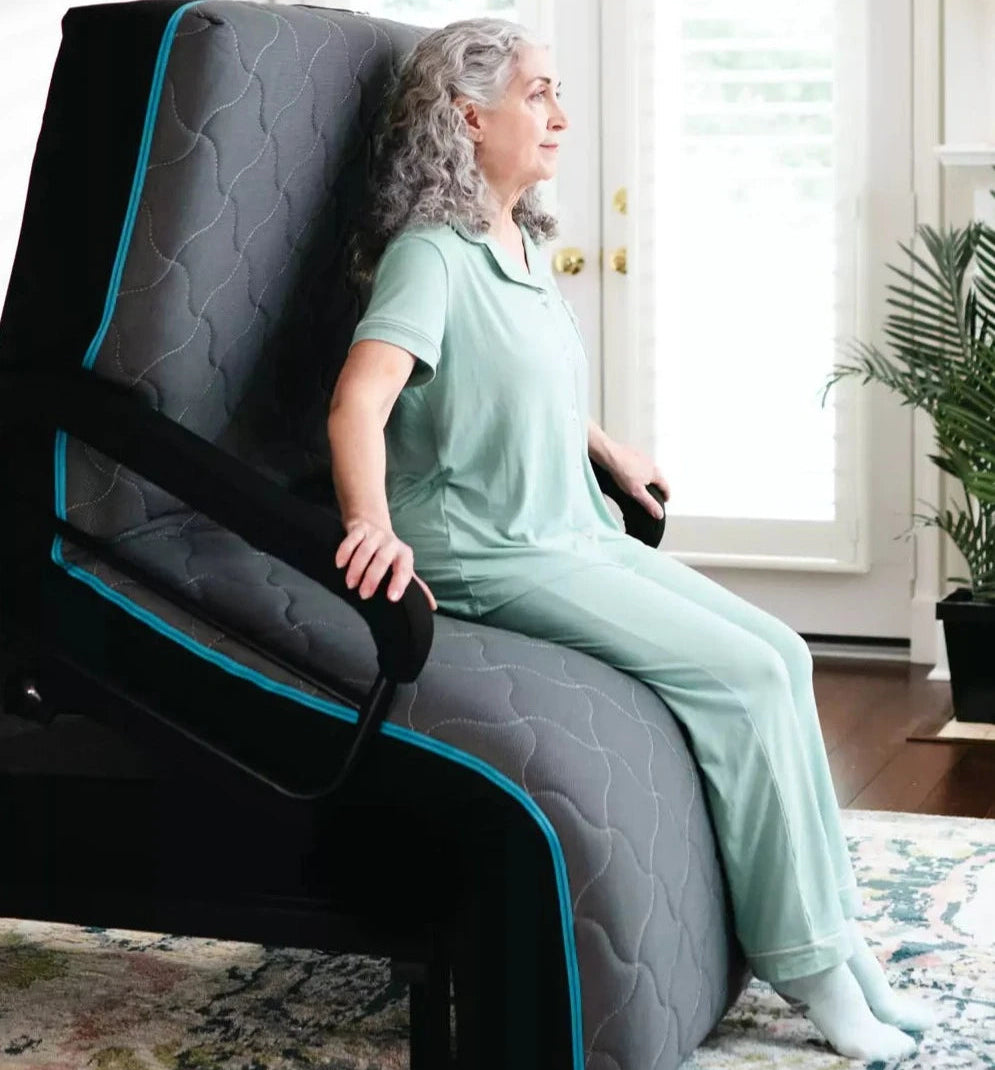
A hospital bed your doctor orders and a home bed you buy yourself are separate purchases with separate rules. EzLift sells lift beds for home use. They are not a substitute for a hospital bed a doctor has ordered, and they are not billed to Medicare, Medicaid or insurance. Whatever bed you look at, compare the maker's written weight rating with the user's weight before you buy. Our comparison of a hospital bed vs adjustable bed vs sleep-to-stand bed walks through the differences.
FAQ
What is the weight limit for a bariatric hospital bed?
CMS code descriptions give two bands. A heavy duty, extra wide hospital bed (E0301 or E0303) has a weight capacity greater than 350 pounds but less than or equal to 600 pounds. An extra heavy duty, extra wide bed (E0302 or E0304) has a weight capacity greater than 600 pounds. Check the written rating for the exact bed you get.
Does Medicare cover a bariatric hospital bed at home?
It may. The CMS hospital bed policy (LCD L33820) covers a heavy duty extra wide bed if the person meets one of the criteria for a fixed height hospital bed and weighs more than 350 pounds but not more than 600 pounds. An extra heavy duty bed is covered if the person meets the criteria for a hospital bed and weighs more than 600 pounds. Medicare.gov says you pay 20% of the Medicare-approved amount after the Part B deductible.
Do I need a doctor's visit before Medicare will pay for a bariatric bed?
For some codes, yes. The CMS Master List shows a face-to-face encounter and a written order prior to delivery are required for E0301 and E0304, effective 08/12/2024. The same list shows No for E0302 and E0303. Ask your doctor and an enrolled supplier which code applies.
Is there a queen size hospital bed for home?
The CMS code descriptions call bariatric beds extra wide and give weight ratings, but they do not list a width. The Disabled Living Foundation says bariatric beds are available if there is a need for a larger than standard size bed. Ask the supplier for the exact dimensions and make sure the mattress fits the frame.
Will Medicare pay for a bed that raises and lowers in height?
The CMS policy says a total electric hospital bed is not covered because the height adjustment feature is a convenience feature. A variable height bed is covered only if the person meets a fixed height bed criterion and needs a different bed height to permit transfers to a chair, wheelchair or standing position.
Sources
- CMS, Local Coverage Determination L33820, Hospital Beds and Accessories (revision effective 01/01/2020): https://www.cms.gov/medicare-coverage-database/view/lcd.aspx?lcdid=33820
- CMS Medicare Learning Network, Medicare provider compliance tips, Hospital Beds and Accessories: https://www.cms.gov/training-education/medicare-learning-networkr-mln/compliance/medicare-provider-compliance-tips/hospital-beds
- CMS, Master List of DMEPOS Items Potentially Subject to Conditions of Payment, E0301: https://www.cms.gov/data-research/monitoring-programs/medicare-fee-service-compliance-programs/medical-review-and-education/master-list-dmepos-items-potentially-subject-conditions-payment/e0301
- CMS, Master List, E0302: https://www.cms.gov/data-research/monitoring-programs/medicare-fee-service-compliance-programs/medical-review-and-education/master-list-dmepos-items-potentially-subject-conditions-payment/e0302
- CMS, Master List, E0303: https://www.cms.gov/data-research/monitoring-programs/medicare-fee-service-compliance-programs/medical-review-and-education/master-list-dmepos-items-potentially-subject-conditions-payment/e0303
- CMS, Master List, E0304: https://www.cms.gov/data-research/monitoring-programs/medicare-fee-service-compliance-programs/medical-review-and-education/master-list-dmepos-items-potentially-subject-conditions-payment/e0304
- Medicare.gov, Hospital beds: https://www.medicare.gov/coverage/hospital-beds
- U.S. Food and Drug Administration, Hospital Beds: https://www.fda.gov/medical-devices/general-hospital-devices-and-supplies/hospital-beds
- Disabled Living Foundation (Living made easy), Choosing a bed and bed accessories: https://livingmadeeasy.org.uk/dlf-factsheets/choosing-a-bed-and-bed-accessories
Written by the EzLift Team, EzLift's organizational authorship team. Last reviewed November 10, 2026. This guide summarizes CMS, Medicare.gov, FDA and Disabled Living Foundation material. It is not medical, legal or billing advice. Coverage rules can change, so confirm with Medicare (1-800-MEDICARE), your plan, your doctor and a Medicare-enrolled supplier. This article does not claim that any bed, accessory, or EzLift product prevents falls, prevents injury or treats any condition.