



Best Hospital Beds for Home Use: How to Choose the Right One
Short answer: for most families caring for someone at home, a full-electric hospital bed is the best all-round choice, because the caregiver can raise the whole bed to a safe working height and lower it to reduce fall injury without cranking. A hi-low or low bed is the pick when falls out of bed are a worry. A semi-electric bed costs less but has a manual crank for height. And if the person is fairly independent and the real problem is standing up, a hospital bed may not be the best fit at all (see the last section).
Disclosure: this guide is published by EzLift, which makes sleep-to-stand and rotating beds (not hospital beds). We mention our own bed only where it genuinely fits, and we say plainly where a hospital bed is the better choice.
The three main types
| Type | Head & knee | Whole-bed height | Best for | Trade-off |
|---|---|---|---|---|
| Semi-electric | Motor | Manual crank | Tighter budgets; height rarely changed | Cranking is hard work for caregivers |
| Full-electric | Motor | Motor | Most home care; frequent repositioning | Costs more than semi-electric |
| Hi-low / low bed | Motor | Motor, with a very low minimum | Fall-injury risk, dementia, restlessness | Usually the priciest of the three |
Also ask about bariatric models if the user is heavier; capacity varies widely by model, and some makers count the mattress and accessories in the stated load.
What to look for
- Height range. Low for safer getting in and out and less injury from a roll-out; high to protect the caregiver's back during care. Compare the minimum and maximum deck heights on the spec sheet.
- Weight capacity and how it's defined. "Safe working load" often includes the mattress, rails and bedding. Leave a margin.
- Mattress. Basic foam suits short-term use. For someone in bed most of the day, ask the care team about pressure-redistributing mattresses. Use the mattress size the bed maker specifies: gaps between a mattress and rails are an entrapment risk (FDA).
- Rails. Half rails help with repositioning, but the FDA warns that bed rails can cause entrapment and that many patients can be safe without them; it lists alternatives such as low beds, floor mats and transfer aids (FDA). See our bed rails safety guide.
- Room and doorways. Measure the room, door widths and the path from the curb. Hospital beds usually arrive in sections.
- Locking casters, battery backup and controls a tired caregiver can use in the dark.
- Delivery, setup and service. Who assembles it, and who fixes it if a motor fails?
- Looks. It will sit in a bedroom for months or years. Some home-care models hide the hospital look with wood headboards.
Buy, rent, or use Medicare?
Medicare Part B may cover a hospital bed as durable medical equipment if a provider prescribes it for use in the home. After the Part B deductible you pay 20% of the Medicare-approved amount, the supplier must be enrolled in Medicare, and depending on the equipment Medicare may require you to rent rather than buy (Medicare.gov). Ask the supplier if they accept assignment before ordering. More: Does Medicare cover beds? and does the VA pay for a hospital bed?
Short recovery (weeks)? Renting often makes sense. Long-term use, or a model Medicare won't cover? Buying may cost less over time.
Who a hospital bed is right for
- Someone who spends most of the day in bed.
- Care that happens in the bed: bathing, changing, wound care, repositioning.
- A clinician has recommended or prescribed one.
- Falls out of bed are a concern (consider a hi-low/low bed plus floor mats).
When a sleep-to-stand bed is the better fit
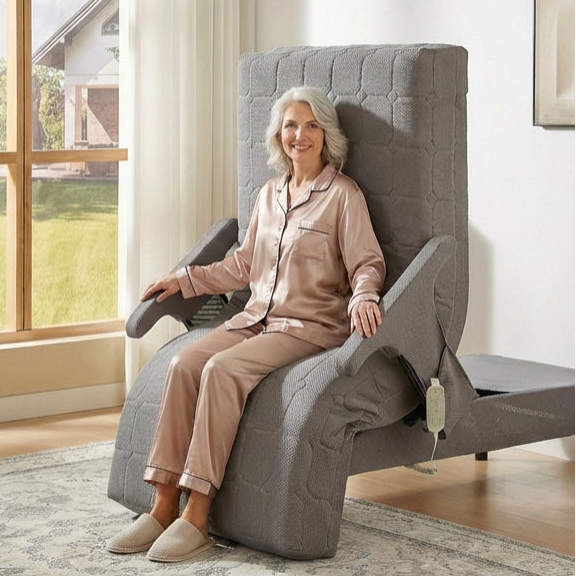
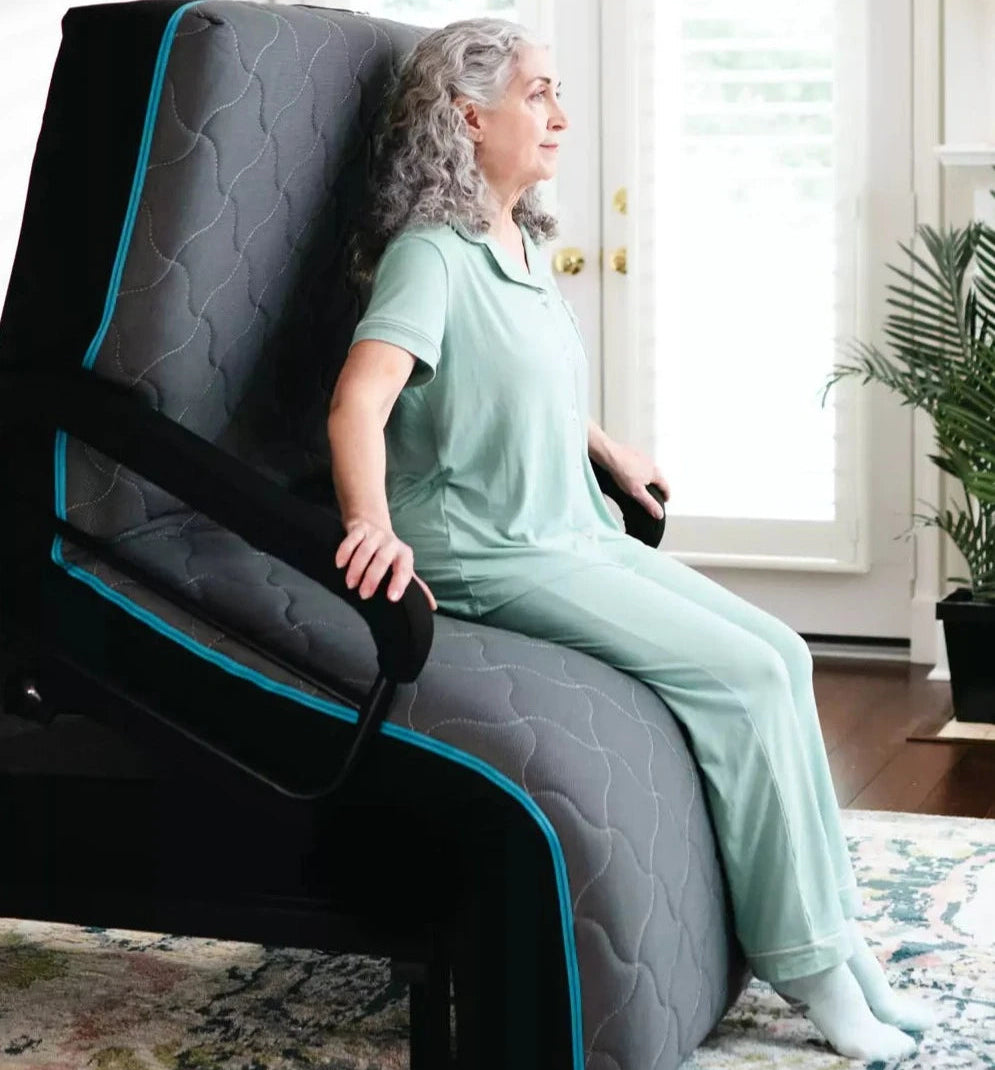
A hospital bed raises the head, knees and whole deck, but it doesn't lift a person toward standing. If the person still walks and sleeps independently, and the hard moment is getting up in the morning or at night, a sleep-to-stand bed (or a rotating lift bed) is built for that one job and looks like a normal bed.
It is not a medical bed and isn't billed like one. EzLift beds are not billed to Medicare, Medicaid or insurance. The EzLift Deluxe, for example, has no whole-bed hi-low, so it isn't a substitute for a caregiver-height hospital bed. It is rated by the manufacturer for up to 550 lb user weight and carries a 6-year total warranty (1-year manufacturer + 5-year Mulberry extended warranty). If you're torn, read the three-way comparison, and see the EzLift Deluxe. For more on lift beds, see the best beds for seniors with mobility issues and our sleep-to-stand and rotating lift beds comparison.
Example home hospital / hi-low models (specs from makers' pages)
| Model | Type | Height range (deck) | Stated capacity | Starting price | Source |
|---|---|---|---|---|---|
| Transfer Master Supernal 3 Hi-Low | Hi-low home bed | 10.5"–20.5" | Twin 400 lb; Full/Queen 500 lb (evenly distributed, incl. mattress/rails) | from $3,999 | transfermaster.com |
| Med-Mizer ActiveCare Standard | Rotating hi-low medical bed | 12.5"–27.5" | 600 lb safe working load (incl. mattress, bedding) | $9,682 (store, Oct 2026) | store.med-mizer.com |
Prices and specs checked Oct 26, 2026; they change, so check each link before buying.
FAQ
What is the best type of hospital bed for home use? For most home care, full-electric; hi-low/low if fall injury is a worry; semi-electric if budget is tight and height rarely changes. Do I need rails? Not always. Discuss with the care team; the FDA lists alternatives (FDA). Will Medicare pay? Possibly, with a prescription and an enrolled supplier (Medicare.gov).