




Does Medicare Cover Home Health Care? Who Qualifies and What It Pays For
Quick answer: Yes, but only in limited cases. Medicare.gov says it covers part-time or intermittent skilled care at home when you are homebound, a provider has seen you in person and ordered the care, and a Medicare-certified agency gives it. You pay nothing for covered services. It does not pay for 24-hour-a-day care or for personal care alone.
What Medicare home health care covers
Medicare.gov describes home health as a range of health care services you get at home for an illness or injury, to help you get better, keep your current level of function or slow a decline. Covered services include: (Medicare.gov, Home health services)
- Medically necessary part-time or intermittent skilled nursing care, such as wound care for pressure sores or a surgical wound, patient and caregiver education, intravenous or nutrition therapy, injections, and monitoring of serious illness and unstable health.
- Physical therapy, occupational therapy and speech-language pathology services, if you meet certain conditions.
- Medical social services.
- Part-time or intermittent home health aide care, such as help with walking, bathing or grooming, changing bed linens and feeding, but only if you also get skilled nursing care, physical therapy, speech-language pathology services or occupational therapy at the same time.
- Injectable osteoporosis drugs for women who meet certain criteria.
- Durable medical equipment and medical supplies for use at home.
The official Medicare booklet on home health care goes further on skilled nursing. It must need the skills of a nurse, be reasonable and necessary to treat your illness or injury, and come from a registered nurse or a licensed practical nurse. Medicare will not cover a visit only to draw blood. Skilled care also excludes anything a non-medical person, including you, could do safely without a nurse watching over it. (Medicare & Home Health Care, CMS Product No. 10969, 07/2025)
What Medicare does not pay for
In our view, read this list twice. Medicare.gov names four things it does not pay for:
- 24-hour-a-day care at your home
- Home meal delivery
- Homemaker services, like shopping and cleaning, that are not related to your care plan
- Custodial or personal care that helps with daily activities like bathing, dressing or using the bathroom, when this is the only care you need
Medicare's long-term care page puts it more broadly. Long-term care, also called custodial care, includes help with personal care, home-delivered meals, adult day health care and transportation. Medicare says it does not pay for long-term care, and neither do most health insurance plans, including Medigap. It says you may be able to get long-term care through Medicaid. (Medicare.gov, Long-term care) For how paid home care compares with assisted living on cost, see our guide to assisted living vs in-home care.
Who qualifies
Medicare.gov and the Medicare booklet set out these conditions. All of them must be true.
| Requirement | What Medicare says |
|---|---|
| You need skilled care | Part-time or intermittent skilled nursing, physical therapy, speech-language pathology services or continued occupational therapy, certified by a doctor or allowed provider. |
| You are homebound | Leaving home is not recommended because of your condition, or you have trouble leaving without help. And you are normally unable to leave home, and leaving takes a lot of effort. |
| A provider saw you in person | A doctor or other provider, like a nurse practitioner, must see you in person, confirm you need home health care and order it. The booklet says the visit must be within required timeframes and related to the reason you need care. |
| You have a care plan | You are under the care of a doctor or allowed provider and get services under a plan of care they set up and review regularly. |
| The agency is Medicare-certified | A Medicare-certified home health agency must provide the care. |
Being homebound still allows some trips out. Medicare.gov says you may leave home for medical treatment or for short, infrequent absences for non-medical reasons, like religious services, and you can still get home health care if you go to adult day care. The booklet gives more examples, such as an occasional trip to the barber, a walk around the block or a family reunion, funeral or graduation.
The booklet also lists the kinds of help that can make leaving home hard: a cane, a wheelchair or walker, crutches, special transportation or help from another person. If you are setting up mobility equipment, our guides on whether Medicare covers wheelchairs and whether Medicare covers patient lifts explain those separate rules.
How many hours Medicare covers
Medicare.gov says that if you qualify, you can get unlimited home health visits. The hours are limited, though. In most cases, part-time or intermittent means skilled nursing care and home health aide services up to 8 hours a day combined, for a maximum of 28 hours a week. If your provider decides it is necessary, you may get more frequent care for a short time: less than 8 hours a day and up to 35 hours a week.
The booklet uses a second, narrower test for skilled nursing alone. It defines intermittent skilled nursing as care needed fewer than 7 days each week, or daily for less than 8 hours each day for up to 21 days. It says Medicare may extend the 3-week limit in exceptional circumstances. If you are expected to need full-time skilled nursing over a long period, the booklet says you usually will not qualify.
The booklet also says Medicare pays the agency one payment for each 30-day period of care, based on your condition and care needs, and that you can have more than one 30-day period.
What you pay
Medicare.gov says you pay nothing for covered home health services. After you meet the Part B deductible, you pay 20% of the Medicare-approved amount for Medicare-covered medical equipment. The booklet says Medicare pays for durable medical equipment separately from home health care, and that the equipment must meet certain criteria and be ordered by your provider.
Before care starts, the agency should tell you how much Medicare will pay, and tell you both verbally and in writing about anything Medicare will not pay for and what you will owe. The booklet says the agency must give you an Advance Beneficiary Notice of Noncoverage (ABN) before it gives you a service or supply that Medicare probably will not cover, for example because the care is only personal care, you are not homebound, or you do not need skilled care on an intermittent basis.
If you have a Medicare Advantage Plan or another Medicare health plan, Medicare.gov says to check with your plan about home health benefits. If you have Medigap or other insurance, tell your provider so your bills get paid correctly.
How to start home health care
- See the doctor or provider. They must see you in person, confirm you need home health care and order it.
- Get a list of agencies. Medicare.gov says your provider should give you a list of agencies that serve your area, and must tell you if their organization has a financial interest in any agency on it. You can also compare agencies at Medicare.gov Care Compare.
- Choose an agency. The booklet says you have a say in which agency you use, though choices may be limited by availability or your insurance. Medicare pays for care from only one home health agency at a time.
- Expect a first visit. The agency will schedule a visit to talk about your needs and health, and will talk with your provider about your care plan.
- Review the plan of care. The booklet says the plan lists the services you need, who will give them, how often, the medical equipment you will need and the results your provider expects. Your provider and home health team review it at least once every 60 days.
The booklet includes a checklist of questions for an agency. Four of the most useful: Is it Medicare-certified? Can the staff give the type and hours of care your provider ordered, and start when you need them? Is staff available at night and on weekends for emergencies? Has the agency explained what Medicare will cover and what you must pay?
In our view, ask the agency to put the visit schedule in writing on day one. That makes it easy to check the care against what the doctor ordered.
If services are cut or ending
The booklet describes two notices. The agency must give you a Home Health Change of Care Notice (HHCCN) before it reduces or stops services or supplies that change your plan of care. It should give you a Notice of Medicare Non-Coverage (NOMNC) at least 2 days before it ends your services. If you do not get one, ask for it.
When all covered services are ending and you think that is too soon, the booklet says you may have the right to a fast appeal. An independent reviewer, a Beneficiary and Family Centered Care Quality Improvement Organization (BFCC-QIO), looks at your case. You should expect an answer generally no later than 3 days after the date on the NOMNC. If the reviewer decides your coverage should end, you pay for services after that date.
Home health care is not the same as home care
Medicare home health is part-time, skilled and ordered by a provider. Many families need something else: daily help with bathing, dressing and meals. Medicare.gov is clear that it does not pay for that kind of custodial care when it is the only care someone needs. Our guide on how to get help for an elderly parent covers local programs, and does Medicare cover respite care covers short breaks for family caregivers.
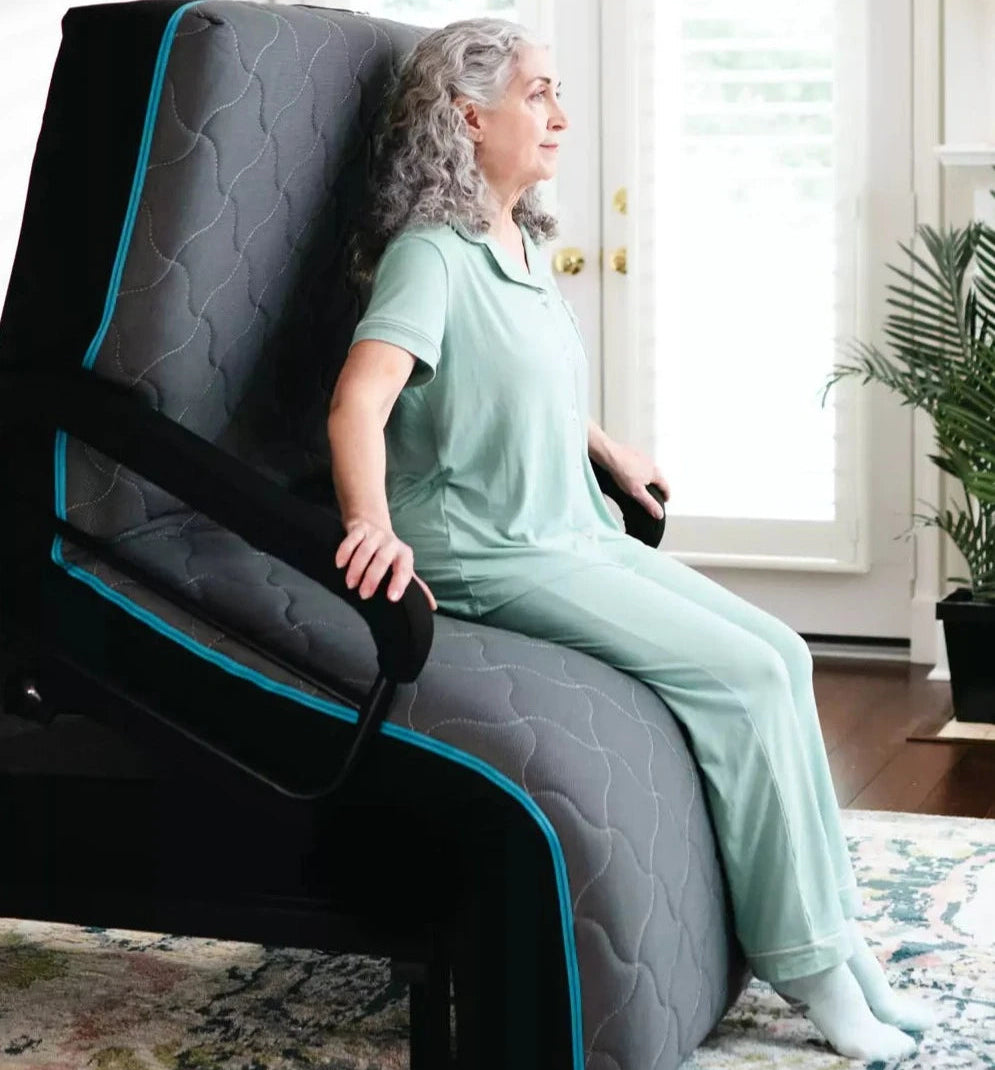
Equipment at home follows its own rules. EzLift sells lift beds for home use. EzLift is not a Medicare-enrolled supplier. EzLift beds are not billed to Medicare, Medicaid or insurance. For other ways families pay for a bed, see how to pay for a lift bed without Medicare, and for hospital beds see does Medicare cover beds.
FAQ
Does Medicare pay for a caregiver to come to the house?
Medicare pays for part-time or intermittent home health aide care, such as help with walking, bathing or feeding, only if the person also gets skilled nursing care, physical therapy, speech-language pathology services or occupational therapy at the same time. Medicare.gov says Medicare does not pay for 24-hour-a-day care at home or for custodial or personal care when that is the only care the person needs.
How many hours of home health care will Medicare pay for?
Medicare.gov says that in most cases, part-time or intermittent means skilled nursing care and home health aide services up to 8 hours a day combined, for a maximum of 28 hours a week. A provider may decide that more frequent care is needed for a short time, up to 35 hours a week. If you qualify, the number of visits is unlimited.
What does homebound mean for Medicare?
Medicare.gov says you must meet two conditions. Leaving home is not recommended because of your condition, or you have trouble leaving without help such as a cane, wheelchair, walker, crutches, special transportation or another person. And you are normally unable to leave home, and leaving takes a lot of effort. You can still leave for medical care, short trips such as religious services, or adult day care.
How much does Medicare home health care cost?
Medicare.gov says you pay nothing for covered home health services. After you meet the Part B deductible, you pay 20% of the Medicare-approved amount for Medicare-covered medical equipment. The agency must give you a written notice called an Advance Beneficiary Notice before it gives you a service or supply that Medicare probably will not cover.
Does Medicare Advantage cover home health care?
Medicare.gov says people in a Medicare Advantage Plan or another Medicare health plan should check with their plan about home health benefits. The Medicare booklet adds that a plan may require you to use home health agencies it contracts with.
Sources
- Medicare.gov, Home health services: https://www.medicare.gov/coverage/home-health-services
- Centers for Medicare & Medicaid Services, Medicare & Home Health Care (CMS Product No. 10969, 07/2025): https://www.medicare.gov/publications/10969-medicare-and-home-health-care.pdf
- Medicare.gov, Long-term care: https://www.medicare.gov/coverage/long-term-care
Written by the EzLift Team, EzLift's organizational authorship team. Last reviewed November 16, 2026. This guide summarizes Medicare.gov pages and the official Medicare & Home Health Care booklet. It is not medical, legal or insurance advice. Medicare rules can change. Confirm coverage with your provider, the home health agency, your plan or 1-800-MEDICARE (1-800-633-4227) before care starts. EzLift is not a Medicare-enrolled supplier. EzLift beds are not billed to Medicare, Medicaid or insurance.