




Does Medicare Cover Wheelchairs? Part B DME Rules Explained
Quick answer: Yes. Medicare Part B covers manual wheelchairs, power wheelchairs and scooters as durable medical equipment (DME) if you're eligible. Your treating doctor has to submit a written order saying you need the wheelchair or scooter for use in your home, and you have to meet Medicare's mobility conditions. After the Part B deductible ($283 in 2026), you pay 20% of the Medicare-approved amount, as long as your supplier is enrolled in Medicare and accepts assignment.
What Medicare Part B covers for wheelchairs
Medicare Part B (Medical Insurance) covers wheelchairs and power-operated vehicles (scooters) as DME. Medicare.gov describes them as mobility devices "that can help you get around if you have a limited ability to walk." (Medicare.gov)
To count as DME, equipment has to be durable, used for a medical reason, typically only useful to someone who is sick or injured, used in your home, and expected to last at least 3 years. Wheelchairs and scooters are on Medicare's list of covered DME, along with items like canes, walkers and hospital beds. (Medicare.gov)
Who qualifies for a Medicare-covered wheelchair?
Medicare's fact sheet on wheelchairs and scooters (CMS Product No. 11046, April 2026) lists the conditions. Medicare Part B covers a wheelchair or scooter if the doctor treating your condition submits a written order stating that you have a medical need for it for use in your home, and you meet all of these conditions (Medicare fact sheet):
- You have a health condition that causes significant difficulty moving around in your home.
- You're unable to do activities of daily living (like bathing, dressing, getting in or out of a bed or chair, or using the bathroom) even with the help of a cane, crutch or walker.
- You're able to safely operate and get on and off a wheelchair or scooter, or you have someone with you who is always available to help you.
- Both the doctor treating you for the condition and the DME supplier accept Medicare.
- Your doctor or DME supplier has visited your home and verified that you can use the equipment there (for example, it's not too big to fit through your doorways).
Medicare won't cover a power wheelchair or scooter that you only need and use outside the home. (Medicare DME booklet)
Manual wheelchair, scooter or power wheelchair: which one will Medicare cover?
Medicare matches the device to how you need to get around at home. CMS's national coverage policy for mobility assistive equipment (NCD 280.3) works through the options in order: first whether a cane or walker would be enough, then whether your home has room for a wheelchair, then a manual wheelchair, a scooter and finally a power wheelchair. (CMS NCD 280.3)
| Device | Who may qualify (per Medicare's fact sheet) | Notes |
|---|---|---|
| Manual wheelchair | You can't use a cane or walker safely, but you have enough upper body strength, or someone to help you | You may have to rent it first, even if you plan to buy it later |
| Scooter (power-operated vehicle) | You can't use a cane or walker or operate a manual wheelchair, and you can get in and out of the scooter safely and sit up and operate the controls | If you don't need it long term, you can rent it |
| Power wheelchair | You can't use a manual wheelchair in your home, or you don't qualify for a scooter | Face-to-face exam and written order required; some models need prior authorization |
The NCD names the features that set a power wheelchair apart from a scooter: control by a joystick or other input device, a lower seat height for slide transfers, and room for a variety of seating needs. It also lets a caregiver's help count. If you can't propel a manual wheelchair yourself but a caregiver is available, willing and able to help, a manual wheelchair may be appropriate.
How much does a wheelchair cost with Medicare?
With Original Medicare, you pay the Part B deductible, then 20% of the Medicare-approved amount if your supplier accepts assignment. The Part B deductible is $283 in 2026. (Medicare.gov costs)
A supplier that participates in Medicare must accept assignment, which means it can charge you only the deductible and coinsurance on the Medicare-approved amount. A supplier that doesn't participate or won't accept assignment may charge you more. For rented equipment, make sure the supplier will accept assignment for all rental months. Otherwise you'll have to pay the full cost up front, and Medicare pays you later for the amount it covers. (Medicare.gov)
Renting vs. buying a wheelchair through Medicare
Medicare pays for most DME on a rental basis. For some more expensive equipment, like wheelchairs and hospital beds, Medicare pays to rent the item for 13 months of continuous use, and once the 13th month ends, the supplier must transfer ownership to you. Medicare buys only inexpensive or routinely bought items, like canes and walkers, or complex rehabilitative power wheelchairs. (Medicare DME booklet)
Repairs depend on who owns the chair:
- If you rent, the supplier must maintain and repair the equipment and keep it in good working order. Repair costs are the supplier's responsibility.
- If you own it, Medicare pays 80% of the Medicare-approved amount for repairs (up to the cost of replacing the item), and you pay 20%.
- Equipment you own may be replaced if it's lost, stolen, damaged beyond repair, or used longer than its reasonable useful lifetime, which is generally 5 years from when you start using it.
Power wheelchairs: face-to-face exam and prior authorization
Before you get a power wheelchair or scooter, you must have a face-to-face exam with your doctor, who reviews your needs and helps decide whether you can safely operate the device. The doctor then submits a written order telling Medicare why you need it and that you're able to operate it. (Medicare fact sheet)
Certain power wheelchairs and scooters also need prior authorization. Your DME supplier works with your provider to send the request and documents to Medicare. Medicare can deny the request if it doesn't get enough information or finds you don't medically require a power wheelchair. The supplier can resubmit with more information, and you can appeal a denied claim.
Does Medicare Advantage cover wheelchairs?
Medicare Advantage plans must cover all medically necessary services that Original Medicare covers, but you may need approval (prior authorization) from your plan first. (Medicare.gov) Contact your plan to find out about costs and which DME suppliers you can use before you order.
How to get a wheelchair through Medicare, step by step
- See the doctor treating your condition. Explain what you can't do at home, such as getting to the bathroom or in and out of bed. For a power wheelchair or scooter, this must be a face-to-face exam.
- Get a written order. The doctor submits the order stating your medical need for use in your home.
- Choose a Medicare-enrolled supplier. Medicare only pays for DME from suppliers enrolled in Medicare. Ask whether they accept assignment. You can search with Medicare's medical equipment supplier finder.
- Expect a home check. Your doctor or supplier verifies that the equipment fits and works in your home.
- Let the supplier handle prior authorization if your model needs it. Medicare sends its decision letter to the supplier, so ask them about it.
- Review your Medicare Summary Notices for any equipment you never got.
Medicare also lists warning signs of supplier fraud: offers of a "free" wheelchair or scooter, offers to pay you cash or waive your copayment, and a doctor you don't know ordering equipment for you. Report these at 1-800-MEDICARE (1-800-633-4227).
What about beds and other home equipment?
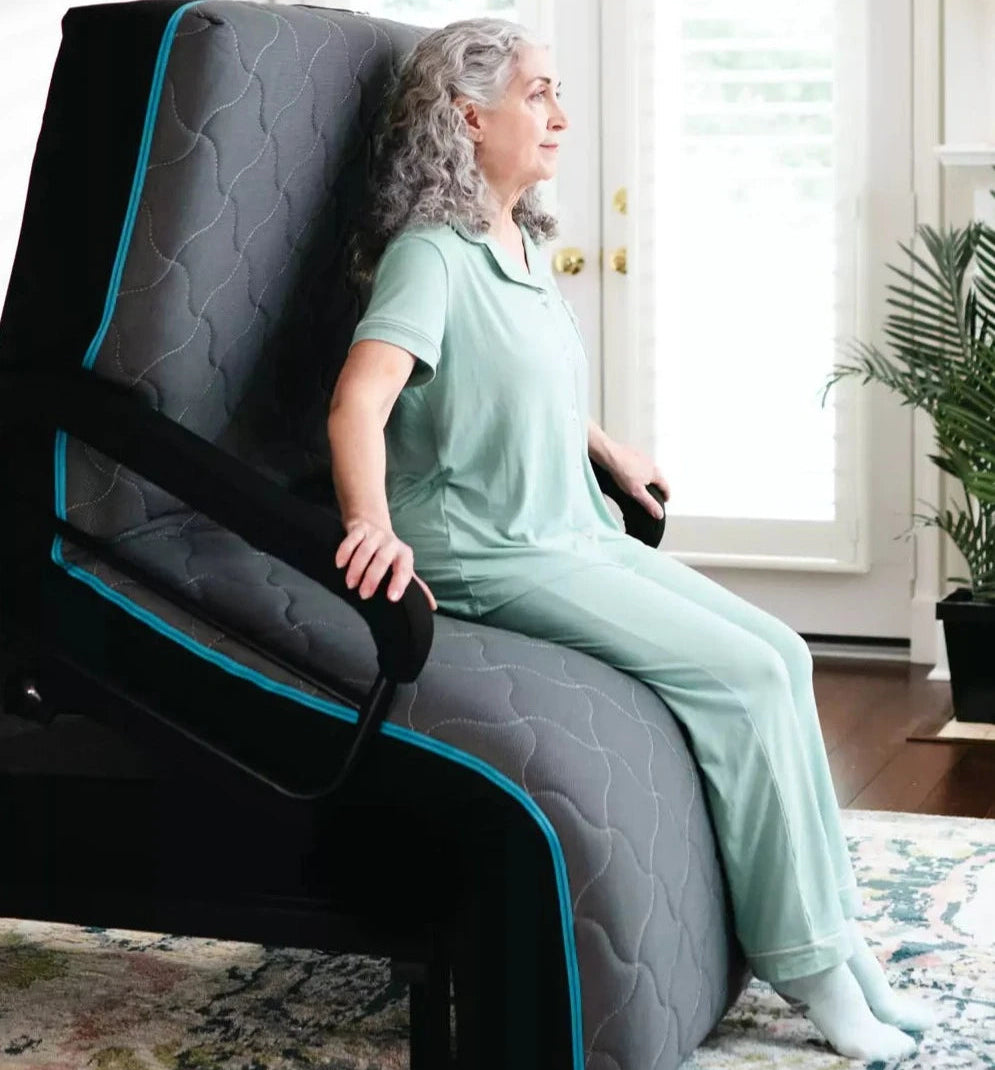
Hospital beds are also on Medicare's DME list, and Medicare pays to rent them on the same 13-month basis. Our guide Does Medicare Cover Beds? explains them, and our comparison of hospital beds, adjustable beds and sleep-to-stand beds shows how the bed types differ.
EzLift is not a Medicare-enrolled supplier, and EzLift beds are not billed to Medicare, Medicaid or insurance. If you're looking at other ways to pay for home equipment, see our guides to Medicaid, VA benefits, HSA and FSA funds and paying for a lift bed without Medicare.
FAQ
Does Medicare cover a wheelchair I only need outside the home?
No. Medicare covers wheelchairs and scooters for use in your home. It won't cover a power wheelchair or scooter that you only need and use outside the home.
How much will I pay for a wheelchair with Medicare?
With Original Medicare, you pay 20% of the Medicare-approved amount after the Part B deductible, which is $283 in 2026, if your supplier accepts assignment. Suppliers that don't accept assignment may charge more.
Does Medicare cover power wheelchairs?
Yes, when they're medically necessary and you meet the conditions. You need a face-to-face exam and a written order from your doctor, and some power wheelchairs need prior authorization.
Will I rent or own the wheelchair?
Usually you rent first, because Medicare pays for most DME on a rental basis. For wheelchairs, Medicare pays rent for 13 months of continuous use, and then the supplier must transfer ownership to you. Complex rehabilitative power wheelchairs may be bought outright.
Sources
- Medicare.gov, "Wheelchairs & scooters": https://www.medicare.gov/coverage/wheelchairs-scooters
- Medicare.gov, "Durable medical equipment (DME) coverage": https://www.medicare.gov/coverage/durable-medical-equipment-dme-coverage
- Medicare, "Medicare Coverage of Wheelchairs & Scooters," CMS Product No. 11046, April 2026: https://www.medicare.gov/publications/11046-medicare-coverage-of-wheelchairs-scooters.pdf
- Medicare, "Medicare Coverage of Durable Medical Equipment & Other Devices," CMS Product No. 11045, February 2025: https://www.medicare.gov/publications/11045-medicare-coverage-of-dme-and-other-devices.pdf
- CMS, National Coverage Determination 280.3, Mobility Assistive Equipment: https://www.cms.gov/medicare-coverage-database/view/ncd.aspx?ncdid=219
- Medicare.gov, "Costs" (2026 Part B amounts): https://www.medicare.gov/basics/costs/medicare-costs
- Medicare.gov, "Compare Original Medicare & Medicare Advantage": https://www.medicare.gov/basics/get-started-with-medicare/get-more-coverage/your-coverage-options/compare-original-medicare-medicare-advantage
Written by the EzLift Team, EzLift's organizational authorship team. Sources checked November 2, 2026. This guide offers general information; it is not medical, legal or insurance advice. Medicare rules and amounts change each year, so confirm your coverage with Medicare (1-800-MEDICARE) or your plan before you order equipment.