




Renting vs Buying a Hospital Bed for Home: How Medicare Rentals Work
Quick answer: If Medicare covers the bed, you usually do not get to choose. The official Medicare booklet says Medicare pays to rent a hospital bed for 13 months of continuous use, and then the supplier must transfer ownership to you. While you rent, the supplier must maintain and repair it. Without Medicare, renting or buying is your call.
Renting feels like the easy answer when the need may be short. But Medicare's rules, the bed type you need and who handles repairs all change the answer, so it helps to know them before you call a supplier.
How Medicare handles a hospital bed: rent first, then you own it
Medicare.gov lists hospital beds as durable medical equipment (DME) that Part B may cover when a doctor or other provider orders the bed for use at home. It also says Medicare covers different kinds of DME in different ways: you may need to rent, you may need to buy, you may be able to choose, and with some items, ownership passes to you after a set number of rental payments. (Medicare.gov, Hospital beds)
The Medicare booklet on DME gets specific about hospital beds. It says most DME is paid for as a rental. Medicare buys outright only cheap or routinely bought items (it names canes, walkers and blood sugar monitors) and complex rehabilitative power wheelchairs. Hospital beds sit in the pricier group, with wheelchairs: Medicare pays rent for 13 months of continuous use. When the 13th rental month ends, the supplier must transfer ownership to you. (Medicare Coverage of Durable Medical Equipment & Other Devices, CMS Product No. 11045)
During the rental, the booklet says you pay 20% of the Medicare-approved amount after your Part B deductible, and Medicare pays the other 80%. Medicare.gov adds a warning for rentals: make sure the supplier is willing to accept assignment for all rental months. Otherwise you may have to pay the full cost upfront, and Medicare pays you back later for its share after your claims are processed.
Who qualifies for a covered bed is a separate question. Our guide on does Medicare cover beds covers the medical criteria.
Renting vs owning: who handles what
The booklet sets out different duties depending on whether you rent or own Medicare-covered equipment:
| Question | If you rent | If you own |
|---|---|---|
| Repairs and maintenance | The supplier must maintain and repair the equipment and keep it in good working order at all times. Repair and replacement part costs are the supplier's responsibility. | The supplier who sold it is not required to repair it. Medicare may cover repairs and replacement parts, paying 80% of the Medicare-approved amount (up to the cost of replacing the item). You pay the other 20%. |
| Getting it fixed | The supplier picks up the equipment if it needs repairs. You do not have to bring it back. | Use Medicare.gov/medical-equipment-suppliers to find a supplier who can maintain or repair it. |
| When you no longer need it | The supplier picks it up. | It is yours. |
| Replacement | The supplier must answer your calls and service, repair or replace rented equipment whenever necessary. | It may be replaced if lost, stolen, damaged beyond repair, or used longer than its reasonable useful lifetime, generally 5 years from the date you start using it. |
If a rental supplier does not answer your requests for service, the booklet says to call 1-800-MEDICARE (1-800-633-4227).
The bed type can force the decision
Medicare covers specific types of hospital beds. The CMS coverage rule (LCD L33820) lists fixed height, variable height, semi-electric, heavy duty extra wide and extra heavy-duty beds, each with its own criteria. It also says a total electric hospital bed is not covered, because the height adjustment feature is a convenience feature. (CMS, LCD L33820 Hospital Beds and Accessories)
The related policy article defines the difference. A semi-electric bed has manual height adjustment with electric head and leg adjustments. A total electric bed has electric height, head and leg adjustments. It also says fully electric hospital beds must always be billed with upgrade modifiers. (CMS, Hospital Beds and Accessories Policy Article A52508)
In practice, if you want electric height adjustment, ask the supplier in writing what Medicare will pay and what the upgrade costs you before delivery.
Changes that affect a rental
Changes at home can affect a rental. The booklet asks you to tell your supplier if:
- You are changing insurance companies
- You are changing doctors
- You are in the hospital or will soon be admitted
- You are in a nursing home or will soon be admitted
- You are traveling
- You are moving
- You or your secondary contact have changed your phone number
Where the person lives also counts. The booklet says a hospital or nursing home that is giving you Medicare-covered care cannot count as your home for DME, but a long-term care facility can. During a skilled nursing facility stay covered under Medicare Part A, the facility is responsible for any DME you need there for up to 100 days.
Medicare Advantage is a little different. The booklet says these plans must cover the same medically necessary categories of DME as Original Medicare, but your suppliers and costs depend on your plan, so contact the plan first. If the bed is for end-of-life care, see our guide on hospice beds vs hospital beds.
Renting or buying without Medicare
If Medicare will not cover the bed, or you want a bed it does not cover, the choice is yours. We do not list rental or purchase prices here because they vary by supplier and region. In our view, the deciding question is how long you expect to need the bed. A rental fits a short or uncertain need, such as the weeks after a hospital stay. Buying fits a long-term need, or a bed you want to choose yourself.
Before you sign a private rental, ask for the monthly price in writing, along with delivery, setup, pickup and who pays for repairs. Other ways to pay are covered in does the VA pay for a hospital bed or lift bed, does Medicaid pay for a lift bed or hospital bed and how to pay for a lift bed without Medicare.
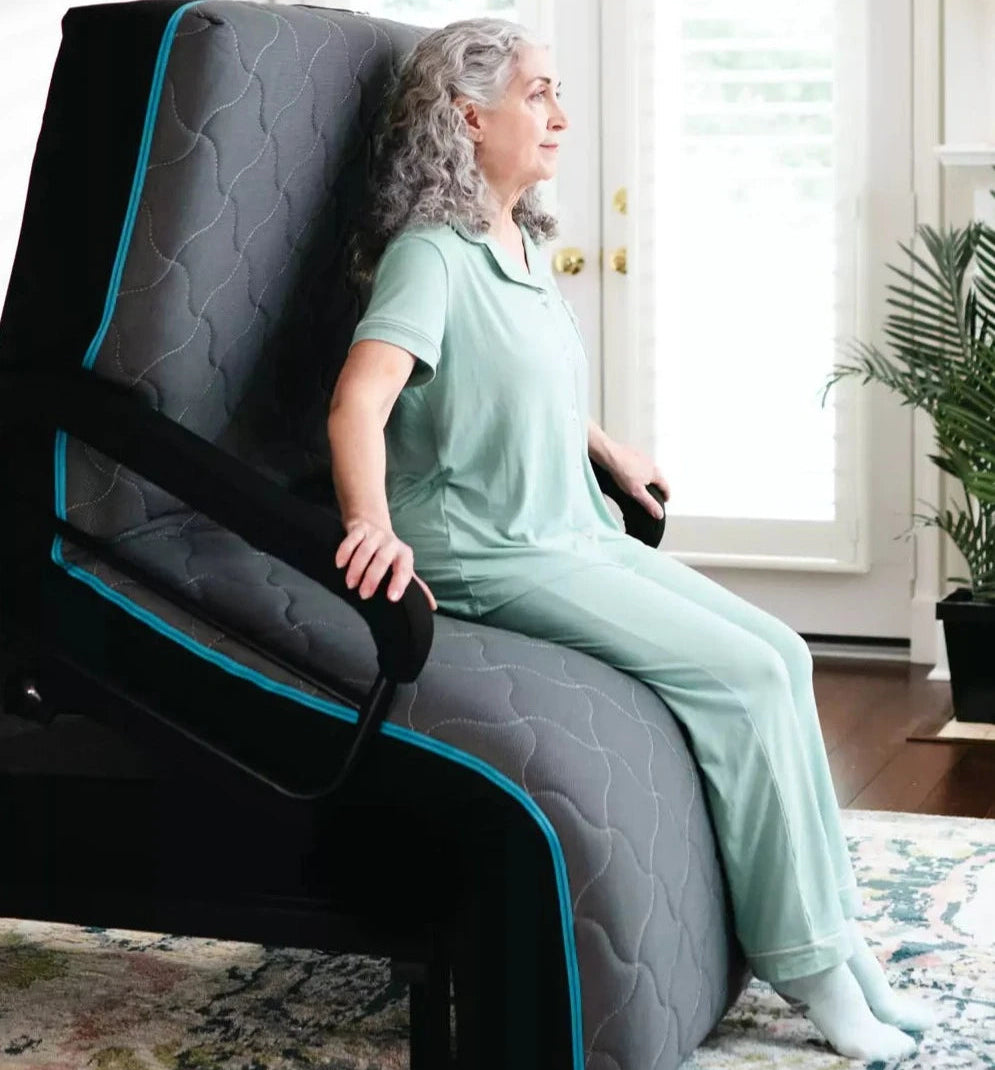
Some families compare a hospital bed with other bed types before they decide. Our guide on hospital bed vs adjustable bed vs sleep-to-stand bed lays out the differences, and best hospital beds for home use covers features. EzLift sells lift beds for home use. EzLift is not a Medicare-enrolled supplier. EzLift beds are not billed to Medicare, Medicaid or insurance.
Questions to ask a supplier before you rent
- Are you a Medicare-enrolled supplier, and do you accept assignment? The booklet lists both questions.
- Will you accept assignment for every rental month? Medicare.gov says to confirm this for rented DME.
- Which bed type is on the order, and is any part an upgrade I pay for?
- Who do I call for repairs, and how fast do you respond?
- What happens at month 13? Ask how the transfer of ownership is handled.
FAQ
Does Medicare rent or buy hospital beds?
The official Medicare booklet on durable medical equipment says Medicare pays for most equipment on a rental basis. For more expensive equipment, like wheelchairs and hospital beds, Medicare pays to rent the item for 13 months of continuous use.
Do I own the hospital bed after renting it through Medicare?
Yes, if the rental runs its course. The booklet says that once the 13th month of continuous rental ends, the supplier must transfer ownership of the equipment to you.
Who pays for repairs on a rented hospital bed?
The supplier. The booklet says that if you rent, the supplier must maintain and repair the equipment and keep it in good working order, and any costs for repairs or replacement parts are the supplier's responsibility. If the supplier does not respond, call 1-800-MEDICARE (1-800-633-4227).
Does Medicare cover a fully electric hospital bed?
No. The CMS coverage rule for hospital beds (LCD L33820) says a total electric hospital bed is not covered because the height adjustment feature is a convenience feature. The related policy article says fully electric hospital beds must always be billed with upgrade modifiers.
What happens to a rented bed if I go into a nursing home?
Tell your supplier. The booklet lists going into a nursing home, or being admitted soon, as a change to report. It also says that during a skilled nursing facility stay covered under Medicare Part A, the facility is responsible for the equipment you need there for up to 100 days.
Sources
- Medicare.gov, Hospital beds: https://www.medicare.gov/coverage/hospital-beds
- Centers for Medicare & Medicaid Services, Medicare Coverage of Durable Medical Equipment & Other Devices (CMS Product No. 11045, 2/2025): https://www.medicare.gov/publications/11045-medicare-coverage-of-dme-and-other-devices.pdf
- CMS, Local Coverage Determination L33820, Hospital Beds and Accessories (revision effective 01/01/2020): https://www.cms.gov/medicare-coverage-database/view/lcd.aspx?lcdid=33820
- CMS, Hospital Beds and Accessories Policy Article A52508 (revision effective 01/01/2020): https://www.cms.gov/medicare-coverage-database/view/article.aspx?articleId=52508
Written by the EzLift Team, EzLift's organizational authorship team. Last reviewed November 18, 2026. This guide summarizes Medicare.gov, the official Medicare booklet on durable medical equipment and CMS hospital bed coverage documents. It is not medical, legal or insurance advice. Medicare rules can change. Confirm coverage and rental terms with your doctor, the supplier, your plan or 1-800-MEDICARE (1-800-633-4227) before you rent or buy. EzLift is not a Medicare-enrolled supplier. EzLift beds are not billed to Medicare, Medicaid or insurance.